




| IN A NUTSHELL |
|
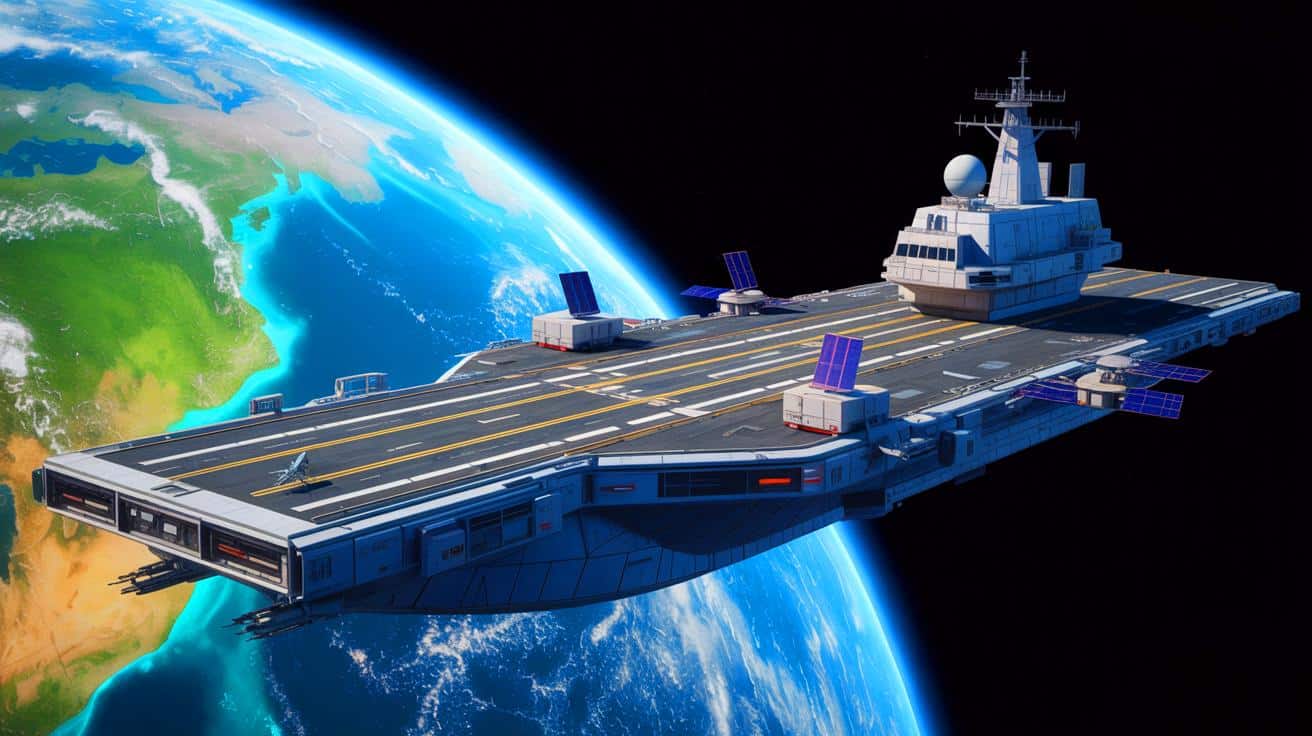
The United States is taking bold steps in the realm of space technology with a pioneering project poised to revolutionize satellite deployment. Central to this initiative is the development of an orbital aircraft carrier by the innovative company Gravitics. This project highlights the strategic importance of space as a domain for national security and emphasizes the growing synergy between private enterprises and national defense agencies. Amid rising global tensions, the U.S. is making a concerted effort to assert its presence and ensure dominance in the space arena, marking a new chapter in defense and technological advancement.
The Vision Behind the Orbital Aircraft Carrier
Gravitics has undertaken an ambitious project aimed at transforming the way satellites are deployed. This $60 million venture, supported by the U.S. Space Force, seeks to facilitate the direct launch of satellites from Earth’s orbit. Such a platform promises to provide swift and flexible responses to national security threats by eliminating reliance on traditional rocket launches. The concept of a space-based carrier offers a significant strategic edge, placing the United States ahead in military applications.
This initiative reflects the military’s increasing interest in sustaining a strong orbital presence, especially given the potential for a space arms race. The ability to have a pre-positioned platform in orbit allows for timely satellite deployment, addressing both immediate and long-term security needs. This innovation underscores the United States’ commitment to maintaining leadership in space technology, showcasing its strategic foresight in preserving national security interests.
Enhancing Space Security and Superiority
The orbital aircraft carrier developed by Gravitics offers an environment that safely houses multiple satellites, protecting them from the harsh conditions of space. This safeguarding of sensitive electronics and batteries is crucial in an era dominated by electronic warfare and cyber threats. The ability to shield satellites enhances the U.S.'s space security capabilities, providing a tactical advantage.
Moreover, the potential to conceal satellites from adversaries adds another layer of strategic benefit. Gravitics CEO Colin Doughan describes the carrier as a "game-changer" that aligns with the Space Force's mission of orbital dominance. The project not only boosts military capabilities but also sets the stage for future technological advancements in space exploration, further solidifying the U.S.'s leadership in this domain.
Public-Private Partnerships and Their Impact
The creation of the orbital aircraft carrier exemplifies the significant role of public-private partnerships in the space sector. Gravitics, in collaboration with Axiom Space, is working on a pressurized space module, demonstrating its commitment to both national defense and commercial solutions. This dual focus highlights Gravitics's growth and its alignment with the Department of Defense's objectives.
Such collaborations are pivotal for integrating innovative technologies into national defense strategies. By partnering, private companies and government bodies can enhance the U.S.'s position in space while also fostering the development of technologies with potential civilian applications. The success of these partnerships could open new market opportunities and drive further advancements in space technology, shaping the future of the industry.
The Future of Space Exploration
As technologies like the orbital aircraft carrier come to fruition, a new era of space exploration and exploitation is emerging. This technological advancement has the potential to transform security, surveillance, and communication paradigms, impacting both military operations and private sector endeavors. The implications are significant, signaling a shift in how space is utilized and governed.
As the U.S. Space Force and companies like Gravitics prepare to address future challenges, important questions about international space cooperation arise. How will these innovations affect diplomatic relations among nations? More importantly, how can we ensure that space remains a domain of shared peace and progress, benefiting all of humanity?




Wow, this is like something out of a sci-fi movie! 🚀
This sounds like something out of a sci-fi movie! 🚀
How will this affect international space agreements and treaties?
Does this mean satellites can be launched without prior notice to other countries? 🤔
How do they plan to manage the costs of maintaining such an orbital platform?
I’m skeptical. What about the environmental impact of having more objects in orbit?
Thank you for this insightful article. It’s amazing to see how far technology has come!
This sounds like a huge leap in space technology. Thank you for the insights!
Isn’t this just going to escalate the space arms race? 😕
With this technology, could space junk become an even bigger issue? 🛰️
Isn’t this just going to escalate the space arms race? 🤔
Will this make space exploration more accessible to smaller countries?
Can this system be hacked? I wonder about the cybersecurity measures in place.
Why does everything have to be about war? Can’t we focus on peaceful space exploration?
Gravitics seems to be doing great work. Kudos to them! 👏
What happens if the orbital carrier itself is attacked? How is it protected?
This could be a game-changer for satellite communications. 📡
Are there any plans to collaborate with other countries on this project?
Could this potentially lead to the militarization of space? 😟
How does this affect commercial satellite companies?
Wow, this could change everything we know about space warfare!
It all sounds great, but is there any civilian application for this technology?
Absolutely fascinating! Can’t wait to see how this develops. 🌌
Will this technology be affordable for widespread use, or is it just for the military?
Is this just a stepping stone towards building actual space stations?
This is either the best or worst idea, depending on how it’s used.
I’m concerned about the implications for global security. 🛡️
Does this mean we might see more private companies entering the space industry?
What about the risk of collisions with existing satellites?
Thanks for the article! It’s exciting to see such innovation happening. 😊
Can the orbital carrier be used for purposes other than launching satellites?
I’m not sure if I should be excited or worried about this development.
How soon can we expect this technology to be operational?
Will this impact the cost of satellite launches?
The future of space exploration looks bright! 🌟
What are the ethical considerations of deploying this technology?
This could redefine the concept of air superiority! ✈️
Is there a plan for decommissioning the carrier when it’s no longer needed?
How does this align with the Space Force’s long-term goals?
I’d love to see more transparency about this project’s potential impacts.
How do they plan to mitigate the risks of space debris?