



| IN A NUTSHELL |
|
In a groundbreaking move that could reshape the educational infrastructure landscape, Qatar has embarked on the world’s largest 3D-printed construction project. This ambitious endeavor involves the creation of two monumental schools, setting a new benchmark for 3D-printed buildings globally. With the support of advanced technology, this initiative not only underscores Qatar’s commitment to innovation but also promises to transform the way educational structures are conceived and constructed. As this project progresses, it offers a glimpse into a future where traditional building methods might be revolutionized by cutting-edge 3D printing techniques.
Unveiling the 3D Printed Schools Project
The 3D Printed Schools Project in Qatar is a collaborative effort spearheaded by UCC Holding in partnership with Qatar’s Public Works Authority. This innovative venture involves the construction of two gigantic schools using 3D printing technology, each with an impressive built-up area of 215,000 square feet. These schools are part of a larger project that comprises a total of 14 schools, with the remaining 12 constructed using conventional methods. The use of 3D printing technology in this project is not just about building schools; it’s about setting a precedent for future-ready educational infrastructure.
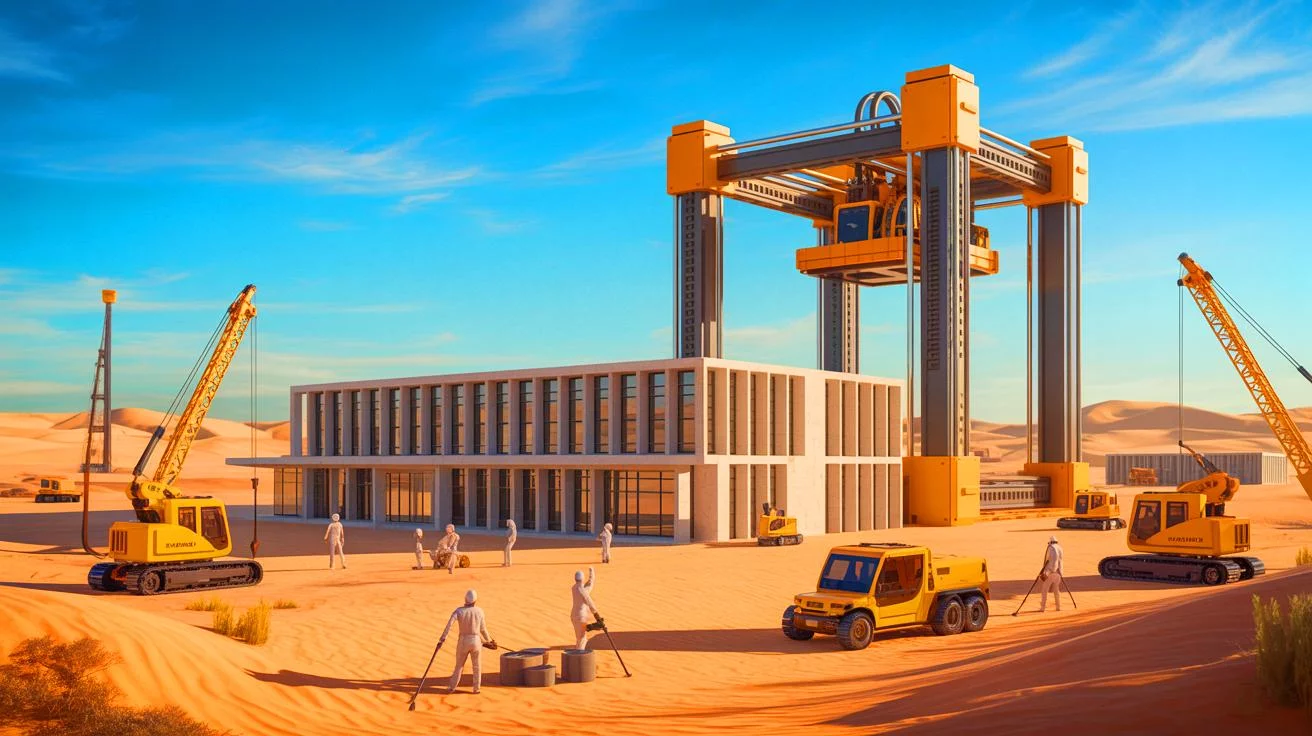
At the heart of this project are two customized BODXL printers, specially designed and commissioned from COBOD, a leader in 3D-printed construction. These printers, measuring 164 feet in length, 98 feet in width, and 49 feet in height, are capable of producing large-scale structures by extruding a cement-like mixture through a robotically controlled nozzle. This process allows for the creation of complex, durable, and aesthetically pleasing structures, setting a new standard in construction technology.
Revolutionizing Construction with 3D Printing
The use of 3D printing in construction is a revolutionary step forward, offering numerous benefits over traditional building methods. One of the most significant advantages is the ability to create complex designs with ease, as evidenced by the planned curved, flowing walls of the schools, inspired by Qatar’s natural desert formations. This method allows for greater flexibility in design, enabling architects to push the boundaries of what is possible in architectural aesthetics.
Moreover, 3D printing offers efficiency and speed in construction. By automating the building process, it reduces the reliance on manual labor and minimizes waste, making it a more sustainable option. The precision of 3D printing also ensures consistency and quality in construction, which is crucial for large-scale projects like the 3D Printed Schools Project.
Setting a New Benchmark in Educational Infrastructure
The sheer scale of the 3D Printed Schools Project is unprecedented, with each school occupying a plot measuring 328 by 328 feet. This project is not only the largest of its kind but also a model for future educational infrastructure in Qatar and the surrounding region. By integrating advanced technology with educational needs, Qatar is paving the way for a new era of learning environments that are both innovative and sustainable.
While the claim that these schools are 40 times larger than any other 3D-printed building is challenging to verify, the project’s magnitude is undeniable. As this endeavor progresses, it will likely influence future construction projects, demonstrating the potential of 3D printing to address large-scale infrastructure needs efficiently and effectively.
The Road Ahead: Completion and Future Prospects
Projected to be completed by the end of 2025, the 3D Printed Schools Project is poised to become a landmark achievement in both Qatar’s architectural landscape and the global construction industry. As more details about the project unfold, it will be exciting to see how this initiative shapes the future of educational infrastructure and inspires similar projects worldwide.
Despite the lack of visual renders at this stage, the anticipation surrounding the project is palpable. The integration of cutting-edge technology with educational infrastructure marks a significant step forward, promising to deliver functional and aesthetically pleasing environments that enhance the learning experience. As we look to the future, how might other countries adopt similar technologies to revolutionize their infrastructure needs?


Wow, 3D printing is really taking construction to the next level! 🚀
I wonder how long it takes to print one of these giant schools?
Are these 3D-printed buildings as durable as traditional structures?
This is amazing! Can’t wait to see more countries adopting this tech.
How does the cost of 3D printing compare to regular construction methods?
Can 3D printing handle different weather conditions, especially in a desert? 🤔