




| IN A NUTSHELL |
|
The recent suspension of Canada’s clean energy regulations has opened new avenues for developing gas-fired power plants to support the growing demand for large data centers. This policy shift, agreed upon by Prime Minister Mark Carney and Alberta Premier Danielle Smith, signifies a strategic move to bolster Alberta’s carbon-pricing system. The agreement allows companies like Capital Power Corp. to expand their operations and consider new projects that were previously unfeasible under stricter environmental standards. This development is a significant pivot in Canada’s energy and economic strategy, reflecting broader geopolitical and market dynamics.
Canada’s Energy Policy Shift
The suspension of clean energy regulations marks a significant departure from Canada’s previous environmental commitments. Under former Prime Minister Justin Trudeau, the country was on a path to achieving net zero emissions by 2050. This included stringent annual emissions limits for all electricity-generating units. However, the new agreement between Carney and Smith has temporarily halted these regulations, enabling the construction of gas-fired power plants. This shift aims to stabilize Alberta’s carbon-pricing system and address the economic challenges posed by the previous policies.
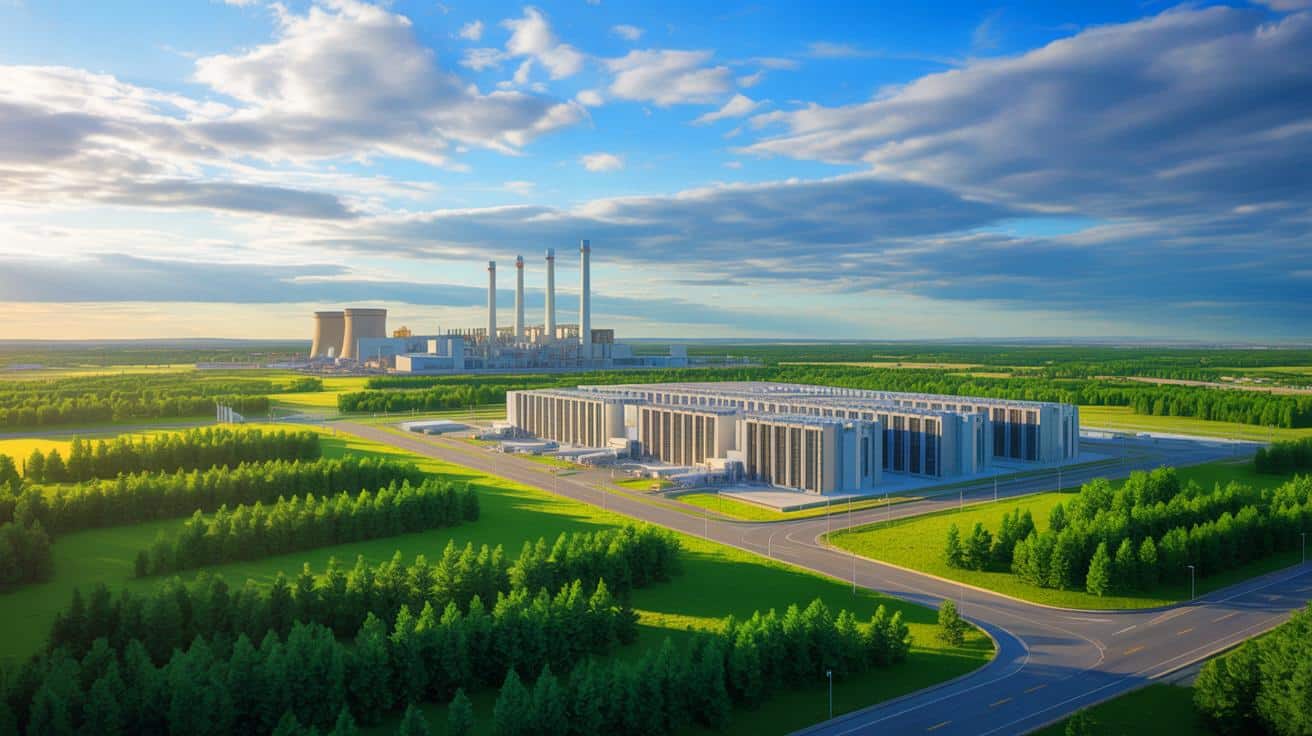
Capital Power Corp., an independent electricity producer, stands to benefit significantly from this regulatory change. The company’s CEO, Avik Dey, expressed optimism about expanding their operations at the 1,857-megawatt Genesee site. This site, recently converted from coal to gas, is uniquely positioned to accommodate a 1,000-megawatt, 1 million-square-foot hyperdata center. Such developments could make the Genesee site one of the largest data centers in North America, leveraging existing infrastructure and transmission capabilities.
Economic and Environmental Implications
The decision to suspend clean energy regulations raises critical questions about the balance between economic growth and environmental responsibility. While the move allows for increased industrial and data center expansion, it also deviates from Canada’s previous environmental targets. This policy shift is part of a broader strategy to reduce economic dependence on the United States, especially after strained relations during the Trump administration.
The agreement also includes plans to increase pipeline capacity, facilitating Alberta’s oil exports to Asian markets. This expansion aligns with the broader goal of diversifying Canada’s economic partners and reducing reliance on a single market. However, these changes might face opposition from environmental advocates who argue that they undermine global efforts to combat climate change.
Impact on Capital Power Corp.
Capital Power Corp. is poised to capitalize on the new regulatory environment. The company’s focus on expansion in the United States was primarily driven by Canada’s stringent emissions regulations. With the suspension of these rules, Capital Power can now redirect its attention to domestic projects. The Genesee site is a prime candidate for expansion, offering a strategic location for a large data center due to its existing infrastructure.
In addition to potential data center developments, the company is considering reviving a previously canceled carbon capture and storage project at Genesee. This project was shelved in 2024 due to poor economic viability. However, the new regulatory landscape may provide the necessary conditions to revisit and possibly implement this initiative, which could help mitigate some environmental impacts of the expanded gas-fired power generation.
Future of Carbon Pricing in Alberta
The memorandum of understanding between Alberta and the Canadian government includes plans to raise the carbon price in the province from $95 per metric ton to at least $130. This increase is part of an effort to establish a new industrial carbon-pricing agreement by April 1. The raised carbon price aims to incentivize the reduction of emissions and encourage investment in cleaner technologies.
However, the effectiveness of this strategy will largely depend on the specifics of the new carbon-pricing framework. It remains to be seen how these changes will impact industrial growth and environmental outcomes in Alberta. The balance between economic expansion and environmental stewardship will be a critical factor in determining the long-term sustainability of this approach.
The suspension of Canada’s clean energy regulations represents a pivotal moment in the country’s energy policy. While it opens new opportunities for industrial growth, it also poses challenges for meeting environmental commitments. How will Canada reconcile these competing priorities, and what role will industry leaders play in shaping the future of energy and environmental policy in the region?


Is this a step backward for Canada’s climate goals? 🤔
So, are we just giving up on climate change goals now? 🤔
Interesting move by Canada. Will this really help reduce economic dependence on the US?
Why would they suspend clean energy regulations? Doesn’t sound very “clean” to me.
Interesting move by Canada! Do you think this will really reduce dependency on the US?
Wow, Capital Power must be thrilled with this decision! 💡
Isn’t this a step backwards for Canada’s environmental commitments? 🌍
Finally, some pragmatic decisions! Let’s hope it boosts the economy. 💪
Thank you, Capital Power CEO, for shedding light on this strategic move. Much needed!
I guess Alberta loves its oil too much to let go. 😅
Why is there a sudden change in Canada’s energy strategy?
How does this impact small energy companies in Canada?
Are there any plans for renewable energy developments alongside these changes?
I can’t believe they’re going back to gas-fired plants. So much for clean energy! 😡
Thanks for the update. Will be interesting to see how this unfolds. 🤞
Seems like a risky gamble with the environment. Hope they know what they’re doing.