



| IN A NUTSHELL |
|
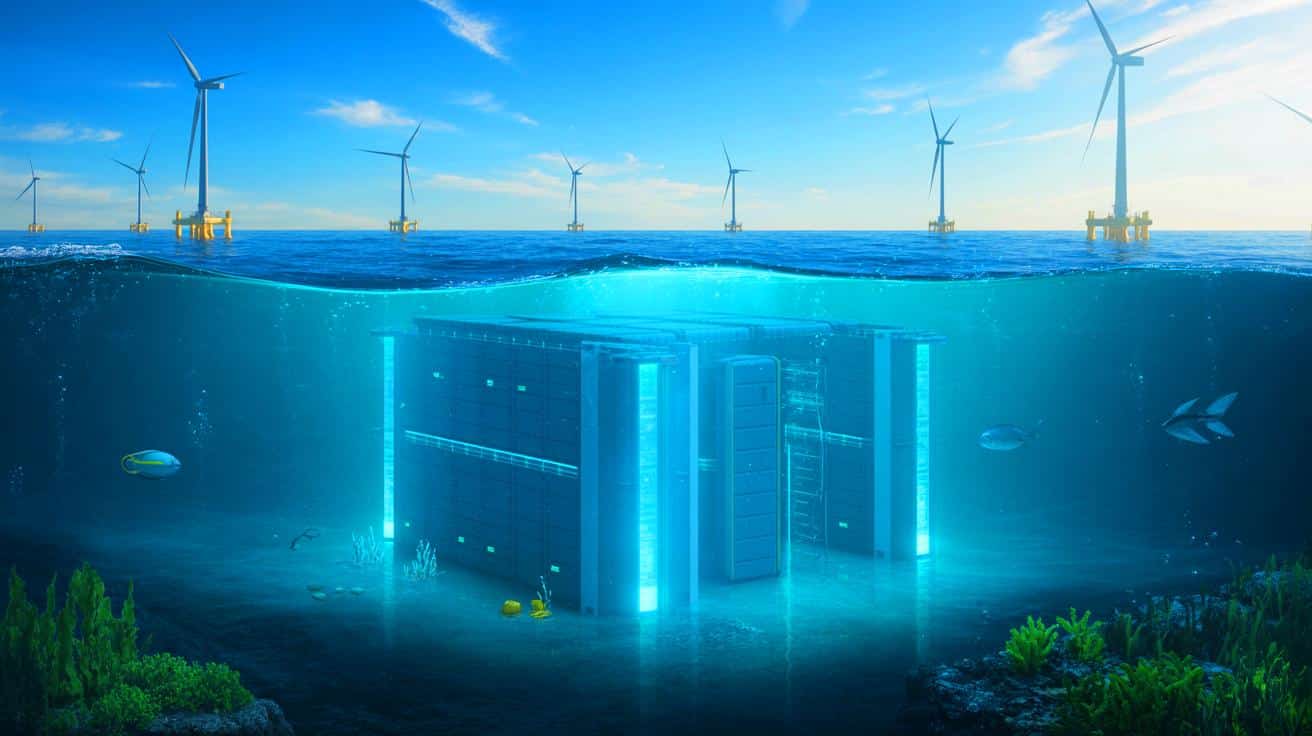
China has made a groundbreaking stride in sustainable technology with the completion of the world’s first wind-powered underwater data center. Located off the coast of the Lin-gang Special Area near Shanghai, this innovative project represents a $226 million investment in high-performance computing infrastructure. This facility is set to change how data centers operate by leveraging offshore wind power and natural seabed cooling. By doing so, it aims to significantly cut energy consumption and eliminate the need for fresh water, which is a critical resource in traditional data centers.
The Environmental Impact of Cooling
Data centers are notorious for their high energy consumption, particularly due to the cooling processes required to maintain optimal temperatures for servers. Traditional centers can use up to five million gallons of water daily for cooling purposes. This is equivalent to the daily water use of a small town. However, the Lin-gang Special Area facility is expected to challenge this paradigm by employing seawater for cooling.
By using the ocean as a natural cooling system, the facility aims to reduce its cooling energy consumption to less than 10% of total power use. This is a significant reduction compared to the 40-50% typically seen in other centers. The project is designed to achieve a Power Usage Effectiveness (PUE) rating of no higher than 1.15. This is well below China’s national guideline, which mandates a PUE of no higher than 1.25 by 2025 for new or retrofitted centers.
Beyond Data Storage: A Multifunctional Hub
The Lin-gang Special Area data center is designed to be more than just a data storage facility. It is poised to support a diverse range of digital-economy applications. From powering artificial intelligence workloads to providing computing infrastructure for 5G networks and the industrial Internet of Things (IoT), the center is a versatile addition to the region’s technological landscape.
Moreover, the center’s role extends to e-commerce and international data flows, making it a crucial part of the region’s digital backbone. This multifunctional capability underscores the facility’s potential to serve as a high-performance underwater computing cluster, marrying technological advancement with environmental sustainability.
Scaling Up: Future Prospects
The current phase of the underwater data center is a 2.3-MW demonstration facility. Plans for Phase 2 aim to scale this up to a 24 MW capacity, although no timeline for this expansion has been set. The facility’s successful integration of renewable energy and subsea cooling on a commercial scale marks a significant milestone in the evolution of data centers.
However, the transition from this demonstration phase to full-scale operations involves challenges. Engineers are closely monitoring potential maintenance costs, corrosion issues, and the impact on the marine environment. These factors will be critical in determining the long-term viability and scalability of such projects.
Challenges and Considerations
While the Lin-gang Special Area facility is a pioneering project, it is not without its challenges. As stated by Wang Shifeng, chairman of China Communications Construction Company’s Third Harbor Engineering, “Construction of UDCs is still in its initial stage.” The transition to large-scale applications will require advancements in technology and cost optimization.
The Shanghai municipal government has ambitious plans to scale up its intelligent computing cloud industry, aiming for a computing capacity of 200 EFLOPS by 2027. This underscores the need for continued innovation and improvement in underwater data center technology. The road ahead involves addressing technological maturity and refining cost structures to make these centers more feasible on a larger scale.
As China forges ahead with this innovative approach to data management, the world watches closely. The Lin-gang Special Area facility stands as a testament to the potential of combining renewable energy with cutting-edge technology. What steps will other nations take to follow suit, and how might these developments shape the future of data centers worldwide?



Wow, an underwater data center! 😮 That’s some James Bond-level stuff! How do they keep everything dry down there?
Wow, this is a game-changer! 🌍 Can’t wait to see the impact on global data center strategies.
This is incredible! Does the use of seabed cooling have any negative impacts on marine life? 🌊
How will they address maintenance in such a challenging environment? 🤔
I’m curious about the maintenance costs. How often do they need divers to check things?
Impressive! But what about the impact on marine life? 🐠
Is this something other countries are thinking of doing too, or is China way ahead of the pack?
Finally, a step towards sustainable tech. Kudos to China! 🎉
Hmm, it sounds good on paper, but I’m skeptical about the long-term environmental impacts. 🤔
Is this really feasible on a larger scale, though?
Can someone explain how the wind power is captured and used under water? Sounds complicated!
Corrosion is a big issue in marine environments. How are they planning to tackle it?
Hope they have a backup plan if the underwater part doesn’t work out. 😅