




| IN A NUTSHELL |
|
Far beneath the North Sea, a groundbreaking energy project is taking shape. This ambitious endeavor, involving a massive undersea cable, promises to revolutionize how electricity is managed across Europe. Stretching between two nations, this cable is set to transform the energy landscape, creating a direct link that could redefine power distribution on the continent. As technology advances and the demand for sustainable energy sources grows, such initiatives offer a glimpse into the future of energy sharing and cooperation between countries.
The Invisible Energy Highway Transforming Europe
The NeuConnect project is not merely an electrical link; it represents the first direct energy connection between the United Kingdom and Germany. Dubbed the “invisible energy highway,” this project allows both nations to instantly exchange electricity as per their respective needs, fostering an unprecedented synergy between two of Europe’s largest economies. This collaboration underscores a significant step towards optimizing energy resources on a continental scale.
The concept is brilliantly simple: when Germany generates excess solar or wind power, it can export this surplus to the UK. Conversely, when British wind turbines are operating at full capacity and Germany faces calm weather, electricity can flow in the opposite direction. This setup minimizes waste and maximizes the use of renewable energy sources, creating a more efficient energy system across Europe.
A Titanic Undertaking in the Depths of the Sea
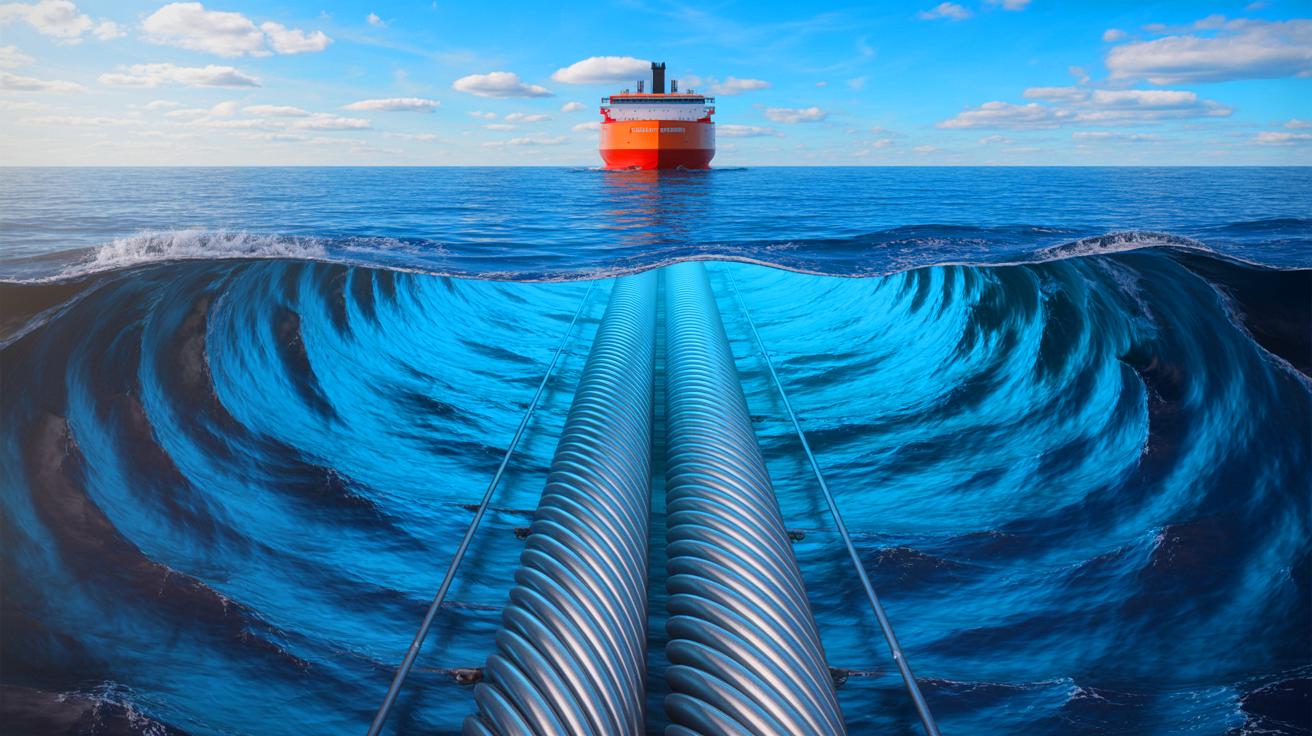
Currently, the cable-laying vessel Leonardo da Vinci—considered the largest of its kind in the world—is meticulously deploying 87 miles of cables in British waters, 14 miles off the coast of Kent. This maritime giant is capable of installing cables as deep as 9,842 feet, a technical feat essential for traversing the challenging seabed of the North Sea.
Laying these undersea cables is both an art and a science. Each mile must be precisely positioned and safeguarded against currents, corrosion, and human activity. Teams employ cutting-edge burial tools to ensure that this critical infrastructure remains resilient for decades to come, highlighting the intricate balance of engineering and environmental consideration required for such a project.
Dizzying Power Potential
The NeuConnect project is impressive in its scope: 450 miles of high-voltage direct current cables with a capacity of 1.4 gigawatts, enough to power 1.5 million homes. To put this power into perspective, it is sufficient to illuminate entire cities or sustain power-hungry industries, showcasing the project’s monumental potential.
This enormous capacity relies on two state-of-the-art converter stations: one on the Isle of Grain in Kent, and another in Wilhelmshaven, northern Germany. These facilities convert alternating current from each national grid into direct current for underwater transmission, then reconvert the electricity upon arrival, ensuring seamless energy exchange between the two countries.
A Technological Marathon Through 2028
The project is steadily progressing towards its goal of full operation by 2028. Following this current phase of cable laying, additional stages are planned for 2026 and 2027. In Germany, the foundations of the converter station are already complete, while in the UK, teams are finishing concrete work before erecting the “superstructure” this summer.
This methodical advancement reflects the magnitude of the challenge: electrically connecting two nations separated by hundreds of miles of turbulent water demands perfect coordination among engineers, sailors, and technicians from multiple countries, highlighting the international collaboration required for such a monumental task.
Significant Environmental Impact
Beyond its technical achievements, NeuConnect carries a substantial environmental promise: reducing carbon emissions by 13 million tons over 25 years. This massive reduction stems directly from the project’s capacity to optimize the use of renewable energies on both sides of the North Sea.
By enabling intelligent sharing of green electricity, this interconnection transforms two national grids into a more efficient and cleaner continental system. This silent revolution, unfolding deep beneath the ocean, represents a significant leap forward in sustainable energy management, offering a model for future projects worldwide.
As NeuConnect continues to develop, it poses a critical question: how will this unprecedented level of cooperation and technological innovation influence future energy projects and geopolitical relations across Europe and beyond?

Wow, 13 million tons of emissions saved! That’s like a diet plan for the planet! 🌍💪
How reliable is the technology behind these undersea cables? Are there risks of failure?
Are there any plans for similar projects connecting other countries? 🤔
So, we are basically wiring the ocean? Hope the fish don’t mind! 🐟
This is a great step forward for green energy! Thanks to all the engineers involved! 🙌
What about the cost? Who’s paying for this massive undertaking?
It’s impressive, but does this project have any impact on marine life?
Can someone explain how this will work during a winter storm in the North Sea? 🌊
This seems like a sci-fi movie. Cables under the sea powering millions of homes!
Finally, something good coming out of Brexit! 😂
How long will the cables last? Will they need frequent maintenance?
They should have named the project “Electric Eel”! ⚡
I hope this project inspires more renewable energy collaborations across the world. 🌿
Will this reduce electricity costs for people in the UK and Germany?
Sounds amazing, but what if a ship’s anchor hits the cable? 🚢
I’m skeptical. What if one country decides to cut off the power?
How does this affect the current energy policies in both countries?
Are there any environmental concerns with laying cables across the seabed? 🌊
1.4 gigawatts? Great Scott! That’s enough to power the DeLorean! ⚡🕒
Thanks for the update! Excited to see how this project unfolds!
Will this project create more jobs in the energy sector?
How will this affect the current energy market dynamics in Europe?
Seems like a massive investment. Are there any financial risks involved?
The cable-laying ship sounds like a beast! Would love to see it in action! 🚢
This could be a game-changer for European energy independence. 🇪🇺
Hope this sets a precedent for more cross-border energy collaborations globally!
Are there any security concerns with such a vital infrastructure project under the sea?