


| IN A NUTSHELL |
|
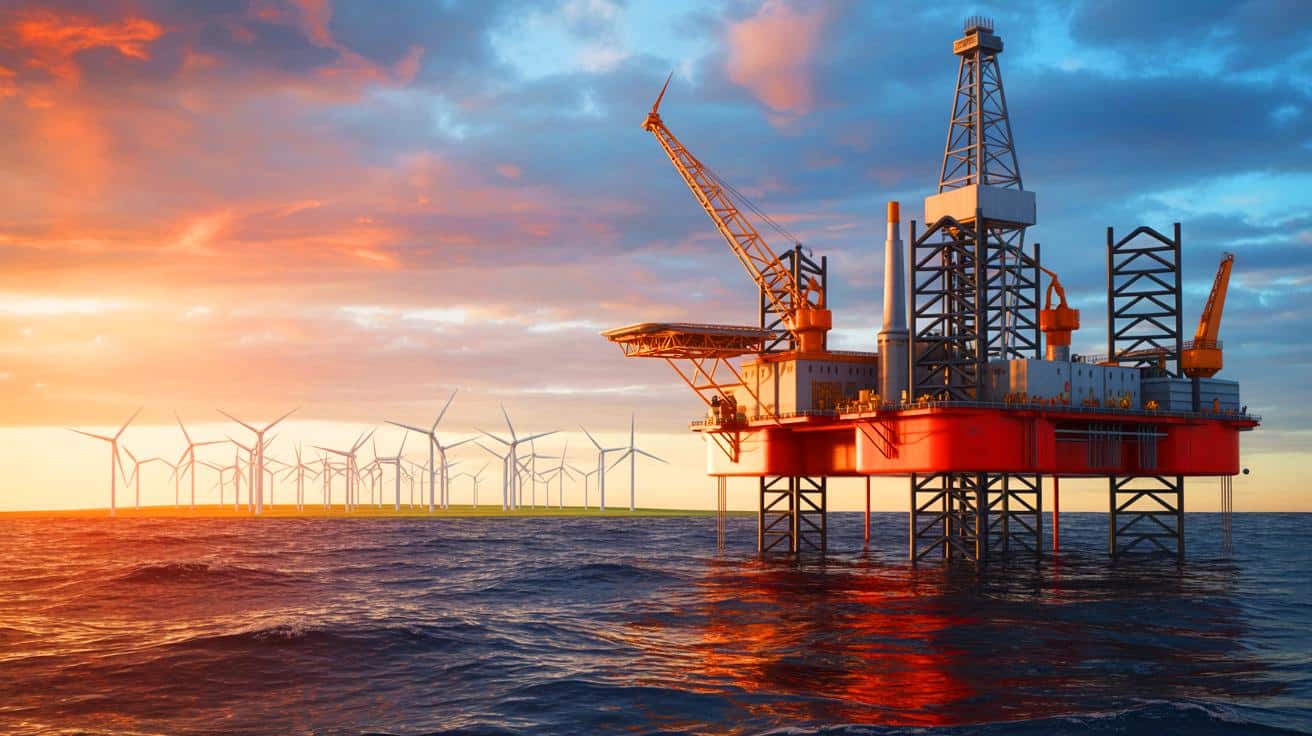
The recent announcement by the British government to allow new oil and gas production on existing fields has stirred reactions across the energy sector. As the country maneuvers its commitment to net-zero emissions by 2050, this policy adjustment highlights the ongoing tension between economic interests and environmental commitments. With the backdrop of declining oil production and a stringent windfall tax regime, stakeholders are assessing the potential impacts of this policy shift on the energy landscape.
Britain’s Oil and Gas Production Decline
Britain’s oil and gas production has seen a significant decline over the past decades. From a peak output of around 4.4 million barrels of oil equivalent per day (boed) at the turn of the millennium, the country now produces approximately 1 million boed. According to the North Sea Transition Authority (NSTA), this figure is expected to drop below 150,000 boed by 2050. This decline has transformed Britain from a net exporter to a nation increasingly reliant on imports to meet its energy needs.
The shift in production levels poses challenges for the country’s energy security and economic stability. As fossil fuel resources dwindle, the government must balance the need for domestic energy production with its environmental commitments. The recent decision to allow some new production on existing fields is seen as an attempt to address these challenges while minimizing new exploration and environmental impacts.
The future of Britain’s energy sector hinges on innovative policies that reconcile economic needs with environmental sustainability.
Windfall Tax Remains a Point of Contention
The British government’s decision to maintain its windfall tax on oil and gas producers has sparked debate within the industry. This tax, considered one of the most rigorous globally, imposes a 38% levy when prices exceed certain thresholds, effectively raising the overall tax burden to 78% in such scenarios. The Energy Profits Levy (EPL), set to expire in March 2030, aims to redirect revenues towards funding renewable energy projects.
Industry leaders argue that this tax regime stifles investment in the North Sea. David Whitehouse, head of the Offshore Energies UK industry group, warned that projects could stall, and jobs may be lost if the levy persists beyond 2026. The government, however, remains firm in its stance, seeing the tax as a necessary tool to support the transition to renewable energy.
“The future of North Sea energy depends on investment, which won’t come without urgent reform of the windfall tax,” said David Whitehouse.
Environmental and Economic Implications
The announcement has drawn mixed reactions from various stakeholders. Environmental groups like Greenpeace UK have acknowledged the government’s leadership in reducing fossil fuel exploration. However, they also emphasize the need for greater support for North Sea energy workers transitioning to renewable sectors. Areeba Hamid, co-executive director of Greenpeace UK, highlighted the importance of creating new job opportunities in the renewable energy industry to ensure a just transition.
On the economic front, companies such as Harbour Energy have expressed disappointment with the policy, citing concerns about investment and profitability under the current tax regime. The government’s plan to replace the EPL with an Oil and Gas Price Mechanism by 2030, taxing at a rate of 35% if prices remain high, is seen as an attempt to provide some relief while maintaining fiscal discipline.
“The government has shown genuine global climate leadership, making the UK the world’s largest economy to call time on new fossil fuel exploration,” said Areeba Hamid.
The Global Perspective and Political Reactions
Internationally, the U.S. has voiced its opinion on Britain’s energy policies. Former President Donald Trump has been a vocal critic, urging the UK to increase North Sea drilling and expressing skepticism about wind energy. This highlights the geopolitical dimensions of energy policy, where national interests and global climate commitments often clash.
Domestically, the Labour government’s previous pledge to halt new oil and gas licenses remains a contentious topic. The recent policy change reflects the complexity of governing in a landscape where political, environmental, and economic considerations intersect. As Britain navigates these challenges, the outcomes of these decisions will likely influence both its domestic energy strategy and its standing in international climate commitments.
As Britain continues to adapt its energy policies, the balance between fostering economic growth and achieving environmental goals remains delicate. With the ongoing debate surrounding the windfall tax and new production licenses, questions arise about the future direction of the nation’s energy strategy. How will these decisions shape Britain’s path towards a sustainable energy future, and what role will innovation play in bridging the gap between economic and environmental priorities?


Why is Britain still investing in oil and gas when they should be focusing on renewables? 🤔
Isn’t this just going to prolong our dependency on fossil fuels? 🤔
Why do they keep changing the rules? It feels like no one knows what’s going on!
Great article! It’s important to have a balanced view on economic and environmental concerns. Thank you! 😊
Thanks for the detailed article! Really sheds light on the complexities of this issue. 👍
Isn’t this just a step backwards for Britain’s climate goals?
Great, more permits for oil and gas. Just what the planet needs…not. 🌎
How do they plan to balance the economic benefits with environmental protection?
Interesting read, but I think the government is missing the point on renewable energy!
The windfall tax sounds good in theory, but is it really helping the transition to renewables?
Maybe if we all start riding bicycles, we won’t need oil and gas anymore! 🚴♂️
Am I the only one who thinks this is just a short-term fix? 🤷