

Close Menu
  • Featured
    • News
    • Consumption
    • Environment
    • Industry
    • Opinion
    • Policy
    • Production
    • Storage
    • Transmission
  • About Us
  • Advertise
  • Contact Us

Subscribe to Our Newsletter

News, investigations, and analysis — our top stories every morning to start your day right.

Trending
The Key Benefits of Oil
CO2 Emissions: How Carbon Dioxide Affects the Environment and the Planet
Ocean Warming: A Growing Threat to Marine Ecosystems and the Global Environment
Facebook X (Twitter) LinkedIn YouTube TikTok
Energy Reporters
Facebook X (Twitter) RSS
Subscribe
  • Featured
  • News

    Researchers Discover That Diamonds Can Generate Electricity

    09/03/2026

    South Africa: Thousands of Dead Sardines Disrupt Koeberg Nuclear Power Plant

    08/28/2026
    Illustration of Abu Dhabi National Oil Company's $11 billion financing deal for future gas production projects.

    ADNOC Secures $11 Billion for Gas Expansion, Transforming Energy Future and Boosting Local Economies

    12/19/2025
    Illustration of Energy Transfer LP's Lake Charles LNG project suspension and strategic shift to pipeline infrastructure.

    Energy Transfer Suspends Lake Charles LNG Project, Sparking Concerns Over Job Losses and Future Energy Solutions

    12/19/2025
    Illustration of a U.S. judge blocking Michigan's attempt to shut down Enbridge's Line 5 pipeline.

    Judge Blocks Michigan’s Effort to Shut Down Enbridge’s Line 5 Pipeline, Sparking Environmental and Economic Debate

    12/18/2025
  • Use

    How energy subsidies affect the market and consumers

    08/11/2026

    Steps to make your business more energy efficient

    06/16/2026

    How to conduct an energy audit for your home

    05/19/2026

    The impact of energy consumption on climate change

    05/12/2026

    Tips for choosing the best energy provider

    05/05/2026
  • Climate

    CO2 Emissions: How Carbon Dioxide Affects the Environment and the Planet

    10/14/2026

    Ocean Warming: A Growing Threat to Marine Ecosystems and the Global Environment

    10/09/2026
    renewable energy industry

    The Benefits of Renewable Energy for the Climate

    09/15/2026

    How to evaluate the carbon footprint of your energy use

    07/21/2026

    The connection between energy use and water resources

    07/07/2026
  • Industry

    How France Produces Its Electricity: Nuclear Power at the Heart of a Changing Energy Mix

    10/02/2026

    The Importance of Oil in Logistics

    09/10/2026
    A bunch of black and white objects with a green arrow above them

    The Ongoing Bribery Case Against Hithium’s Chairman Wu Zuyu Highlights the Stakes for Battery Investors

    02/22/2026
    Illustration of Ford's strategic shift from electric vehicles to gas and hybrid models.

    Ford Reveals $19.5 Billion Charge as EV Strategy Unravels, Impacting Jobs and Future Mobility Choices

    12/17/2025

    US Drillers Cut Oil and Gas Rigs Again, Exposing Potential Economic and Environmental Impacts on Local Communities

    12/13/2025
  • Opinion
    lighted city skyline at night

    Korean Companies Are Losing Ground to China: Why Governance Failures at Conglomerates Like Young Poong Group Matter More Than Ever

    03/22/2026

    Pulling back the curtain on Turkey’s natural gas strategy

    09/01/2020

    How West Africa can expand power supply and meet climate goals

    06/15/2020

    Review: Oil and the Great Powers: Britain and Germany, 1914 to 1945

    06/09/2020

    Eastern Mediterranean gas: testing the field

    05/27/2020
  • Policy

    Understanding dynamic pricing in electricity markets

    06/23/2026

    The influence of artificial intelligence on energy management

    06/02/2026
    renewable energy industry

    How government policies are shaping the energy sector

    04/14/2026

    What you need to know about smart energy management

    02/24/2026

    Trump Administration Faces Delays in Finalizing 2026 Biofuel Quotas, Raising Questions About Future Energy Policies

    12/14/2025
  • Output

    The Key Benefits of Oil

    10/20/2026

    How France Produces Its Electricity: Nuclear Power at the Heart of a Changing Energy Mix

    10/02/2026

    The Importance of Oil in Logistics

    09/10/2026

    Researchers Discover That Diamonds Can Generate Electricity

    09/03/2026

    South Africa: Thousands of Dead Sardines Disrupt Koeberg Nuclear Power Plant

    08/28/2026
  • Storage
    renewable energy industry

    How energy storage can stabilize renewable sources

    06/30/2026

    Innovations in battery technology for energy storage

    03/17/2026
    Illustration of Venezuela's oil storage facilities nearing maximum capacity amid U.S. sanctions.

    Venezuela Faces Oil Storage Crisis as Tanker Restrictions Expose Vulnerabilities in Energy Infrastructure and Economy

    12/18/2025
    time lapse photography of square containers at night

    ‘Mega Batteries’ are Powering the Future of Energy Consumption

    10/23/2025
    Illustration of a gravity-based energy storage system integrated into a skyscraper, utilizing renewable energy sources.

    Gravity Battery Innovation Transforms Skyscrapers into Renewable Energy Storage, Revealing New Possibilities for Urban Sustainability

    10/18/2025
  • Grid

    Understanding energy grids and their modernization

    04/28/2026
    Illustration of Ovintiv and Pembina's collaboration on LNG export from the Cedar LNG facility.

    Ovintiv Agreement for Cedar LNG Capacity Sparks New Era in North American Energy Collaboration and Innovation

    12/16/2025
    Illustration of Star Catcher Industries' power beaming technology at NASA's Kennedy Space Center.

    Star Catcher Achieves Breakthrough, Sets New 1.1-kW Power Beaming Record, Transforming Future Energy Solutions

    11/25/2025
    Illustration of U.S. LNG exports navigating global market challenges and expanding into Asian regions amidst rising competition.

    US LNG Export Dominance Faces Challenge as Sellers Explore New Markets Beyond Europe’s Energy Demand

    11/23/2025
    Illustration of the race to develop new pipelines in response to California refinery closures and rising fuel prices.

    California Refinery Closures Drive Urgent Pipeline Race, Transforming Energy Supply Dynamics on the West Coast

    11/19/2025
Energy Reporters

“Scientists Call Discovery Alarming”: NASA Uncovers Secret Army Base Beneath Decades Of Ice As Officials Face Global Accusations Of Cover-Up

Beneath Greenland's melting ice sheet, NASA's recent radar survey has uncovered the long-buried Camp Century, a Cold War-era U.S. military base, reigniting concerns about its potential environmental hazards as climate change accelerates.
Eirwen WilliamsEirwen Williams08/30/20250
Share Twitter Facebook LinkedIn Telegram WhatsApp Email Copy Link
Follow Us
Google News
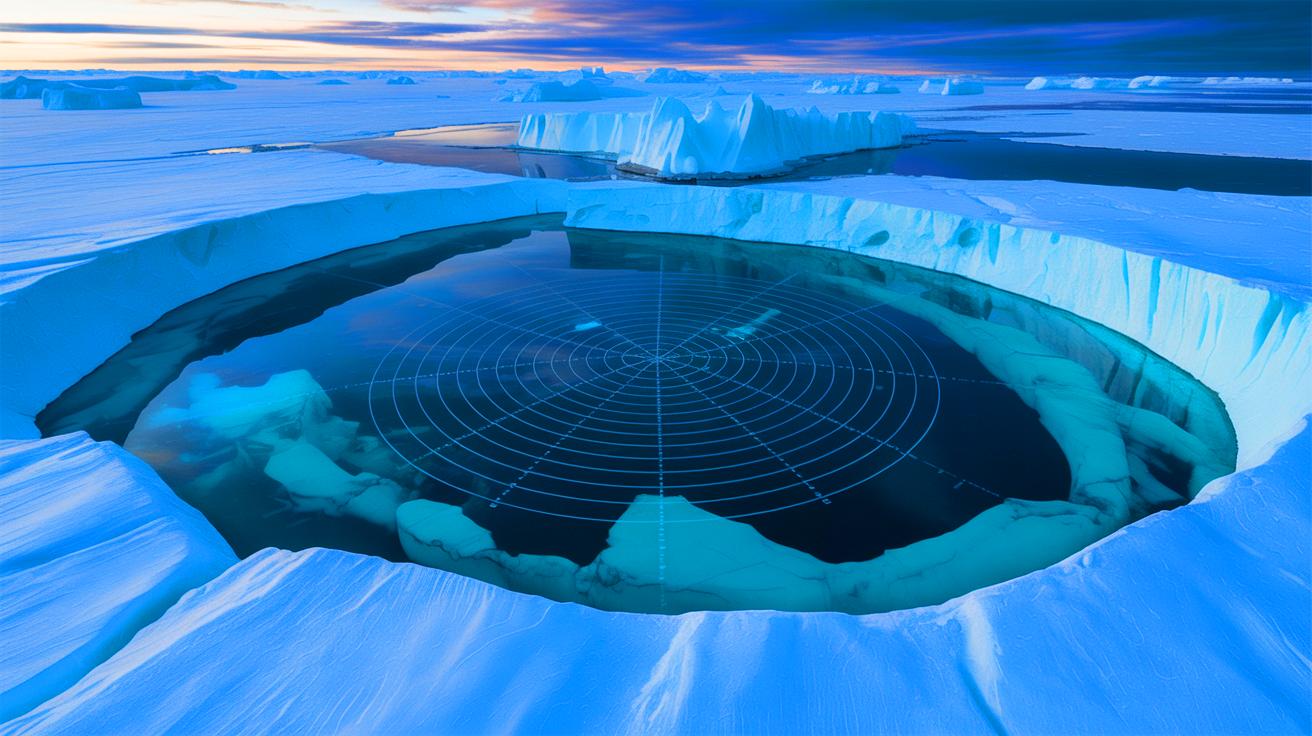
Illustration of NASA's radar survey revealing the buried Camp Century beneath Greenland's ice sheet.
Share
Twitter Facebook LinkedIn WhatsApp Email Copy Link
IN A NUTSHELL
  • 🛰️ NASA’s recent radar survey revealed the hidden Camp Century, a U.S. military base buried beneath Greenland’s ice.
  • 🌍 The base was part of the Cold War-era Project Iceworm, intended to establish a network of nuclear launch sites.
  • ⚠️ Concerns grow over the potential release of waste left at the site as the ice continues to melt.
  • 📊 Advanced radar technology is crucial for understanding the environmental impact and future of the Greenland ice sheet.

Deep beneath Greenland’s ice sheet lies a relic of Cold War ambition: Camp Century. This once-secret U.S. military base, buried under 100 feet of ice, symbolizes a bygone era of geopolitical tension. Recent discoveries by NASA scientists, however, have brought this forgotten installation back into the spotlight. Using advanced radar technology, researchers have uncovered the remnants of this underground city, reigniting concerns about the environmental hazards it poses. As global warming continues to melt the ice that once cloaked these secrets, the world is forced to confront the long-term consequences of past military endeavors.

The Birth of Camp Century

In the late 1950s, amid the escalating tensions of the Cold War, the United States embarked on a bold military project: Camp Century. Located in northwest Greenland, this base was constructed by the U.S. Army Corps of Engineers between 1959 and 1960. The ambitious plan involved digging a vast network of 21 tunnels, stretching over 1.86 miles in total length, beneath the thick ice sheet. Dubbed the “city under the ice,” Camp Century was designed to house up to 200 soldiers year-round, with the capacity to store a staggering 600 nuclear medium-range ballistic missiles.

Powered by a nuclear reactor, the base was part of Project Iceworm, an initiative to establish a covert network of nuclear launch sites. These sites aimed to withstand a first strike, providing a strategic advantage in the volatile geopolitical climate of the time. However, the project was fraught with challenges. The ice sheet’s instability, coupled with logistical difficulties, led to the project’s eventual abandonment in 1967, just eight years after its inception.

NASA Researchers Stunned After Spotting Massive Bioluminescent Sea Creature From Space That Appears Larger Than Anything Ever Recorded

Environmental Concerns and Buried Waste

When Camp Century was abandoned, it left behind a significant environmental footprint. The base was not fully decommissioned, and an estimated 200,000 liters of fossil fuel and 24 million liters of other waste, including sewage, were left to the elements. Scientists now worry that as the ice continues to melt, this waste could seep into the ice sheet and eventually reach the ocean, posing a considerable environmental threat.

Over the decades, the ice has continued to bury the base deeper, but it has not erased it. Occasional radar surveys have revealed the presence of Camp Century beneath the ice, likening it to an “environmental time bomb.” In April 2024, NASA’s Uninhabited Aerial Vehicle Synthetic Aperture Radar (UAVSAR) provided unprecedented detail of the base’s structures, highlighting the potential risks of the buried waste. The melting ice not only threatens to release this waste but also contributes to rising sea levels, compounding the global challenge of climate change.

NASA Nuclear Breakthrough: Fuel More Potent Than Plutonium Promises New Space Era While Igniting Fears of Global Power Struggle

The Role of Advanced Radar Technology

NASA’s recent radar surveys have played a critical role in bringing Camp Century back into the public eye. Using UAVSAR technology, scientists were able to differentiate individual structures within the buried base, offering insights previously unavailable. This technological advancement is crucial for understanding the current state of Camp Century and assessing the potential environmental impact.

While the radar data has not yet led to direct intervention, it provides valuable information on the thickness of the ice sheet. This knowledge is essential for predicting how the melting ice will affect global sea levels. As cryospheric scientist Alex Gardner from NASA’s Jet Propulsion Laboratory points out, “Without detailed knowledge of ice thickness, it is impossible to know how the ice sheets will respond to rapidly warming oceans and atmosphere.”

NASA Reports Rapidly Expanding Earth Anomaly That Scientists Warn Could Threaten the Continental United States With Unimaginable Consequences

The Future of Camp Century and the Greenland Ice Sheet

As climate change accelerates, the fate of Camp Century remains uncertain. The Greenland ice shelves have lost 35 percent of their volume since 1978, and this rapid melting could expedite the release of waste from the base. However, scientists are primarily focused on understanding the broader implications of ice loss for sea level rise, rather than addressing the specific challenges posed by Camp Century.

Efforts to monitor and study the ice sheet’s thickness are vital for future projections. These studies could inform potential mitigation strategies for the environmental risks associated with Camp Century. Yet, with the ice continuing to recede and the global climate crisis showing no signs of abating, the question remains: how will the world address the legacy of past military activities while navigating the present challenges of climate change?

The story of Camp Century is a poignant reminder of the long-lasting impact of human endeavors on our planet. As the ice continues to melt, exposing remnants of the past, we are faced with the challenge of addressing both historical and current environmental issues. What steps should be taken to mitigate the potential hazards of buried waste, and how can we ensure that future projects consider their long-term environmental implications?

This article is based on verified sources and supported by editorial technologies.

Subscribe to Our Newsletter

News, investigations, and analysis — our top stories every morning to start your day right.

Cold War Greenland NASA
Follow on Google News Follow on X (Twitter)
Share. Facebook Twitter LinkedIn Telegram WhatsApp Email Copy Link
Previous ArticleThe Elite Soldier Program Sparks Alarm As Scientists Reveal Secret Brain Abnormalities And Governments Confront Mounting Accusations Of Negligence
Next Article “Experts Call Concorde Obsolete”: ESA Reveals Invictus Supersonic Jet At Twice The Speed As Critics Warn Of Safety And Financial Disaster
Eirwen Williams
  • X (Twitter)

Eirwen Williams is a Brussels-based journalist at Energy Reporters, specializing in European energy policy, market trends, technological innovation, and energy security. Trained in journalism through a renowned program in New York, he examines how nations and industries are navigating the continent’s energy transition. With a focus on the forces driving change, his reporting highlights the interplay between regulation, infrastructure, and new technologies shaping Europe’s energy future. Contact: eirwen.williams@energy-reporters.com

Keep Reading

CO2 Emissions: How Carbon Dioxide Affects the Environment and the Planet

Ocean Warming: A Growing Threat to Marine Ecosystems and the Global Environment

renewable energy industry

The Benefits of Renewable Energy for the Climate

Add A Comment
Leave A Reply Cancel Reply

Subscribe to Our Newsletter

News, investigations, and analysis — our top stories every morning to start your day right.

Trending
The Key Benefits of Oil
CO2 Emissions: How Carbon Dioxide Affects the Environment and the Planet
Ocean Warming: A Growing Threat to Marine Ecosystems and the Global Environment
News by category
  • Featured
  • News
  • Use
  • Climate
  • Industry
  • Opinion
  • Policy
  • Output
  • Storage
  • Grid
Information
  • About Us
  • Advertise
  • Meet the Team
  • Contact Us
  • Legal Notice
  • Privacy Policy

Subscribe to Our Newsletter

News, investigations, and analysis — our top stories every morning to start your day right.

Facebook X (Twitter) RSS
© Energy-Reporters.com. All rights reserved.

Type above and press Enter to search. Press Esc to cancel.