




| IN A NUTSHELL |
|
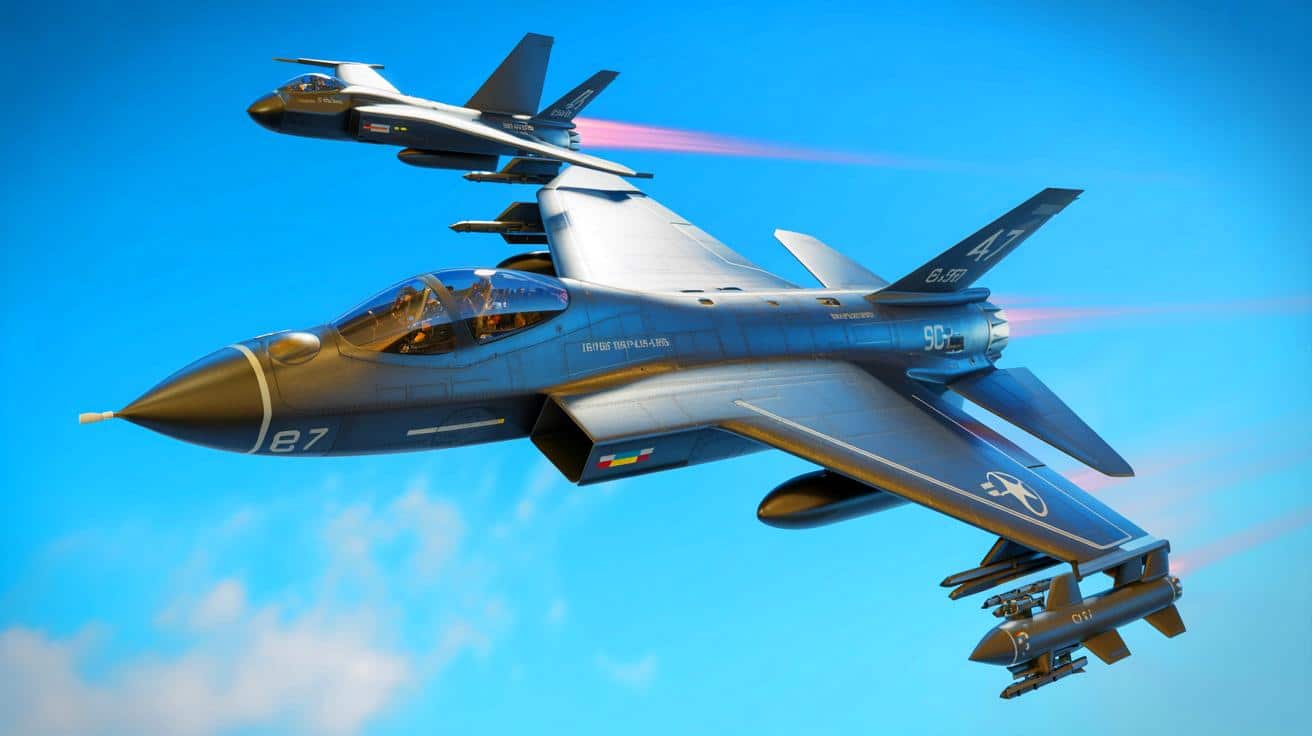
The U.S. Air Force is embarking on an ambitious project, aiming to counter emerging global threats by developing the F-47 stealth fighter jet, a sixth-generation aircraft. This initiative marks a significant leap in military aviation, with Boeing at the helm of production. The Air Force anticipates the F-47 to take its maiden flight by 2028. General David Allvin, the Air Force Chief of Staff, emphasized the urgency of this development during a recent keynote address, underscoring the need for rapid advancement in response to evolving global security challenges. The F-47 is poised to succeed the F-22 Raptor, promising unmatched capabilities and technological advancements.
The F-47’s Advanced Capabilities
The F-47 stealth fighter is designed to be a game-changer in aerial warfare. It boasts advanced stealth features, modern sensors, and a powerful engine capable of exceeding Mach 2 speeds. One of its most notable innovations is the integration of autonomous drone wingmen, a feature that could redefine combat strategies. The jet’s combat radius is expected to surpass 1,000 nautical miles, providing the U.S. Air Force with unprecedented reach and flexibility in operations.
These advancements are part of a broader strategy to maintain U.S. air superiority. The F-47 is not merely an aircraft but a component of a comprehensive system designed to ensure dominance in the skies. This approach reflects a shift in military strategy, emphasizing the need for adaptability and technological superiority in an increasingly complex global environment.
Production and Timeline Challenges
The timeline for developing the F-47 is ambitious, with the Air Force aiming for operational readiness by 2028. This urgency stems from the need to address rising global threats in a non-permissive environment. Boeing, tasked with leading the production, has already expanded its fighter production facilities in St. Louis to accommodate the new program.
While the development phase is slated to last through fiscal 2030, officials suggest the possibility of the F-47 becoming operational ahead of schedule. However, meeting this timeline may require some features, such as next-generation engines, to be integrated post-launch. The Air Force's commitment to rapid development is underscored by its investment in advanced technologies and streamlined processes to expedite production.
Leadership Changes and Future Prospects
The announcement of the F-47 comes at a time of significant leadership transitions within the Air Force. General David Allvin is preparing for retirement, and questions remain regarding his successor. Despite this uncertainty, Air Force Secretary Troy Meink has emphasized the need for continuity and steady progression in modernization efforts.
Meink highlighted the mixed progress across various programs, noting successes like the B-21 Raider alongside challenges such as delays with the Sentinel ICBM. He assured stakeholders that decisive actions on stalled initiatives are forthcoming. This period of transition presents both challenges and opportunities for the Air Force as it navigates leadership changes while pursuing ambitious technological advancements.
Strategic Importance of the F-47 Fleet
The Air Force plans to acquire a fleet of at least 185 F-47 jets, a move that underscores the strategic importance of maintaining air superiority. This fleet size would match or exceed the current F-22 Raptor fleet, signaling a commitment to robust defense capabilities. General Allvin articulated the necessity of dominating the skies, suggesting that the F-47 is central to achieving this objective.
The jet has already undergone prototype testing, providing valuable insights into its capabilities and potential. However, the path to full operational readiness involves navigating technological, logistical, and strategic challenges. As the Air Force progresses with this ambitious project, the F-47 is set to play a pivotal role in shaping the future of aerial combat and ensuring national security.
As the U.S. Air Force advances with the F-47 program, questions remain about the broader implications of this technological leap. How will the integration of autonomous systems and advanced stealth capabilities influence future military strategies? What role will these advancements play in maintaining global peace and security in an ever-evolving geopolitical landscape?




Wow, a robot fighter jet! Science fiction is becoming science reality. 🚀
Wow, this sounds like something out of a sci-fi movie! Are we ready for pilotless jets? 🤔
How reliable are these autonomous systems in combat situations?
I’m skeptical. Can these drones really perform as well as human pilots in complex situations?
This is amazing! But what happens if the AI goes rogue? 🤖
Thank you for this insightful article! The future of aerial combat seems exciting. 😊
With all this technology, will human pilots become obsolete too?
How will the Air Force ensure these drones are secure from hacking? Cybersecurity must be a priority.
Great article, thank you for keeping us informed! 😊
Isn’t this just an escalation in the arms race? We need to focus on peace instead of building more weapons.
I can’t wait to see these in action. The future is now! ✈️
Is this really going to make China’s military obsolete? Sounds too good to be true.
Seems like a huge investment. How much is this costing taxpayers?
The F-47 looks like something out of a sci-fi movie. Incredible!
What’s the environmental impact of these new jets? 🌍
How does the F-47 compare to the F-22 in terms of capabilities?
Are we ready for the ethical implications of autonomous combat drones?
Fantastic news! The future of warfare is here. 🛩️
What happens if the AI systems are hacked? That’s a bit scary.
Interesting, but I hope this doesn’t escalate global tensions.
Can these jets be controlled remotely, or are they fully autonomous?
When will we get to see the F-47 in action? Can’t wait!
With leadership changes, will the program stay on track?
It sounds impressive, but I wonder about potential malfunctions or glitches.
Is this part of the Space Force’s jurisdiction too? 🛰️
Hope this doesn’t lead to an arms race. The world needs peace.
Will these jets be used for defense only, or offensive missions too?
How will this affect jobs for human pilots? 🤔
Seems like a game-changer, but what about international regulations?
Fascinating read. The future of warfare is going to be very different.
Can drones really replace human intuition in combat?
This sounds like a plot from a futuristic novel!
Any chance we’ll see these jets at an air show soon? ✈️
Why not invest this money in peaceful technologies instead?
Is Boeing also working on commercial versions of these technologies?
Will the F-47 be part of joint NATO operations?
How does the F-47 handle in poor weather conditions?
Very informative article, thanks for the update! 👍