


| IN A NUTSHELL |
|
In a move that underscores the growing importance of sustainable and reliable energy sources, Amazon is embarking on a groundbreaking project to power its data centers with small modular nuclear reactors (SMRs). The initiative, situated near Richland, Washington, is a direct response to a recent service outage that disrupted operations for millions of users. By investing in nuclear technology, Amazon aims to ensure uninterrupted power for its Amazon Web Services (AWS), a cornerstone of its business contributing over $123 billion in annual revenue. This project reflects a broader trend among tech giants to secure bespoke power solutions that meet increasing energy demands while minimizing environmental impact.
Amazon’s Strategic Shift to Nuclear Energy
The decision to adopt nuclear power is not merely about averting outages. It represents a strategic pivot towards sustainable energy solutions. Amazon’s AWS has grown to become a critical infrastructure component for over 1,000 companies worldwide. Thus, the reliability of power supply is paramount. By opting for nuclear energy, Amazon is not only addressing immediate power stability needs but also contributing to long-term sustainability goals. Nuclear power, known for being a zero-emission energy source, aligns with the company’s commitment to reducing its carbon footprint.
This initiative is part of a larger movement among tech companies to embrace nuclear energy. As data centers become increasingly vital, the demand for stable and clean energy sources is surging. Companies are investing in Generation IV reactor technology, which promises enhanced safety and efficiency. This trend is indicative of a shift in how corporations view their energy responsibilities, balancing operational needs with environmental stewardship.
The Revolutionary Xe-100 SMR
At the heart of Amazon’s nuclear initiative is the Xe-100 Small Modular Reactor (SMR) developed by X-Energy. This High-Temperature Gas-cooled Reactor (HTGR) employs TRISO-X fuel, consisting of uranium particles encased in durable carbon and ceramics. This innovative fuel design enhances safety and efficiency, offering a self-regulating nuclear reaction.
The Xe-100 generates 80 MWe of power, a modest output compared to traditional reactors. However, its compact design allows for scalability and ease of production. These reactors can be manufactured in factories and transported to sites, significantly reducing construction costs and time. Furthermore, their small land footprint and simplified engineering requirements make them an attractive option for companies seeking sustainable power solutions.
Scaling Up: The Cascade Advanced Energy Facility
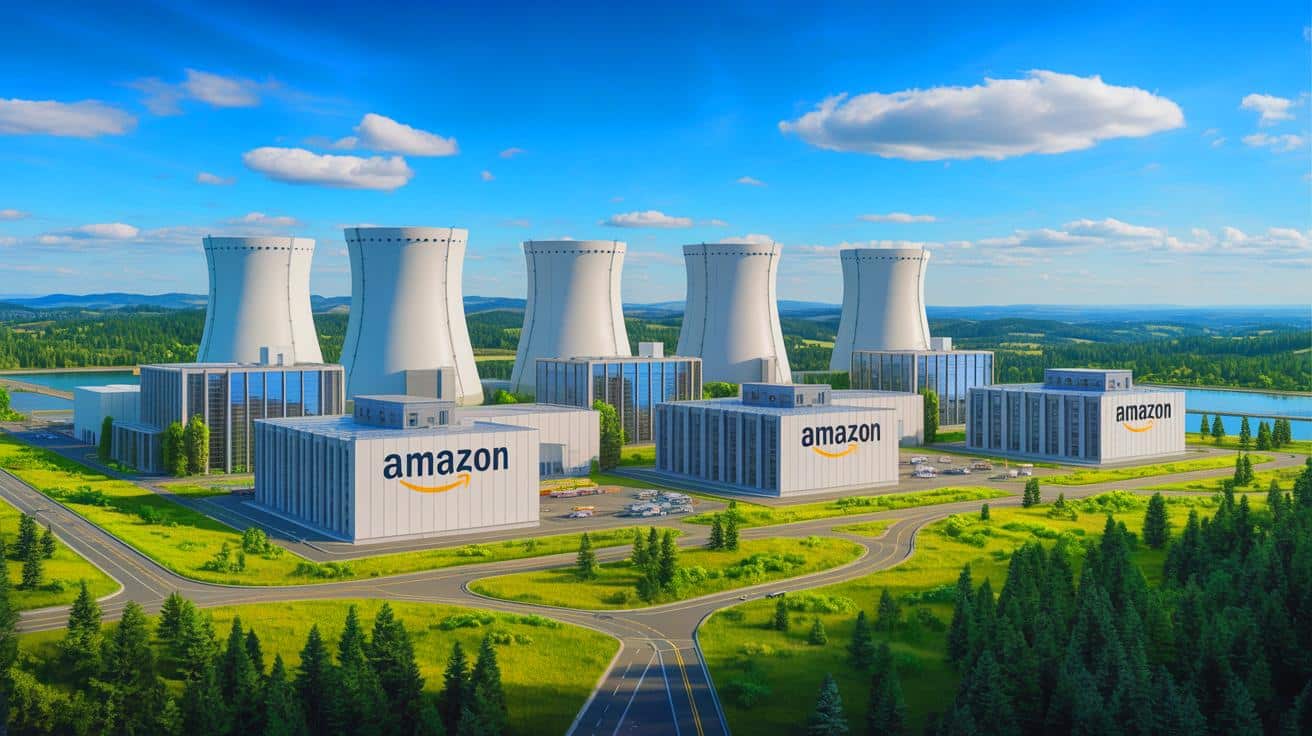
The Cascade Advanced Energy Facility, slated to begin construction by the decade’s end, exemplifies the scalability of SMRs. Initially, it will host four reactors with a combined output of 320 MWe, with plans to expand to twelve reactors producing 960 MWe. This flexibility allows Amazon to adjust power capacity in response to evolving demands.
The project represents a significant investment in the future of energy and technology. Amazon’s ambition to introduce 5 GW of nuclear power to the U.S. by 2039 highlights the potential of SMRs to transform the energy landscape. This capacity could power approximately 3.8 million homes, underscoring the impact of such initiatives on national energy infrastructure.
“The Plane That Can Survive Nuclear War” Inside America’s $13 Billion Doomsday Jet Ready for 2036
“This project isn’t just about new technology; it’s about creating a reliable source of carbon-free energy that will support our growing digital world,” said Kara Hurst, Amazon’s chief sustainability officer.
Implications for the Energy and Tech Sectors
Amazon’s nuclear venture carries profound implications for both the energy and technology sectors. As global energy demands rise, the need for innovative solutions becomes increasingly urgent. SMRs offer a promising avenue, combining low emissions with reliability and scalability.
Moreover, the integration of nuclear technology into corporate strategy signifies a paradigm shift in how companies approach energy consumption. By investing in nuclear power, Amazon and its peers are setting a precedent for others to follow. This could spur further advancements in reactor technology, driving down costs and facilitating wider adoption.
The success of such projects will likely influence policy and regulatory landscapes, as governments and industries collaborate to harness the benefits of nuclear energy. The potential for SMRs to supply vast amounts of clean energy positions them as a key player in future energy strategies.
Amazon’s initiative to power its data centers with small modular nuclear reactors marks a significant milestone in the intersection of technology and energy. As companies seek sustainable solutions to meet growing demands, the role of nuclear power in corporate strategies is set to expand. How will the adoption of SMRs influence future energy policies and technological developments? The answers may reshape the energy sector for decades to come.



This is a huge step for Amazon! Are they planning to expand this to other regions as well? 🌍
Isn’t nuclear power a bit risky for data centers? 🤔
Wow, Amazon is really thinking ahead with this one!
Is it just me or does the idea of nuclear reactors near data centers sound a bit risky? 🤔
Will these nuclear reactors be safe from natural disasters?
Wow, Amazon is really thinking ahead. Thank you for pushing the envelope! 👏
Thank you, Amazon, for pioneering sustainable energy solutions! 🌱
How do they ensure the safety of these reactors? Seems a bit worrisome!
So, when can I expect my Alexa to be nuclear-powered? 😂
How much will this project cost Amazon in total?
I hope they don’t start selling reactors on Prime next. 😂