


| IN A NUTSHELL |
|
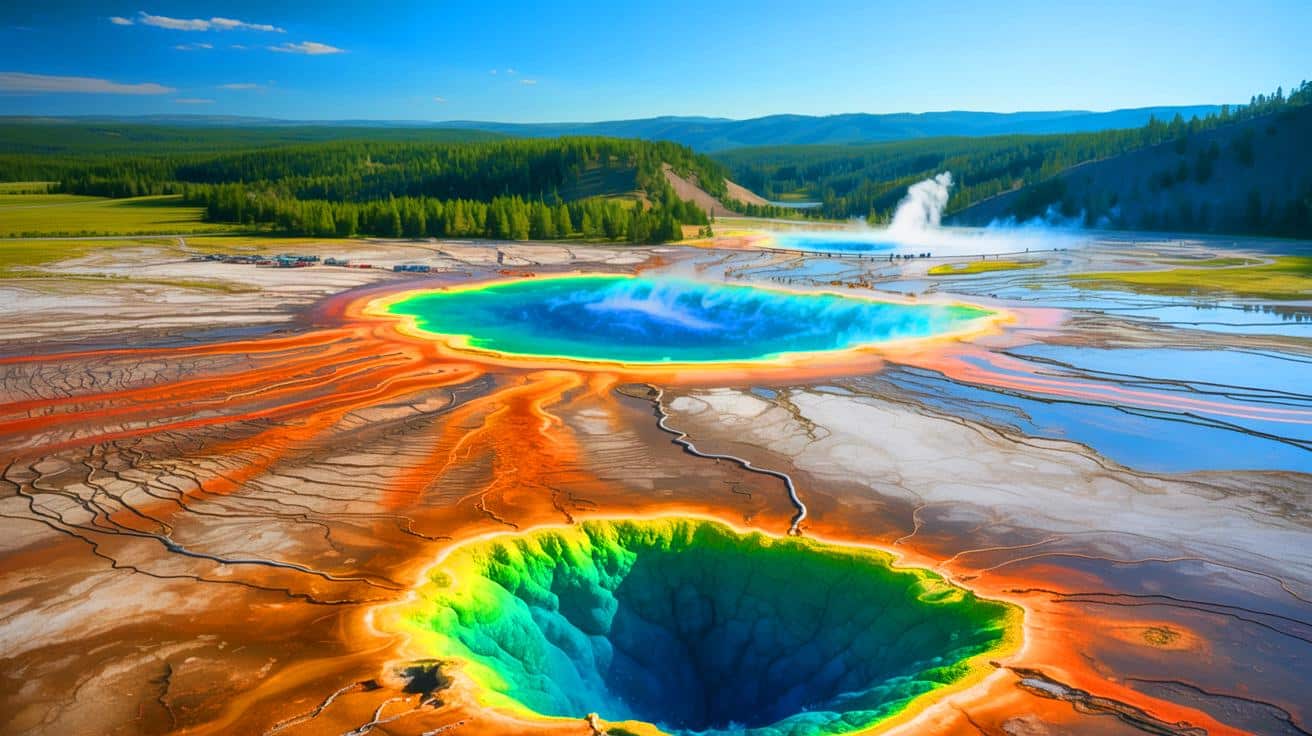
In recent months, scientists have raised concerns about a potential volcanic event that could have far-reaching consequences. The focus of these warnings is Yellowstone National Park, home to one of the world’s most closely monitored supervolcanoes. Recent studies using advanced imaging techniques have revealed unexpected findings beneath the park’s surface. These discoveries have shifted the scientific understanding of the region’s volcanic activity and highlighted new areas of concern. As researchers continue to investigate these developments, questions remain about what this means for the future of Yellowstone and the global implications of a potential eruption.
New Techniques Uncover Hidden Magma Reservoirs
In a groundbreaking study, scientists have utilized cutting-edge imaging technology to map the subsurface of Yellowstone National Park with unprecedented clarity. This research, spearheaded by the U.S. Geological Survey in collaboration with leading universities, employed magnetotelluric techniques to detect shifts in the Earth’s electromagnetic field. Such shifts, often induced by natural phenomena like lightning or solar storms, helped researchers identify areas where molten rock might be present.
The study uncovered four distinct magma reservoirs located between 2.5 and 6.8 miles beneath the caldera. These reservoirs contain rhyolitic magma, known for its high silica content and explosive potential. While these magma bodies are not entirely liquid, they consist of a thick mix of crystal and melt. This revelation significantly alters the risk assessment for potential eruptions, particularly since one of these reservoirs matches the volume of magma expelled during the Mesa Falls eruption 1.3 million years ago.
Understanding the composition and location of these magma pockets is crucial for predicting future volcanic activity. The presence of these reservoirs challenges previous assumptions about the region and prompts a reevaluation of eruption risks in Yellowstone.
The Shifting Danger Zone in Yellowstone
Recent data has prompted scientists to focus their attention on the northeastern section of Yellowstone's caldera. This area has revealed a direct connection between shallow rhyolitic magma and deeper basaltic heat, which acts as an engine supplying heat that could eventually melt more rock. This interconnected system poses a long-term concern as it may grow the magma volume over centuries.
In contrast, the western side of the caldera shows signs of cooling, with magma gradually solidifying. This suggests a decreased likelihood of eruptions in this area in the foreseeable future. However, the northeast remains a focus of study due to its potential for increased volcanic activity.
Volcanologist Larry Mastin of the USGS emphasizes that while current melt fractions do not indicate an imminent eruption, the region's thermal evolution and connectivity are critical factors. Changes in the volcanic system can occur over decades, not just millennia, making ongoing monitoring essential.
Potential Impact of a Super-Eruption
While there is no immediate threat of a catastrophic eruption at Yellowstone, understanding the potential impact is crucial for preparedness. The park has experienced three significant eruptions in the last 2.1 million years, each reshaping landscapes and affecting global climate.
In a worst-case scenario, geophysical models predict that a Yellowstone eruption would begin with smaller explosive events, leading to a sudden release of pressure as magma chambers connect. This could result in a massive eruption with ash plumes reaching the stratosphere within minutes, triggering pyroclastic flows and widespread ash fallout.
The impact would be felt far beyond the immediate vicinity. Cities like Chicago and San Francisco, along with parts of eastern Canada, could experience significant ash deposits. This would disrupt power grids, agriculture, and air travel. The broader consequences would unfold in the atmosphere, affecting global weather patterns and climate.
Long-Term Global Effects and Preparedness
A Yellowstone-scale eruption could inject sulfur dioxide into the atmosphere, forming sulfate aerosols that block sunlight and cool the planet. Historical eruptions, such as the 1815 Tambora event, have demonstrated how such cooling can lead to global crop failures and famine.
Models suggest that a significant Yellowstone eruption could lower global temperatures by up to 7.2°F, with more profound effects in parts of North America. This cooling effect could last for decades, impacting agriculture, shifting monsoon patterns, and causing ecological disruptions worldwide.
Despite the magnitude of these potential effects, scientists stress that Yellowstone is not "overdue" for an eruption. The notion of regular eruption cycles is a misconception. The average interval between eruptions is based on limited data and does not provide statistical certainty.
As research advances, tools like InSAR, multi-gas sensors, and magnetotelluric imaging offer geologists a clearer view of the underground activity at Yellowstone. While predicting the exact timing of an eruption remains challenging, scientists are gaining a better understanding of where it might begin.
As scientists continue to study Yellowstone's volcanic activity, the findings underscore the importance of ongoing monitoring and preparedness. While the threat of an imminent eruption remains low, the evolving landscape beneath Yellowstone serves as a reminder of the dynamic forces at play beneath the Earth's surface. What further insights can researchers uncover to help mitigate the risks associated with such natural phenomena?

Wow, hidden magma? That sounds like the plot of a disaster movie! 🎬🌋
Wow, that’s both fascinating and terrifying! What are the chances of an eruption happening in our lifetime? 😬
Thanks for the update! Always fascinating to learn more about Yellowstone’s underground mysteries.
Great article, but are these findings published in a peer-reviewed journal? I’d like to see the data.
Should we be worried about this? How likely is an eruption in our lifetime? 🤔
Anyone else worried about their summer road trip to Yellowstone now? 🏕️🤔
Interesting article, but isn’t this just fear-mongering? Yellowstone’s been fine for ages.
Thanks for the update! It’s amazing what technology can reveal about our planet. Keep up the good work! 👏
How do these new findings change the current eruption prediction models?
How do these new findings compare to previous assessments of the eruption risk at Yellowstone?
So cool! Science never ceases to amaze me. Keep up the great work, researchers!
Is there any way to predict when these magma reservoirs might lead to an eruption?