


| IN A NUTSHELL |
|
The mysterious craters that have appeared in the Siberian permafrost continue to captivate scientists and the public alike. Since their discovery in 2014, these holes have sparked numerous theories regarding their formation. Initially, ideas ranged from meteor impacts to underground gas explosions. A recent study by a team of geoscientists from the University of Oslo, led by Helge Hellevang, offers a fresh perspective. Their new model suggests that the unique geological conditions of the Yamal and Gydan peninsulas might be responsible. This revelation could bring us closer to understanding why these enigmatic structures have formed exclusively in this region.
Unraveling the Mystery of Siberia’s Craters
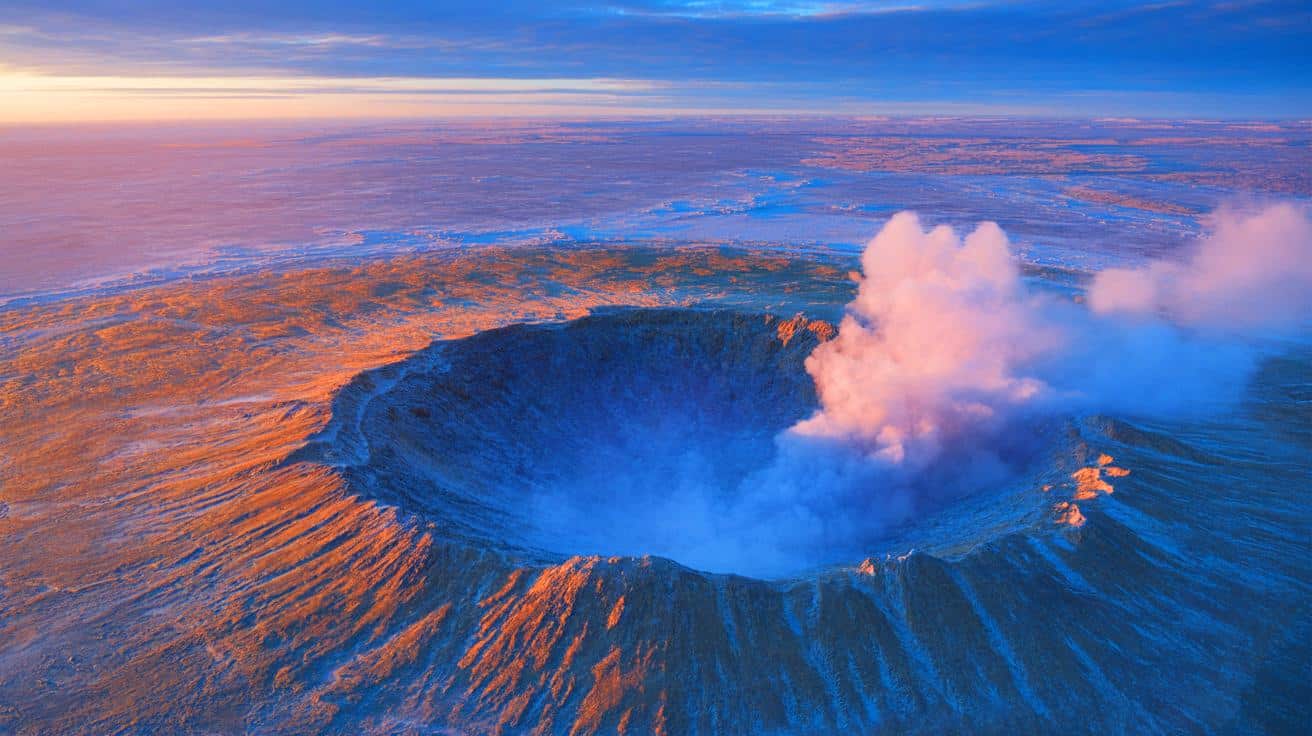
The first known crater in the Siberian permafrost was discovered on the Yamal Peninsula in 2014. This massive hole, measuring approximately 98 feet across and over 164 feet deep, was surrounded by debris, suggesting explosive origins. Scientists have since identified several similar craters in the region, all of which display steep, machine-cut-like walls.
Helge Hellevang and his team have introduced a compelling theory. Unlike previous models that attributed the craters solely to permafrost dynamics, their research points to a combination of factors. They propose that heat and natural gas from deep within the earth’s crust, escaping through fault lines, are crucial to the formation of these craters. These geological conditions are unique to the Yamal and Gydan peninsulas, which sit on top of one of the world’s largest natural gas reserves.
The Role of Methane and Climate Change
Hellevang's research highlights methane's significant role in the formation of these holes, now termed gas emission craters (GECs). The buildup of pressurized methane beneath the permafrost is believed to cause explosive eruptions. However, while methane is central to the model, permafrost conditions alone cannot account for the phenomena.
The team argues that climate change exacerbates the situation. Warming temperatures lead to the thinning of permafrost, creating a fragile barrier above the methane pockets. This thinning, in combination with surface water from growing lakes, may weaken the surface further, allowing gas to break through. Despite this, the exact process remains complex and requires more investigation and empirical data.
Challenging Previous Theories
Previous theories focused heavily on internal permafrost processes. Researchers initially believed that elements like gas hydrates and cryopegs within the permafrost were solely responsible. However, this model has its limitations. If internal processes were the only factors, similar craters would likely appear in other Arctic regions with similar permafrost conditions.
Hellevang's team challenges this notion by presenting evidence that suggests external geological forces are also at play. Their study indicates that the explosive power required to create these craters cannot be generated by permafrost-internal processes alone. The involvement of deeper geological dynamics, such as the movement of natural gas, offers a more plausible explanation.
Future Implications and Questions
This new model provides a more comprehensive understanding of the mysterious Siberian craters. However, it also raises new questions. The theory relies on geological conditions unique to the Yamal and Gydan peninsulas. This specificity means that further research is necessary to determine whether similar processes might occur elsewhere.
Moreover, while the model accounts for many observed features, it requires validation through real-world measurements. The scientific community eagerly awaits further studies that could confirm or challenge Hellevang's findings. These insights could not only unravel the mystery of the craters but also enhance our understanding of permafrost dynamics in a warming world.
The study of Siberia's mysterious craters continues to evolve, with each discovery leading to more questions. As researchers delve deeper, they not only seek to understand these phenomena but also consider the implications of climate change and geological activity in other regions. How might these findings influence our approach to global geological mysteries and climate change mitigation?

Wow, this is fascinating! Are there any other places on Earth where similar craters have been found? 🤔
Wow, those craters sound like something out of a sci-fi movie! 😮
Can these methane bursts be predicted, or are they totally random?
So, basically, Siberia is like Earth’s acne? 😂
Thanks for the informative article. It’s great to see science in action!
Can this methane release have a significant impact on global warming?
So, are we talking about a Siberian version of Old Faithful here? 🌋
Thank you for the detailed explanation! It’s scary to think about what climate change is doing. 🙏
Does this mean other permafrost regions could start “exploding” too? 😬
Finally, a plausible explanation for those giant holes. Kudos to Hellevang’s team!
Has anyone tried to measure the amount of methane released from these craters?
How big of a climate threat are these methane bursts compared to other emissions?
This sounds like something out of a sci-fi movie! 😮
This is fascinating! I’d love to see more research on this topic.
I’m still not convinced. Couldn’t this just be a natural phenomenon unrelated to climate change?
Are there any plans to monitor these craters with drones or satellites?