


| IN A NUTSHELL |
|
As the United States continues its push towards renewable energy, the anticipation for “crane day” marks a pivotal moment in the realm of wind power. On this day, a significant milestone in wind turbine construction will occur, with components being assembled to create a new, powerful rotor. This innovative project, led by Pecos Wind Power, involves a turbine with a rotor diameter exceeding 100 feet and blades measuring 47.5 feet. Though still in development, this project promises to revolutionize distributed wind systems in the U.S., offering a glimpse into a future of enhanced performance and design.
Introducing Small and Medium-Sized Wind Turbines in the U.S.
The introduction of small and medium-sized wind turbines is gaining momentum in the United States, thanks in part to the support of the National Renewable Energy Laboratory’s Competitiveness Improvement Project (CIP). This initiative aims to boost wind energy at the sub-megawatt level, where smaller turbines like those from Pecos Wind Power can make a significant impact. Despite their smaller size compared to towering 300-foot turbines, these units pack a powerful punch.
The Pecos Wind Power turbine, with an 85 kW capacity, features blades stretching 47.5 feet each. The design allows for energy capture in both lower and moderate wind environments, ensuring efficiency and reliability. This small-scale turbine is designed to minimize costs, making wind power more accessible, especially in rural areas. Pecos Wind Power aims to eliminate the financial barriers that have hindered widespread adoption of wind energy, making the technology both affordable and reliable.
How Does Federal Funding Fit Into the Grand Scheme of It All?
Federal funding has played a crucial role in advancing small wind energy projects. The Competitiveness Improvement Project (CIP), launched in 2012, has allocated around $15 million in Department of Energy funding to small wind companies. This funding has enabled these companies to achieve product certification, ensure grid compatibility, and optimize their designs. In its latest funding round, CIP distributed approximately $2.9 million across 11 companies, supporting diverse projects ranging from micro wind turbines to modular energy storage solutions.
Pecos Wind Power’s turbine project stood out in the 2022-2023 CIP cohort due to its innovative blade design. The blade design reduces the levelized cost of energy (LCOE) while enhancing overall turbine performance. This innovation is crucial for promoting decentralized wind energy systems across the U.S. Other funded companies, such as Xflow Energy, Bergey Windpower, and Windward Engineering, also strive to address market challenges, contributing to a broader push for decentralization in the wind energy sector.
The Sheer Significance of Crane Day From an Early Stage
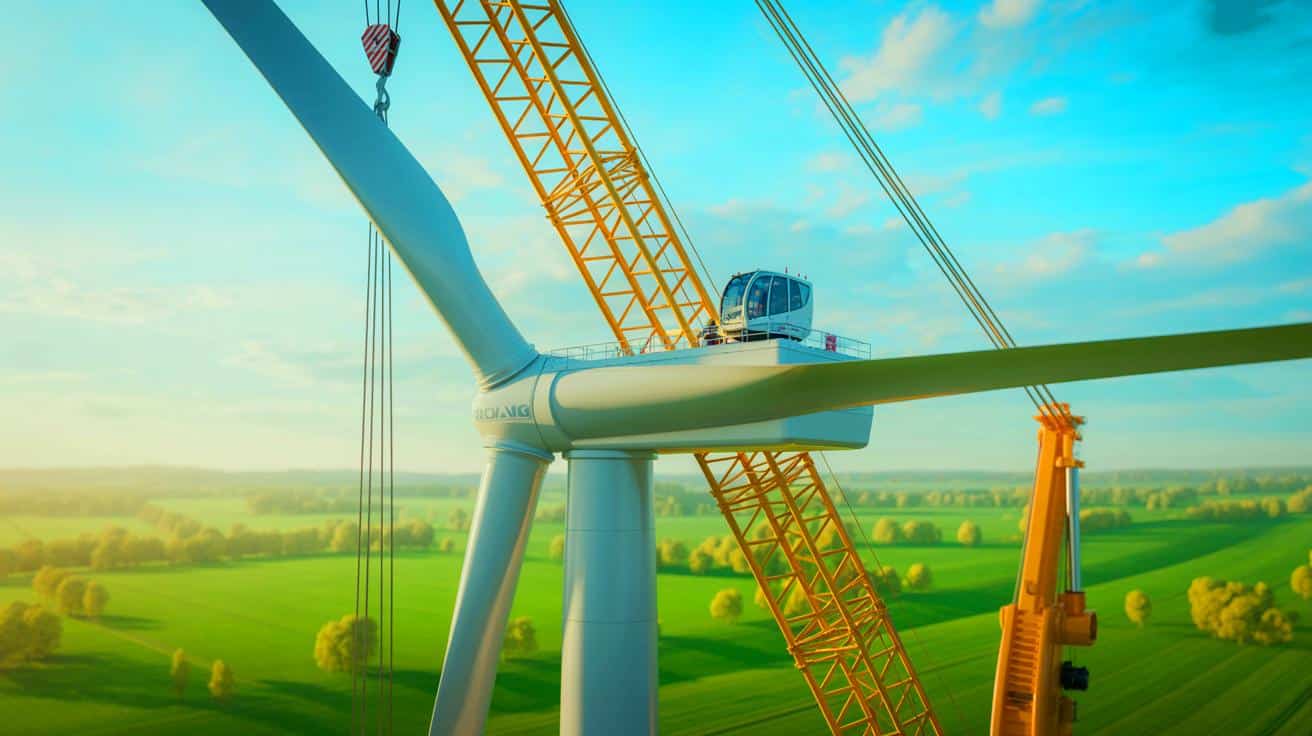
Crane day marks a critical point in the lifecycle of a wind turbine, involving the physical lifting of the turbine onto its tower. This moment is significant for the commercial deployment of high-performing turbines like those from Pecos Wind Power. Although the 47.5-foot blade is still in the design and tooling phase, the anticipation surrounding crane day is palpable.
As Pecos Wind Power prepares its initial prototypes, the next steps involve manufacturing and testing, followed by certification for market readiness. Even in its developmental stages, the significance of this wind project is clear. The progress made in blade development suggests a shift towards wind products that can compete with utility-scale options in terms of performance and cost. The impending crane day for this turbine, designed for factories, farms, and communities, signals a new era in the U.S. wind energy landscape.
The Broader Future of Wind and Anticipation for Crane Day
The future of wind energy in the U.S. looks promising as the nation embraces distributed energy solutions. The rotor, spanning over 100 feet, with its exceptional blades, may outperform utility-scale turbines while fostering a rise in smaller wind solutions. Crane day for Pecos Wind Power’s turbine will symbolize a leap forward in the U.S. energy game, with the iconic blades set to rise skyward.
Pecos Wind Power's vision extends beyond merely selling turbines, representing a transformative step in the American energy sector. This initiative promises to enhance the country's renewable energy capabilities and inspire similar projects nationwide. As the U.S. anticipates crane day, the broader implications for the energy landscape are profound.
The anticipation surrounding crane day highlights a significant shift in the U.S. energy landscape, driven by innovation and federal support. As Pecos Wind Power and similar companies push the boundaries of wind energy, the potential for more efficient, decentralized systems becomes increasingly tangible. What new challenges and opportunities will emerge as the U.S. continues to embrace distributed wind energy solutions?

Wow, this is a game changer for renewable energy! 🎉
Wow, a 100-foot rotor! How does it compare in terms of efficiency with traditional turbines? 🤔
How will Pecos Wind Power’s turbine performance compare to traditional utility giants?
Congratulations to Pecos Wind Power for this achievement! Excited to see where this leads. 🌟
Is there any environmental impact from these smaller turbines?
The idea of distributed energy solutions is great, but how reliable are these smaller turbines?
Thank you for the insightful article! It’s exciting to see innovation in clean energy. 😊
Are these turbines noisy? I live near a potential installation site.
I wonder how much noise these new turbines produce? Anyone know?
This feels like a real David vs. Goliath story in the energy sector! ⚔️
Finally, some innovation in wind energy! Go Pecos Wind Power! 💪
Can individuals purchase these turbines for personal use?
It’s impressive how far wind technology has come. More power to Pecos Wind Power!
How long until we see these turbines in every rural community?
Is the DOE funding enough to support widespread adoption of these turbines?
What are the main challenges Pecos Wind Power faces with this project?
Will these turbines require special maintenance compared to larger ones?
The design of the blades is fascinating—any insights on the R&D process?
This article is a bit too optimistic. What about the downsides?
Are there any plans to expand Pecos Wind Power’s efforts internationally?
What other companies are involved in similar projects, and how do they compare?
Hope this leads to more affordable energy solutions for everyone. 🤞
Is there a timeline for when these turbines will be fully operational?
The future looks bright for clean energy, thanks to projects like this. 🌞
How does the turbine’s performance in low wind compare to others?
Seems like a lot of hype—let’s see some results first!
Are there any tax incentives for adopting these wind turbines?
What are the expected cost savings for consumers using these turbines?
How do these smaller turbines handle extreme weather conditions?
Does Pecos Wind Power have any partnerships with local governments?
Is Pecos Wind Power planning to expand its workforce for this project?
Sounds like great progress, but what about the wildlife impact? 🐦
How does this turbine’s power output compare to solar panels?
The article mentions “crane day” a lot. What’s the big deal?
Is this innovation something we could see in urban areas, too?
Great read! Looking forward to seeing this revolutionize energy. ⚡
What happens if there’s a mechanical failure in these small turbines?