



| IN A NUTSHELL |
|
Amidst the vast biodiversity of Australia, one creature stands out not for its ferocity or agility, but for its sheer size and elusiveness—the Gippsland giant earthworm, known scientifically as Megascolides australis. Found in the secluded valleys of southeastern Victoria, this remarkable species is a testament to the diverse and often surprising natural wonders of the continent. Growing up to ten feet in length, these earthworms offer a glimpse into a hidden world beneath our feet. Yet, despite their size, they remain shrouded in mystery, emerging only under specific conditions and vanishing just as quickly into the earth.
Understanding Megascolides Australis
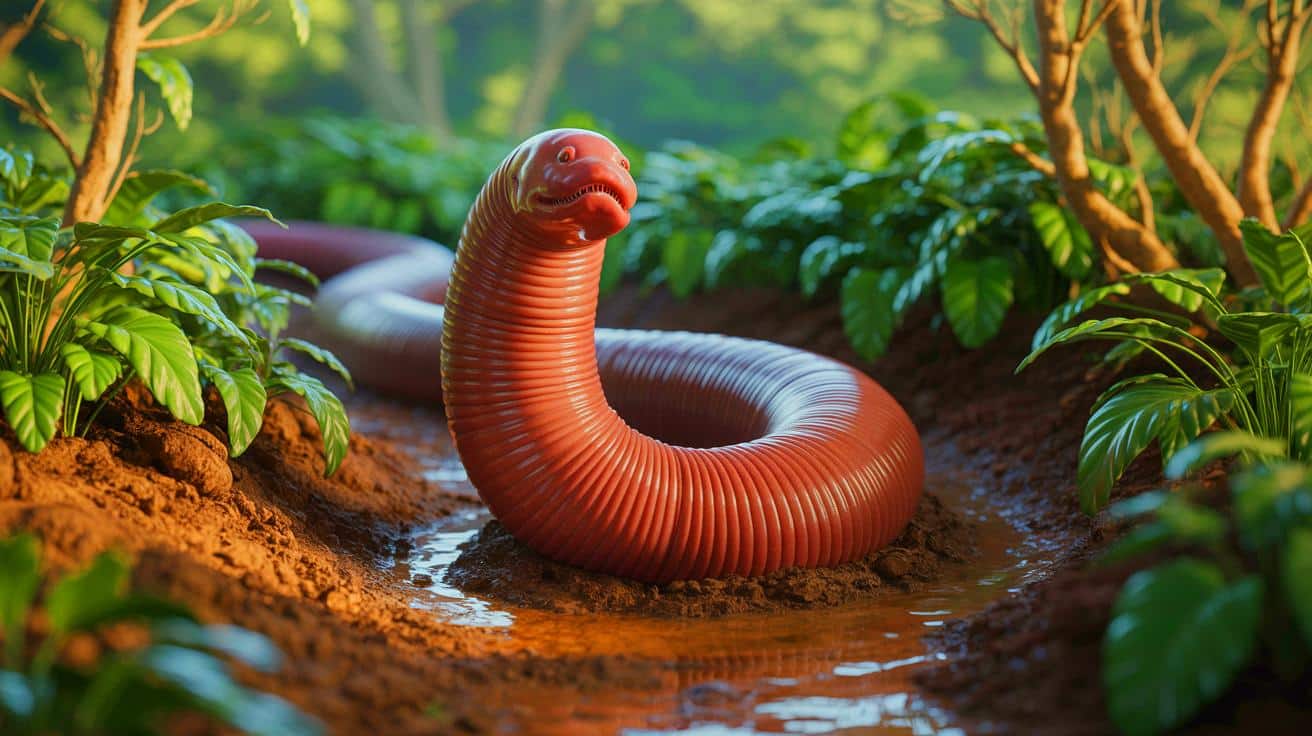
The Gippsland giant earthworm is a marvel of nature, with its length averaging around three feet and a thickness of about three-quarters of an inch in adulthood. However, certain individuals can grow up to ten feet long, positioning this earthworm among the largest globally. It is only outdone by Microchaetus rappi from Africa, which holds the record with a specimen measuring over twenty-two feet in length.
Despite its impressive size, the Gippsland giant earthworm is notoriously difficult to observe. It resides in the loamy, moist soils of the Bass River Valley in Victoria, venturing above ground primarily after heavy rains or flooding. This elusive nature has contributed to its classification as a vulnerable species by the International Union for Conservation of Nature. The earthworm’s subterranean lifestyle is punctuated by a unique behavior: when threatened, it emits a curious blend of whistles and crackles as it retreats further into the wet soil.
Local farmers recount tales of fields turning “red with blood” when previously untouched lands housing these earthworms were first plowed. Such anecdotes highlight the striking impact of human activity on this delicate ecosystem and underscore the challenges faced in studying these creatures.
The Enigma of Reproduction
The reproductive habits of Megascolides australis remain largely enigmatic, a consequence of their secretive nature and the inability to breed them in captivity. These earthworms are hermaphroditic, possessing both male and female reproductive organs. During mating, they exchange sperm, which is then used to fertilize their own eggs.
Egg-laying occurs in spring or early summer, with each egg containing a single developing worm. Remarkably, it takes over a year for the young worm to hatch, highlighting a slow reproductive cycle that adds to the species' vulnerability. This prolonged development period also emphasizes the importance of protecting their natural habitat to ensure their survival.
The mystery surrounding their reproduction is compounded by the lack of extensive research opportunities, as these worms seldom surface from their underground dwellings. This has led to a scarcity of data, leaving many questions about their life cycle and population dynamics unanswered.
Challenges and Conservation Efforts
Conservation of the Gippsland giant earthworm is fraught with challenges, primarily due to its limited distribution and the specific environmental conditions it requires. The species is confined to a small geographic area, making it highly susceptible to habitat disturbance.
Agricultural expansion, land development, and climate change pose significant threats to their habitat. As the demand for arable land increases, the delicate balance of the ecosystem is disrupted, putting the species at risk. Conservationists stress the importance of sustainable farming practices and habitat preservation to safeguard these earthworms.
Efforts to conserve Megascolides australis focus on raising awareness about its ecological importance and advocating for protective measures. Researchers continue to study the species, hoping to uncover more about its biology and ecology to inform conservation strategies effectively.
The Intrigue of Australia's Hidden Giants
The Gippsland giant earthworm represents just one example of the unique and often overlooked biodiversity found in Australia's ecosystems. These underground giants challenge our perceptions of earthworms and highlight the complexity of life beneath the soil.
Their presence raises intriguing questions about the unseen networks and interactions that sustain our planet's biodiversity. As we learn more about these creatures, we gain a deeper appreciation for the intricacies of nature and the delicate interdependencies that exist within ecosystems.
With ongoing research and conservation efforts, there is hope that these remarkable earthworms will continue to thrive in their natural habitat, offering insights into the wonders of life below ground.
As scientists and conservationists strive to unravel the mysteries of the Gippsland giant earthworm, one question remains: How can we balance human progress with the preservation of these extraordinary subterranean ecosystems?

Wow, ten feet long? That’s longer than my car! 🚗
Wow, 10-foot earthworms? 🐛 That’s terrifying and fascinating at the same time!
Why haven’t I heard about these giant earthworms before? This is fascinating!
How do they even measure these worms? Must be quite a task!
How exactly do these earthworms contribute to the ecosystem? 🤔
Thanks for shedding light on this unique species. We need more articles like this. 🌟
Are there any efforts to breed them in captivity, or is that impossible?
So basically, they’re the Bigfoot of the worm world? 😂
Did anyone else think it was an April Fool’s joke at first? 😂
How does one become a giant earthworm conservationist? Asking for a friend. 🐛
I had no idea these creatures existed! Thanks for the enlightening article.
It’s sad to see human activity impacting such unique creatures. We need to do better.
If they sound like thunder, imagine having them as pets! 😄
Is there any chance these worms can be found in other parts of Australia?
Is there a way for locals to help with conservation efforts?
As a farmer, I’m shocked by the impact of agriculture on these worms. Need to rethink our practices!