




| IN A NUTSHELL |
|
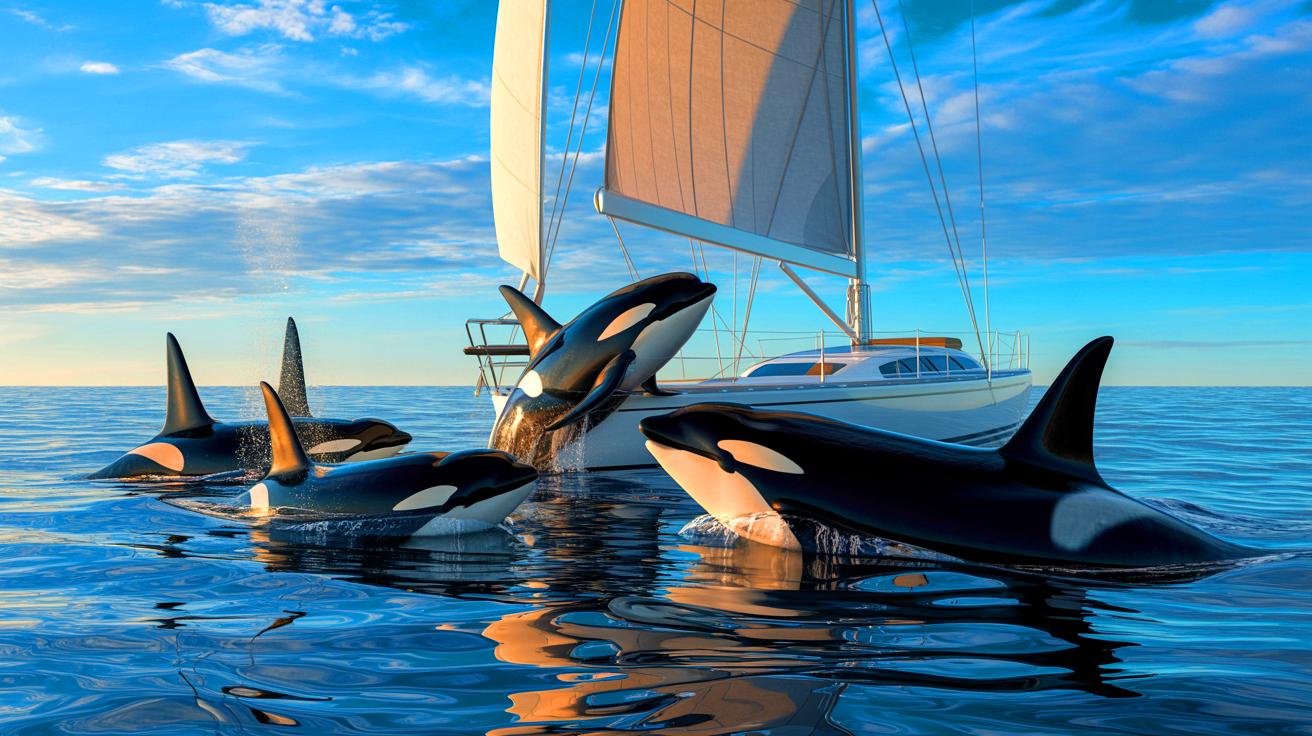
In recent weeks, the calm waters off the Spanish coast have been the site of unexpected turmoil as orcas have been engaging in a series of striking interactions with sailing vessels. These incidents, concentrated in the estuaries of Galicia and northern Portugal, have left crews frightened and boats significantly damaged. While some observers speculate about aggressive behavior or even animal retaliation, researchers suggest a more intricate explanation tied to the social nature of these marine predators. As orcas continue to capture the attention of the maritime community and beyond, questions arise about their behavior and the implications for sailors navigating these waters.
Repeated Orca Interactions Leave Crews Shaken
On August 21, a German sailboat navigating the Vigo estuary in Galicia experienced a harrowing encounter when orcas tore off its rudder. According to the Spanish newspaper Faro de Vigo, these cetaceans continued to strike the vessel even as it was towed to safety. Just days later, on August 30, a traditional-style boat met the same fate off O Grove, while another sailboat was severely damaged in the Pontevedra estuary.
Valentín Otero, the owner of the vessel impacted near O Grove, recounted the ordeal to Faro de Vigo, saying, “We were truly terrified; in fact, we completely panicked when we realized the orcas were striking the boat.” Otero described hearing two loud thuds before spotting a large orca approximately 23 feet in length, accompanied by a smaller companion. These incidents have prompted the Spanish Civil Guard to release a video of a rescue operation, emphasizing the need for vigilance as several sailboats have been targeted in recent weeks.
The Civil Guard’s efforts underscore the urgency of the situation, as authorities remain on high alert to provide swift assistance to crews in distress. As these interactions continue, the sailing community must grapple with the challenges posed by these remarkable marine creatures.
The Enigmatic Behavior of Iberian Orcas
The Iberian orca population, classified as critically endangered, comprises fewer than forty individuals. Since 2020, these orcas have frequently interacted with sailboats traveling between Spain and Portugal. While some theories suggest a form of retribution against the vessels, many experts dismiss this notion.
Observations indicate that young orcas are primarily targeting rudders located beneath the hulls. Researchers propose that these interactions are more likely playful than aggressive. The recent increase in bluefin tuna numbers in the region, a primary food source for these cetaceans, allows them to spend less time hunting and more time engaging in playful activities.
Orcas are known for their complex behavior and intelligence. Scientists have documented surprising social rituals among these mammals, ranging from gentle physical contact, such as nibbling on a peer’s tongue, to collective games and even offerings to humans. Some populations even develop temporary trends, like swimming with a dead salmon perched on their heads.
Despite their reputation as formidable predators, orcas do not attack humans in the wild. The rare known cases of wild orca attacks are often attributed to confusion, with the animal likely mistaking a swimmer for a seal. Researchers emphasize that there is no reason to believe these incidents are targeting people on board. For now, the mystery remains unsolved, and sailors must exercise increased caution.
Understanding the Social Dynamics of Orcas
Orcas, often referred to as killer whales, belong to the dolphin family and are renowned for their sophisticated social structures. These marine mammals live in tight-knit pods, where cooperation and communication are essential for hunting and social interaction. The social bonds within orca pods are complex, with individuals participating in cooperative hunting strategies and communal activities.
These intricate social dynamics may help explain the recent interactions between orcas and vessels. Some experts suggest that young orcas, in particular, might be exploring their environment in a playful manner, using boats as objects of curiosity. This behavior aligns with the orca’s natural inclination for exploration and learning through play.
As researchers continue to study these interactions, they emphasize the importance of understanding orca behavior from a holistic perspective. By examining the social and environmental factors that influence orca behavior, scientists aim to shed light on the motivations behind these interactions and how they fit into the broader context of orca ecology.
The Broader Implications for Marine Conservation
The interactions between orcas and sailboats highlight broader concerns related to marine conservation and human-wildlife interactions. As human activities increasingly encroach on marine habitats, understanding and mitigating the impacts on wildlife becomes crucial. Conservation efforts for species like the Iberian orca are essential to ensure their survival in a rapidly changing environment.
Conservationists advocate for measures that protect critical habitats and promote sustainable practices in the maritime industry. Efforts to raise awareness about the behavior and conservation status of orcas can help foster coexistence between humans and these remarkable creatures. Initiatives that involve collaboration between researchers, policymakers, and the maritime community are vital in developing effective strategies for managing human-wildlife interactions.
As the global community grapples with the challenges of preserving marine biodiversity, the situation off the Spanish coast serves as a reminder of the delicate balance between human activities and the natural world. What steps can be taken to ensure the protection of orcas and other marine species while accommodating the needs of human endeavors?


Wow, this sounds like the plot of a marine thriller! Are the orcas just bored or are they up to something bigger? 🐋
Wow, orcas attacking boats? What do you think they’re trying to achieve with this behavior? 🤔
Interesting read, but I wonder what measures are being taken to protect both the orcas and the boats?
Thanks for the article. It’s fascinating how intelligent these creatures are!
Is there any evidence that these orca interactions are escalating due to increased human activity in their habitat?
Are these orca attacks common or is this a new phenomenon?
Great article! Thanks for shedding light on such a unique maritime issue. 🌊
I’d love to see a video of these interactions. Must be terrifying and amazing at the same time!
Why do the orcas specifically target the rudders? Is it a coincidence or something more deliberate?
Maybe the orcas are just trying to tell us something about our environmental impact. 🌊
Why are they targeting the rudders specifically? Any theories?
Is it possible to install some kind of protective measure on boats to deter the orcas?
Sounds like a scene from Jaws, but with orcas instead! 😬
Could these interactions affect the tourism and sailing industry in the region?
What measures are being taken to protect both the orcas and the sailors?
Not sure I buy the idea that this is just “playful exploration.” 🤨
Thank you for covering this story. It’s important to understand these creatures better.
Orcas are such majestic creatures! But I wouldn’t want to be on a boat with them attacking.
Maybe the orcas are just playing a game of “tag” with the boats! 😂
Do these incidents have any legal implications for sailors?
I hope scientists can figure out what’s causing this behavior soon. 🐋
Where’s the Spanish Civil Guard video? I’d like to see the rescue operation.
Could this behavior be a response to overfishing in the area?
What can be done to ensure the safety of both orcas and humans?
This is both fascinating and terrifying. Nature never ceases to amaze me!
Are there any known cases of orcas attacking humans in the wild?
Thank you for shedding light on this issue. It’s crucial we understand orca behavior. 🐬
I’ve always wanted to see orcas in the wild, but not like this!
Has there been any response from environmental groups about these incidents?
I’m skeptical about these being playful interactions. Seems more deliberate to me.
Are there specific times of the year when these attacks are more frequent?
I’d be terrified if I were on one of those boats! Thanks for the eye-opening article.
Maybe it’s a new orca trend, like the salmon hat trick mentioned in the article! 😂
Do the orcas only attack certain types of boats or any they come across?