



| IN A NUTSHELL |
|
The recent discovery of a massive iron ore deposit in Western Australia’s Pilbara region stands to revolutionize the global iron market and our understanding of Earth’s geological history. Valued at nearly $6 trillion, this deposit is not just a boon for the mining industry but a gateway to new scientific insights. As geologists continue to explore its depths, the implications reach far beyond resource extraction, potentially reshaping international trade and our comprehension of geological processes. The world watches closely as this discovery unfolds, holding the potential to redefine economic and scientific landscapes.
The Pilbara’s Geological Marvel: A New Era for Iron
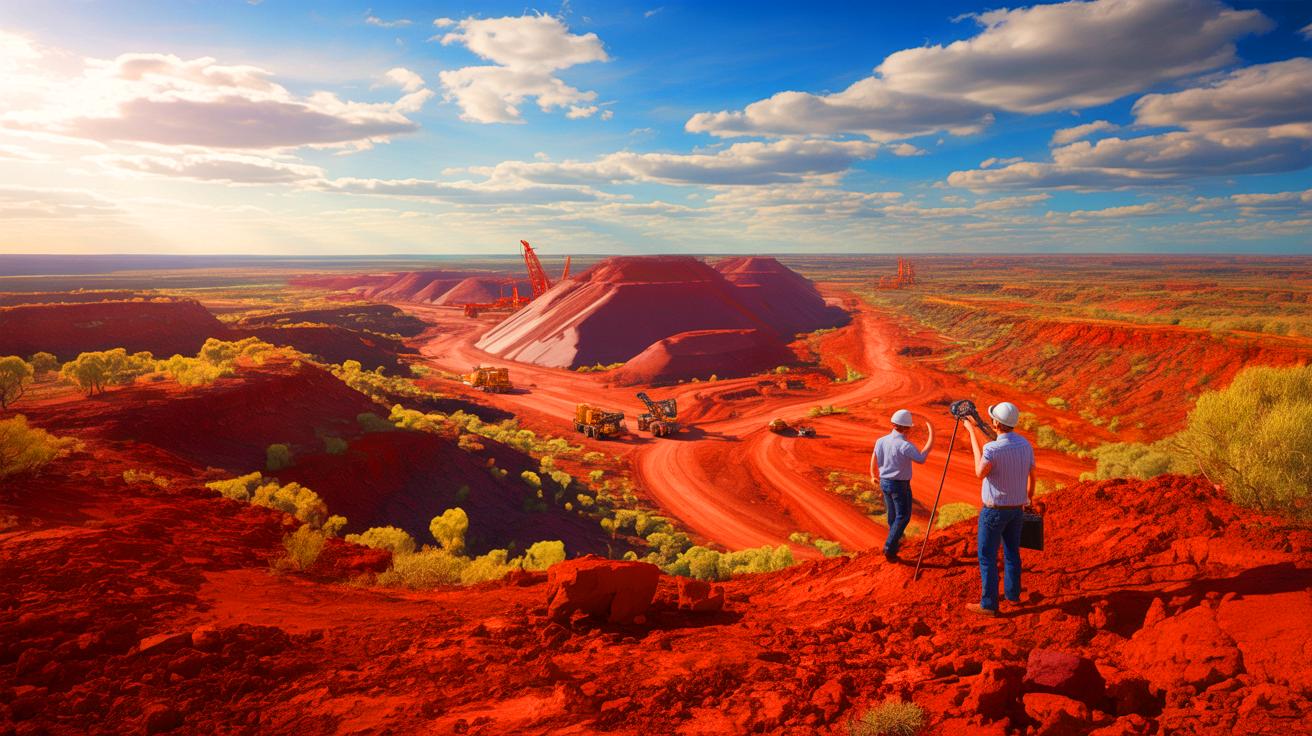
Western Australia’s Pilbara region, long known for its rich mineral resources, has revealed a new geological marvel: the largest iron ore deposit ever recorded. This discovery has fundamentally altered our understanding of the Hamersley region’s mineral wealth. Historically mined for its abundant resources, the area has unveiled new secrets thanks to cutting-edge technological advancements. These breakthroughs have enabled scientists to probe deeper into the geological formations, uncovering iron concentrations that far exceed previous estimates.
Recent geological studies have prompted a reevaluation of the age of these formations. Initially believed to be approximately 2.2 billion years old, they are now estimated to be 1.4 billion years old. This shift has significant implications for understanding the influence of ancient supercontinent cycles on mineral deposits. The dynamic movements of Earth’s crust millions of years ago seem to have created the ideal conditions for these immense mineral concentrations. This new understanding not only enhances our knowledge of Earth’s past but also opens up possibilities for future discoveries in similar geological settings.
Technological Breakthroughs in Mineral Exploration
The discovery of this extraordinary deposit can be largely attributed to modern technology. Geologists utilized advanced isotopic dating and chemical analyses, which revealed not only the vast size but also the exceptional quality of the ore. Initial estimates of 30 percent iron content have been dramatically revised to over 60 percent, placing this deposit among the richest ever found.
The insights gained from these methods extend beyond academic interest. They set the stage for more efficient and environmentally sustainable mining practices, reducing waste and improving extraction techniques. This advancement in technology not only benefits the mining industry but also sets a precedent for future explorations. As researchers continue to refine these techniques, the potential for uncovering other vast deposits grows, promising further revelations about Earth’s mineral wealth.
Global Repercussions for the Iron Industry
Australia already plays a dominant role in the global iron market, and this discovery further solidifies its influence. The magnitude of the deposit is expected to impact iron ore prices worldwide, altering economic and strategic relationships among countries dependent on iron imports. This shift could lead to the formation of new alliances and trade agreements, reshaping the global mining landscape.
Beyond the economic ramifications, the deposit challenges long-standing assumptions about Earth’s geological development. As scientists continue to study the region, they hope to uncover more about the processes that shaped our planet’s surface and its mineral wealth. These discoveries could redefine our understanding of mineral formation and encourage further exploration of similar geological settings across the globe.
Challenging Geological Theories and Inspiring Future Research
The implications of this discovery extend well beyond immediate economic benefits. The deposit has the potential to rewrite chapters of geological history, challenging long-held scientific beliefs. As geologists continue to explore the region, they aim to uncover more about the ancient processes that contributed to such immense mineral concentrations.
This discovery not only enhances our understanding of Earth’s past but also inspires future research. The insights gained could lead to further breakthroughs in geology and mining, opening up new opportunities for exploration and discovery. As the scientific community delves deeper into the mysteries of the Pilbara region, the potential for uncovering other vast mineral deposits increases, promising exciting developments in the years to come.
As the world grapples with the implications of this monumental find, one question remains: what other secrets lie hidden beneath Earth’s surface, waiting to challenge our understanding and reshape our world?


Wow, $6 trillion worth of iron? That’s a lot of metal! 🏗️
Does this mean the price of iron is going to drop significantly?
I’m skeptical. Is this just another exaggerated claim to boost market interest?
Thank you for the informative article. It’s fascinating to see how technology is changing our understanding of geology.
Can this discovery trigger any geopolitical tensions, particularly between US and China? 🤔
So, are we going to see new billionaires emerging from the mining industry because of this?
This is a game-changer for Australia. Go Pilbara! 🇦🇺
The article mentions 60% iron concentration, but how does that compare to other major deposits?
Interesting read, but I’m concerned about the environmental impact of mining such a large deposit.