



| IN A NUTSHELL |
|
SpinLaunch, a pioneering startup based in California, is poised to disrupt the satellite launch industry with its groundbreaking technology. By utilizing a massive centrifugal cannon, the company aims to propel microsatellites into low-Earth orbit more efficiently and sustainably than traditional methods. This innovative approach promises to significantly reduce costs and environmental impact, paving the way for a new era in space exploration. With substantial backing and a vision to challenge established industry leaders like SpaceX, SpinLaunch is setting the stage for potentially record-breaking satellite deployments. The question now is whether this revolutionary method will redefine the future of space missions.
A New Era of Satellite Launches
SpinLaunch is spearheading a transformative approach to satellite launches, utilizing a giant centrifugal cannon to revolutionize the industry. This novel method seeks to drastically reduce the costs associated with satellite deployment while minimizing environmental impact. The company’s ambitious Meridian Space constellation is at the forefront of this endeavor, with plans to launch the initial batch of pancake-like satellites in the near future.
These microsatellites measure 7.5 feet in diameter and weigh approximately 154 pounds. They are ingeniously stacked in a “launch bus,” a design that offers a significant weight advantage over traditional satellites. SpinLaunch aims to challenge the current record for the most spacecraft launched simultaneously, currently held by SpaceX. With strong financial backing and a history of technological achievements, SpinLaunch is well-positioned to compete with and potentially dominate established players in the market.
The Revolutionary Launch System
At the core of SpinLaunch’s innovative approach is its cutting-edge launch system, which employs a vacuum-sealed chamber and spinning arms to accelerate payloads. The Suborbital Accelerator has successfully launched ten rockets into suborbital flight, demonstrating its capabilities. These objects are spun at speeds of up to 5,000 mph, enduring forces as high as 10,000 Gs before being released into the upper atmosphere. The success of these tests provides a solid foundation for future orbital demonstrations.
One of the primary advantages of this system is its cost-efficiency. SpinLaunch anticipates that commercial launches could cost between $1,250 and $2,500 per kilogram, significantly less than SpaceX’s Falcon 9 rockets. Additionally, the absence of greenhouse gas emissions and booster rockets contributes to a more sustainable approach to space travel, addressing environmental concerns and reducing space debris.
Implications for the Satellite Industry
SpinLaunch’s innovative technology has the potential to revolutionize the satellite industry by offering a more affordable and environmentally friendly launch option. This new method challenges the status quo and reshapes the competitive landscape. The Meridian Space constellation aims to deliver high-speed communication services at a fraction of the cost of its rivals, potentially democratizing access to space-based services.
The company plans to expand its capabilities with a larger Orbital Accelerator, which could launch up to five commercial payloads daily. If successful, this ambitious goal would significantly increase the frequency and accessibility of satellite launches, opening new opportunities for industries reliant on satellite technology. However, the surge in low-Earth orbit activity raises concerns about potential issues such as spacecraft collisions, light pollution, and interference with astronomical observations. These challenges must be carefully managed as the industry evolves.
Looking Ahead: Challenges and Opportunities
While SpinLaunch’s innovations offer exciting possibilities, they also present challenges that must be addressed. The potential increase in satellite activity in low-Earth orbit could exacerbate existing issues like space debris and atmospheric pollution from re-entering spacecraft. As SpinLaunch advances its ambitious plans, it will be crucial to address these challenges and work towards sustainable solutions that balance growth with responsibility.
The success of SpinLaunch’s upcoming launches could set a new benchmark for satellite deployment, offering a glimpse into a future where space is more accessible and sustainable. However, the industry must consider how it will adapt to these changes and what measures will be taken to mitigate the potential risks associated with increased activity in low-Earth orbit.
As SpinLaunch continues to innovate and push the boundaries of satellite technology, the world watches with anticipation. How will these advancements shape the future of space exploration, and what role will they play in addressing the challenges of our rapidly evolving technological landscape?


Wow, a giant centrifugal cannon sounds like something out of a sci-fi movie! 🚀
Exciting times! Will SpinLaunch be able to keep up with its ambitious launch schedule?
I don’t know about you guys, but I wouldn’t want to be on a spinning rocket! 😅
Interesting concept, but how does it handle the intense G-forces on the satellites?
SpinLaunch’s approach seems innovative, but what about the light pollution from so many satellites?
Are there any international regulations regarding launching so many satellites at once?
Does anyone else think this might be a bit too ambitious? 🤨
How will SpinLaunch deal with potential collisions in low-Earth orbit?
Can’t wait to see how this technology will evolve in the coming years! 🚀
Have they considered the impact on astronomical observations with so many satellites?
Hope they have a plan for when one of those pancakes gets stuck in the cannon! 😂
What kind of financial backing does SpinLaunch have to take on industry giants like SpaceX?
It sounds like a game-changer, but are there any potential environmental downsides?
How reliable is their technology, given it’s still relatively new?
Will this ‘cannon’ approach eventually replace traditional rocket launches?
How does SpinLaunch plan to address the space debris issue with increased satellite activity?
I’m curious about how they test the durability of these microsatellites under such conditions.
Sounds like a great step forward for sustainable space exploration! 🌍
How do they ensure the satellites don’t collide with existing space infrastructure?
Is there a backup plan in case the launch system fails?
SpinLaunch’s idea is cool, but I can’t help but think about all that potential space junk. 🙈
What measures are in place to prevent atmospheric pollution from re-entering spacecraft?
Would love to see a live demonstration of this centrifugal launch! 🎥
How does SpinLaunch plan to expand its capabilities in the future?
Is the launch bus design patented? Seems like a smart idea.
Can’t wait to see SpinLaunch challenge SpaceX! Competition is always good. 💪
This sounds revolutionary, but I’m skeptical about the potential risks involved. Are there any safety measures in place?
Can someone explain how a “pancake satellite” works? 🍳
It’s great to see innovation aimed at reducing environmental impact in the space industry. Thanks for the insight!
Is this going to make internet access cheaper and more accessible worldwide? 🤔
How does the cost of launching satellites with SpinLaunch compare to SpaceX?
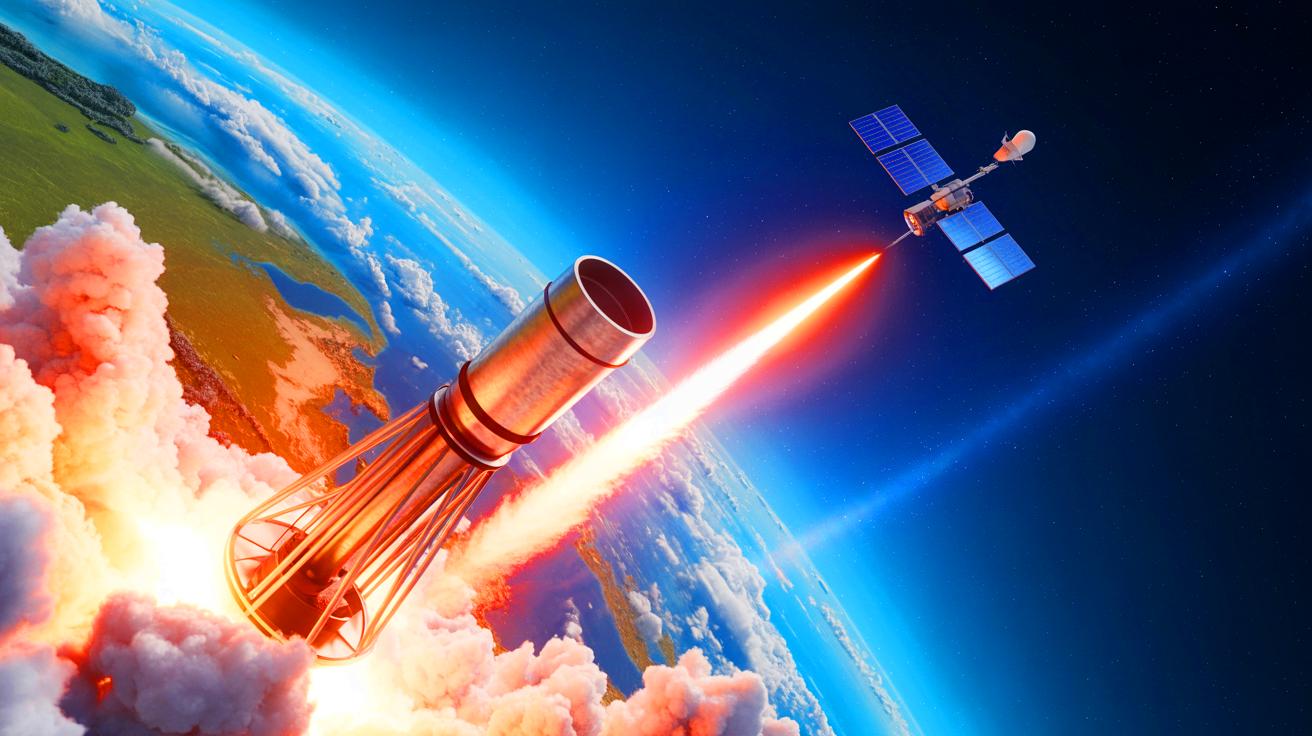
The AI image on this article is ridiculous. The system being reported on uses no launch fuel and looks nothing like this image – and is actually fascinating to look at, but why would you bother showing it? Just because you can get a click with a ridiculous image doesn’t mean you just should. Why would I trust anything in this article? You are obviously just click bait. Shame on you.