




| IN A NUTSHELL |
|
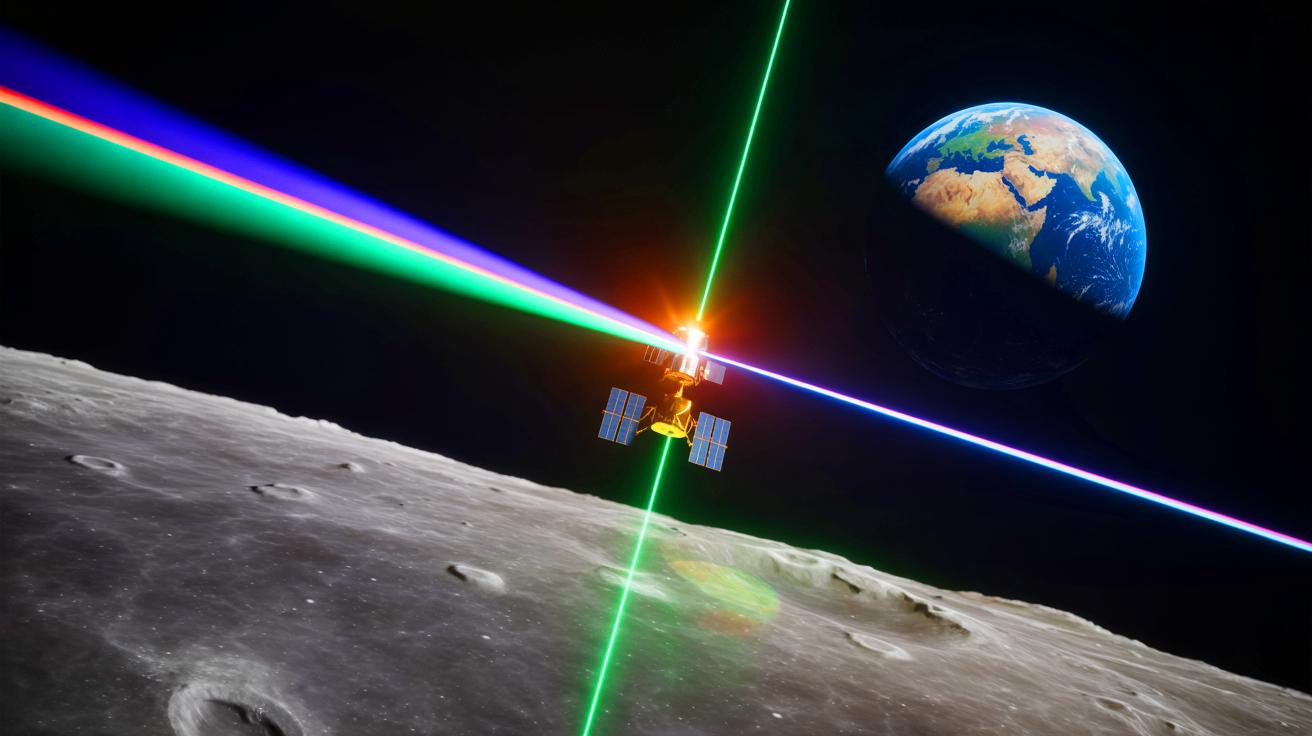
In a groundbreaking achievement, China has successfully demonstrated its advanced capabilities in space technology by achieving an unprecedented milestone in lunar navigation and communication. Through the precise targeting of a laser at a Moon-orbiting satellite during daylight, China has not only showcased its technological prowess but has also paved the way for future lunar exploration missions. This achievement is part of China’s broader vision to establish a sustained presence on the Moon, fostering international collaboration and driving innovation in space exploration. The implications of this success extend beyond national pride, as it marks a significant step in the global race for lunar exploration.
Unprecedented Precision in Laser Targeting
China’s Deep Space Exploration Laboratory (DSEL) has achieved a feat that has long been considered a daunting challenge in the realm of space exploration. By successfully targeting a laser at a Moon-orbiting satellite with precision likened to “hitting a single hair from 6.2 miles away,” China has demonstrated its unrivaled accuracy in space navigation. This level of precision is critical for acquiring orbital data from fast-moving satellites, thereby enhancing the accuracy of future missions.
The Tiandu-1 satellite, launched in March 2024, is part of China’s ambitious Queqiao relay constellation, which aims to establish an Earth-Moon communication and navigation network. This network will support various lunar activities, including landers, rovers, and potentially crewed missions. The laser targeting experiment’s success underscores the robustness of the infrastructure that will support these missions, marking a significant advancement in sustainable lunar exploration.
A Leap Forward in Lunar Communication
China’s achievement in enabling laser ranging during daylight removes a major obstacle in Earth-Moon tracking. This capability is crucial for autonomous spacecraft operations, providing precise landing guidance and facilitating real-time coordination of rover fleets on the lunar surface. The technology is expected to be central to approach, descent, and landing systems for future missions targeting the lunar south pole.
This breakthrough is part of a series of advancements in China’s lunar exploration program. Following the Chang’e-6 mission, which returned samples from the Moon’s far side, China is preparing for the Chang’e-8 mission in 2028. This mission will test small nuclear reactors and other critical infrastructure for the International Lunar Research Station, a joint project with Russia. These initiatives highlight China’s leadership in space exploration and its commitment to international collaboration.
Building Infrastructure for Deep-Space Exploration
The ability to conduct laser ranging in broad daylight has significant implications for deep-space infrastructure. By overcoming solar interference challenges, China can ensure continuous navigation and communication between Earth and the Moon, essential for sustained lunar operations. This breakthrough is expected to enhance the efficiency and reliability of future deep-space missions, providing a robust framework for exploration and research.
The successful deployment of the Tiandu-1 satellite and its counterparts marks a critical step toward establishing a comprehensive Earth-Moon network. This network will facilitate scientific research, support commercial endeavors, and promote international partnerships. As China advances its space capabilities, the potential for deep-space exploration and collaboration grows, opening new avenues for discovery and innovation.
China’s Ambitious Vision for Lunar Exploration
China’s recent achievements in lunar exploration are part of a broader vision to establish a permanent presence on the Moon. By developing advanced technologies and infrastructure, China aims to create a sustainable environment for research and exploration, fostering international cooperation and technological innovation. The success of the daylight laser ranging experiment is a crucial step in realizing this vision, demonstrating China’s commitment to pushing the boundaries of what is possible in space exploration.
As China continues to make strides in lunar exploration, the international community watches with anticipation. The advancements achieved through these endeavors not only hold promise for future missions but also inspire a new generation of scientists and engineers. With the potential for groundbreaking discoveries and unprecedented collaboration, one can’t help but wonder: What new frontiers will China explore next?




Wow, this is a game-changer for space exploration! 🚀
Just wondering, is this safe for the lunar environment?
How does this compare to NASA’s achievements?
Great read! More articles like this, please. 🙌
Did they really manage to hit a single hair from 6.2 miles away? That’s insane!
What’s next after this milestone—any plans for crewed missions?
Why is daylight laser targeting such a big deal?
Can other countries adopt this technology, or is it exclusive to China?
This sounds like something out of a sci-fi movie! 😮
Does this mean we’ll see more countries collaborating with China on lunar missions?
How will this impact future lunar landings?
Hope this leads to peaceful collaborations among nations. 🤞
I’m curious about the costs involved in achieving this milestone.
Do we know the specifics of the laser technology used?
Can this technology be adapted for Earth applications?
Mind-blown by the level of precision achieved here! 🤯
Will this technology help in finding new resources on the Moon?
It’s fascinating how space exploration keeps advancing!
Are there any environmental concerns with this kind of technology?
How does this fit into China’s long-term space goals?
Brilliant advancement! What does this mean for competition in space?
Is there a timeline for when we’ll see the next steps in this project?
Could this tech be a game-changer for lunar base setups?
Impressive achievement! How long did it take to develop this technology?
Did they face any major challenges during this mission?
When can we expect the results from the Chang’e-8 mission?
How will this boost China’s presence on the Moon?
Thanks for keeping us informed on space exploration news! 🌌
Any word from other countries on this achievement?
Can’t help but feel excited about the future of space! 🚀
I’m skeptical—how do we know this isn’t just propaganda?
What are the implications for international space treaties?
Thanks for the detailed report. This is truly groundbreaking!
Can this technology be used for Mars exploration as well?
Is there any video footage of the laser targeting in action?
What a milestone! Can’t wait to see what’s next. 🌕
China is really leading the way in space tech. Kudos! 👏
Sounds impressive, but how does this affect the space race dynamics?