



| IN A NUTSHELL |
|
In a compelling discovery that promises to reshape our understanding of ancient maritime networks, archaeologists have uncovered a 2,000-year-old underwater port in Asini, Greece. This significant find reveals a previously hidden maritime hub that played a crucial role in ancient trade and naval activities. The discovery, spearheaded by a team from the Greek Ministry of Culture alongside Swedish researchers, sheds new light on Asini’s strategic importance in the Mediterranean. As excavations continue, the find not only deepens our understanding of Greek maritime history but also challenges existing assumptions about ancient harbor engineering and trade in the eastern Mediterranean.
The Lost Port of Asini: A Link to the Ancient World
Located near the coastal village of Tolo on the Peloponnese peninsula, the submerged port of Asini offers a new perspective on a region already renowned for its archaeological significance. Asini was a pivotal settlement during the Bronze Age and Classical period, even mentioned in Homer’s Iliad as an ally in the Greek fleet during the Trojan War. The city thrived as a trading hub, connecting mainland Greece with distant markets across the Aegean and Mediterranean.
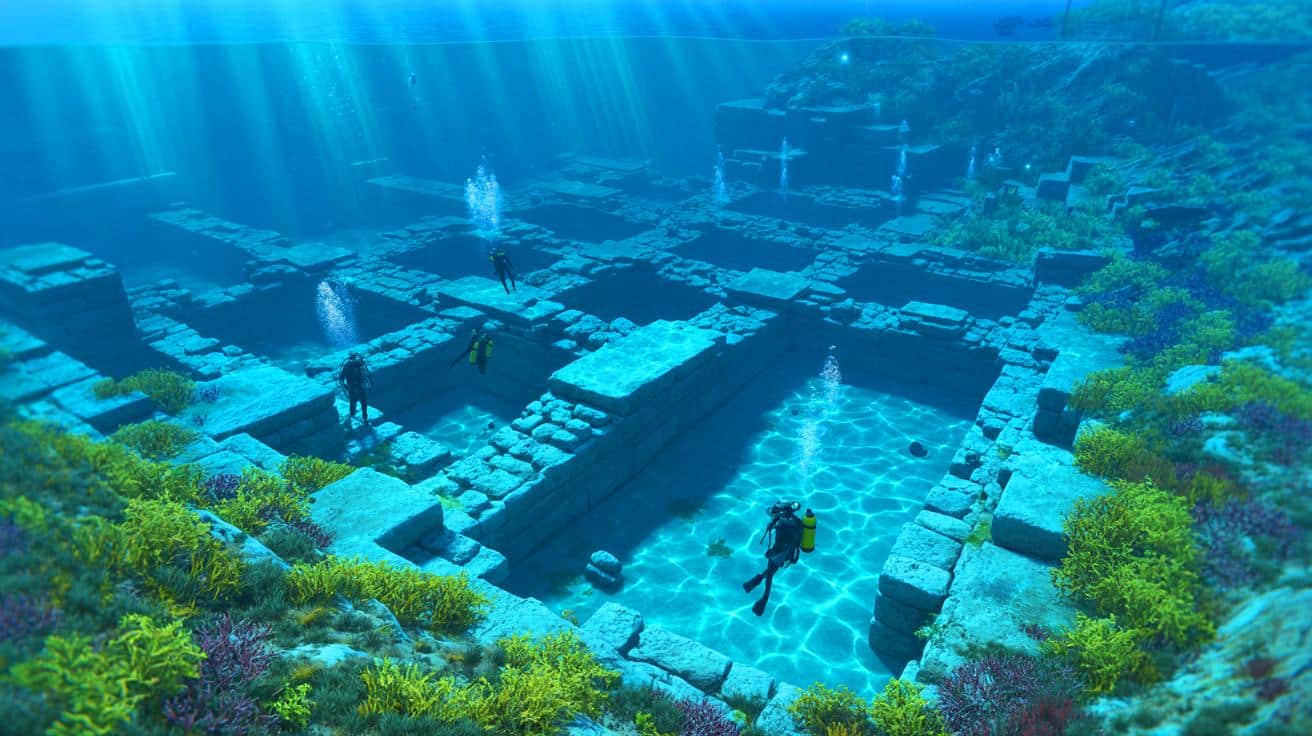
While past excavations revealed Mycenaean fortifications and settlements on land, the confirmation of an underwater port adds a vital dimension to our understanding of Asini’s maritime connections. The presence of large stone foundations underwater suggests a sophisticated harbor infrastructure, indicating the city’s reliance on sea trade and naval activities. For centuries, the port’s remains lay hidden, leaving only fragmented accounts in ancient texts. This new discovery provides tangible evidence of its existence and its integral role in ancient Greek commerce and defense.
What Lies Beneath: Ongoing Excavations and Future Research
With the discovery confirmed, archaeologists are now focused on mapping the site and uncovering its broader significance. The research team is engaged in a detailed excavation effort utilizing manual sediment removal, underwater surveying, and controlled dredging to reveal hidden structures. A crucial aspect of this work involves dating the site’s features to understand the periods of activity the port experienced.
If the port predates 2,000 years, it may suggest earlier phases of maritime development, potentially extending back to the Mycenaean era (1600–1100 BCE). Conversely, if it aligns with a 2,000-year timeline, it may correspond to Hellenistic or early Roman usage, indicating Asini’s continued importance as a trade hub into later antiquity. The artifacts recovered, including ceramics, metal tools, and anchors, may provide direct evidence of the port’s commercial connections. Such findings could offer insights into construction techniques, trade patterns, and daily life, painting a fuller picture of the port’s function.
The Greek Ministry of Culture has expressed optimism that further discoveries could reshape our understanding of Mediterranean maritime networks, offering new insights into how Greek city-states managed their ports, fleets, and trade routes.
Asini’s Place in Ancient Maritime Trade
The port at Asini underscores the significance of regional trade hubs that supported larger Mediterranean economies. Unlike well-documented harbors in Athens or Corinth, smaller settlements like Asini played crucial roles in maintaining the flow of goods and culture across the ancient world. Such ports facilitated the movement of grain, olive oil, wine, metals, and pottery—commodities that fueled the economies of Greek city-states and their trading partners.
Additionally, these harbors may have served as military outposts, supporting naval operations in the Aegean. Asini’s proximity to major sea routes suggests connections to other important centers such as Nafplio, Argos, and Corinth, reinforcing its role in regional commerce and maritime defense. The expansion of trade during the Hellenistic period (323–31 BCE) and under Roman influence raises intriguing possibilities about the port’s continued operation into the early Roman era. If confirmed, this continuity in maritime trade and infrastructure would offer evidence that Greek port cities adapted to shifting political and economic landscapes over centuries.
As archaeologists continue to investigate the underwater port of Asini, the findings promise to enrich our understanding of ancient maritime history and the complexities of ancient trade networks. The discovery raises intriguing questions about the interconnectedness of ancient civilizations and the technological advancements in harbor construction. How might these insights influence our perception of ancient Greek naval capabilities and their impact on the broader Mediterranean world?




Wow, this is like finding Atlantis! I can’t wait to see what else they uncover. 🌊
Wow, this is like discovering Atlantis! Can’t wait to see what else they uncover. 🏺
Did they find any pirate treasure down there? 🏴☠️
Is there any chance of finding ancient treasures or shipwrecks nearby?
Incredible discovery! How did they manage to preserve the site for so long?
This could really change our understanding of ancient Greek trade routes. Fascinating!
Why haven’t we heard about Asini before? Seems like a big deal!
Are there any plans to open the site to tourists in the future?
I’m skeptical about the 2,000-year timeline. Could it be even older? 🤔
I can’t believe something this significant was hidden for 2,000 years. What other secrets does the ocean hold?
Does anyone know if they found any unique artifacts that belonged to well-known historical figures?
Thanks for sharing this amazing discovery. Keeps history alive!
This is mind-blowing! How do they even begin to excavate something underwater?
How do they determine the age of the port? Is it through carbon dating?
I hope they publish more detailed findings soon. This is so exciting! 🎉
How does this discovery compare to other underwater archaeological sites in the Mediterranean?
Incredible find! I wonder if they will find any evidence of ancient battles.
This sounds like it could be the plot of a new Indiana Jones movie! 🎬
Is it true that some of the structures are still intact after thousands of years?
Why is this discovery so important for our understanding of ancient trade?
How are they ensuring that the site is protected during the excavation process?
Do you think there might be more such ports hidden under the sea near Greece?
I’m skeptical. Could this just be an exaggeration by the archaeologists to get funding?
Does anyone else think this could lead to a new tourism boom in Asini? 🌍
This is a game-changer for historians studying ancient Greece!
How deep underwater was this port found? Seems like a challenging excavation!
What are the next steps for the archaeologists in this excavation?
Any chance of finding inscriptions or writings that could give more context to the site?
Some of the stone structures are massive! How did they build them back then?
I heard rumors about ancient Greek technology being more advanced than we thought. Could this be proof?
Finding tools and ceramics is cool, but I want to know if they found any ancient snacks! 😂
It’s amazing to think about all the trade that passed through this port centuries ago.
How does this discovery affect our understanding of Greek naval capabilities?
The underwater pictures are stunning! What kind of technology did they use for the photos?
Is there any evidence of this port being used for military purposes?
I wonder how many more lost cities are out there waiting to be discovered. 🤔
How are they analyzing the artifacts to determine their age and origin?
I love reading about these discoveries. Thank you for sharing this article!
Why wasn’t this discovered earlier? Seems like such a significant site.