

| IN A NUTSHELL |
|
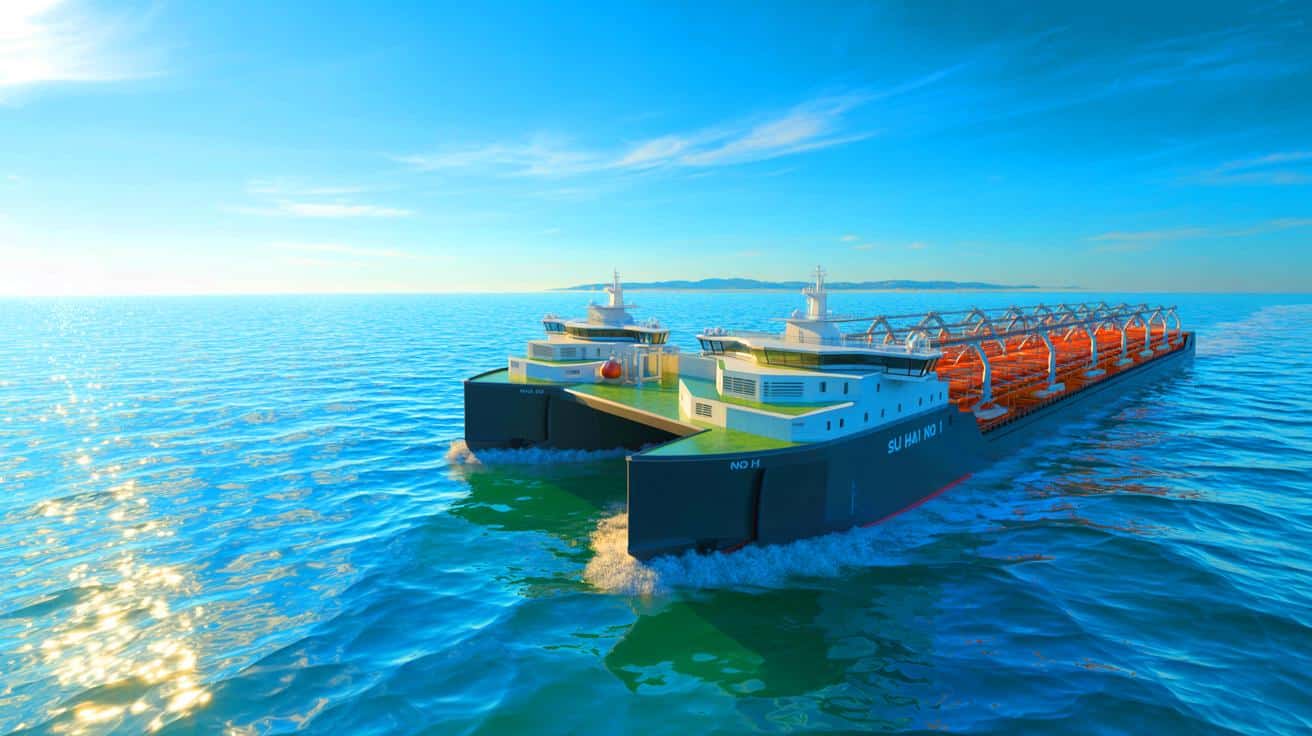
China is set to make significant waves in the global aquaculture sector with the imminent launch of the “Su Hai No 1,” an innovative salmon farming vessel. This groundbreaking ship, constructed at the Huangpu Wenchong Shipyard in Guangzhou, represents a $83.6 million investment aimed at transforming China’s seafood production landscape. Capable of producing up to 8,000 tonnes of salmon annually, the vessel marks a critical step in reducing China’s dependency on salmon imports and enhancing its national food security. As global demand for sustainable food sources grows, China’s ambitious project could change the dynamics of the international fish market.
Boosting China’s Salmon Production
The “Su Hai No 1” provides China with a unique advantage in salmon production, differing significantly from traditional stationary net-pen systems. Unlike these conventional methods, the ship’s mobility enables it to avoid environmental hazards such as typhoons and harmful algal blooms, safeguarding its precious cargo. This flexibility ensures not only the safety of the salmon but also the continuity of production, a critical factor in maintaining supply to meet growing demand.
Furthermore, the vessel is innovatively equipped with onboard processing facilities, allowing freshly processed salmon to be delivered to domestic markets within just 24 hours. This capability considerably reduces the time from sea to table, offering a fresher product to consumers. Operating primarily in the Yellow Sea off Jiangsu province, the vessel will utilize the region’s cold-water eddies, ideal conditions for salmon farming, to initiate production this autumn. With the first harvest expected next year, China’s consumers, increasingly fond of salmon, could soon enjoy homegrown supplies.
Currently, over 80% of China’s salmon consumption is met through imports, predominantly from Norway and Chile. The nation imported more than 100,000 tonnes of salmon last year, a figure anticipated to double by 2030. The “Su Hai No 1” aims to curtail these imports significantly, thereby reducing the associated high logistical and environmental costs, including the substantial carbon footprint of long-distance shipping.
Advancing Marine Farming Practices
China’s launch of the “Su Hai No 1” aligns with its broader strategy to bolster its ocean economy. Recognizing the pressing need for secure food sources amid global challenges such as climate change and geopolitical tensions, Beijing is prioritizing the development of marine farming. This strategy also reflects a commitment to enhancing national food security, a key policy goal in the face of uncertain global trade landscapes.
Moreover, last year, a joint effort by China’s Ministry of Agriculture and Rural Affairs and the Ministry of Natural Resources led to the release of guidelines. These guidelines commit to advancing marine farming practices as well as safeguarding the ocean environment.
The government’s push to domestically farm Atlantic salmon has faced hurdles, prompting the use of rainbow trout as a substitute to meet demand. In 2018, China officially permitted rainbow trout to be marketed as “salmon,” demonstrating the nation’s adaptability in addressing food security challenges. This flexibility in resource utilization underscores China’s innovative approach to meeting consumer needs while advancing its aquaculture capabilities.
The Economic and Environmental Implications
The economic implications of China’s foray into mobile aquaculture are far-reaching. By reducing reliance on imports, the nation stands to improve its trade balance while simultaneously supporting local industries. The “Su Hai No 1” is expected to generate employment opportunities within the marine sector, fostering economic growth in coastal regions.
Environmentally, the vessel’s design emphasizes sustainability. Its ability to relocate in response to environmental threats not only protects the salmon but also minimizes ecological disruption. Additionally, the reduced need for long-distance transport decreases the carbon emissions traditionally associated with imported salmon, aligning with global efforts to tackle climate change.
The vessel’s expansive farming capacity of 8.3 million cubic meters of seawater represents a significant leap in marine resource utilization. By integrating advanced technologies with sustainable practices, China is setting a precedent for future developments in aquaculture.
Future Prospects and Challenges
As the “Su Hai No 1” prepares to set sail, the global aquaculture industry watches keenly. The success of this venture could inspire similar innovations worldwide, potentially reshaping international seafood production. However, challenges remain. Navigating regulatory frameworks, ensuring biosecurity, and maintaining environmental standards will be crucial to the project’s long-term viability.
Additionally, consumer acceptance of domestically farmed salmon will play a pivotal role in the vessel’s success. Educating the public on the benefits of local production, including fresher products and reduced environmental impact, will be essential in building market trust.
As nations grapple with the dual demands of economic growth and environmental sustainability, China’s pioneering approach offers valuable insights. Will the “Su Hai No 1” herald a new era in marine aquaculture, and what lessons will other countries glean from its journey?


Wow, a floating farm! What’s next, flying cows? 🚀🐄
How does the “Su Hai No 1” handle storms? Seems risky to me! 🤔
Thanks for the article! I’m curious how this might impact global salmon prices.
Is the salmon from this ship going to taste different from Norwegian salmon?
China’s innovation never ceases to amaze. Can’t wait to see how this plays out!
So we might get fresher salmon? Count me in! 🍣
Does this mean salmon prices might drop? That would be great news!