



| IN A NUTSHELL |
|
The recent discovery of the Indian Plate splitting into two has sparked significant interest in the geological community. This unexpected phenomenon involves a portion of the plate sinking into the Earth’s mantle, reshaping our understanding of tectonic processes. Published by the American Geophysical Union, the findings emphasize the complexity of plate dynamics and their potential impact on earthquake hazards in the region. This development not only challenges existing theories but also raises questions about the safety and stability of areas affected by such tectonic shifts. As researchers delve deeper, the implications of this split could have far-reaching consequences for both local and global geological studies.
A Hidden Geophysical Phenomenon: Delamination of the Indian Plate
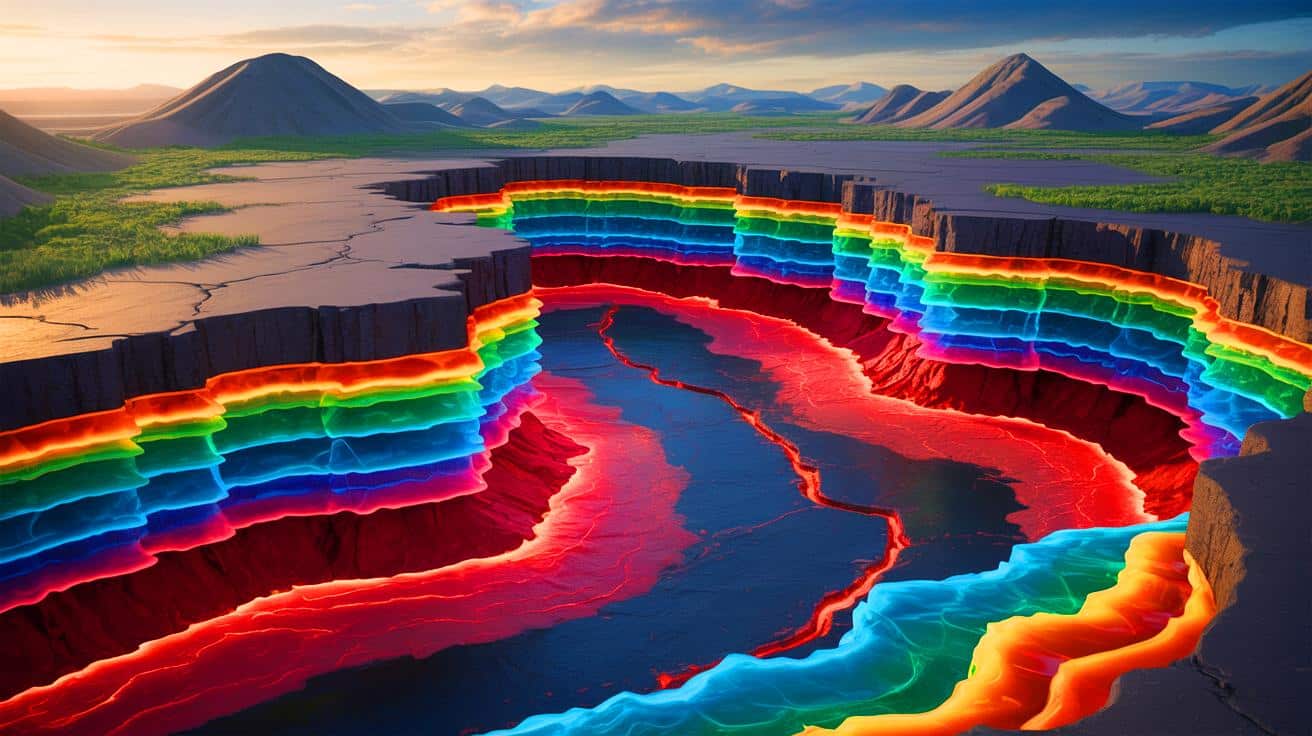
The Indian Plate, long known for its collision with the Eurasian Plate that created the Himalayan mountains, is now at the center of a groundbreaking discovery. Recent studies indicate that the Indian Plate is experiencing delamination. This process involves the dense lower part of the plate detaching and sinking into the mantle. Seismic data and helium isotopes in Tibetan springs have revealed a vertical tear in the plate, previously undetected.
“We didn’t know continents could behave this way, and that is, for solid earth science, pretty fundamental,” remarked Douwe van Hinsbergen, a geodynamicist at Utrecht University.
https://www.energy-reporters.com/news/they-pushed-one-button-chinas-new-drone-system-can-launch-thousands-at-once-and-the-worlds-militaries-are-alarmed/
This statement underscores the significance of the finding, which suggests a more dynamic and complex tectonic shift process. The revelation of varying plate thicknesses and characteristics challenges geologists to rethink how they view continental behavior and tectonic interactions.
The Impact of Delamination on Earthquake Risk
The delamination of the Indian Plate has serious implications for earthquake risk in the region. As Simon Klemperer from Stanford University notes, the tectonic plates in highly compressed areas like the Himalayan collision zone often develop multiple tears. These tears can lead to increased stress in the Earth’s crust, raising the risk of earthquakes. The region already experiences seismic activity, but the delaminated section could cause shifting stress points, leading to more powerful seismic events.
The Cona-Sangri Rift, a significant fracture in the Tibetan Plateau, may be linked to these ongoing processes. The potential for larger and more frequent earthquakes poses a threat to the stability of the region and highlights the need for further research to understand the full implications of this geological activity.
A Cautionary Note on the Data
Despite the excitement surrounding this discovery, experts urge caution. Fabio Capitanio, a geodynamicist at Monash University, emphasizes that the current data represents only a snapshot of a complex process. The full implications of delamination are not yet fully understood, and further studies are required to grasp its long-term effects.
China’s Laser Fusion Center Terrifies: Are You Ready for the New Nuclear Threat?
The intricate nature of tectonic interactions in the Indian subcontinent suggests that while delamination could have significant consequences, the situation remains fluid. Continuous analysis of seismic waves and geochemical signatures is essential to assess the true scale of the earthquake threat and to monitor how these tectonic changes evolve over time.
The Global Implications of India’s Cracking Plate
The discovery of delamination in the Indian Plate has implications that extend beyond regional concerns. As a crucial part of Earth’s tectonic system, understanding its behavior can inform global geological studies. This phenomenon could redefine how scientists view continental interactions and plate tectonics.
Researchers are now exploring other continental regions for similar occurrences, which could provide insights into mountain range formation and the driving forces behind Earth’s geological evolution. If delamination is confirmed as a common process, it could explain not only the formation of the Himalayas but also offer new perspectives on other mountain ranges worldwide. This could transform our understanding of Earth’s dynamic processes and the future of geological research.
As scientists continue to investigate the delamination of the Indian Plate, the findings could reshape our understanding of tectonic processes and their impact on global geological studies. The potential implications of this discovery are vast, prompting further research into similar occurrences worldwide. What other hidden processes might we uncover as we delve deeper into the mysteries of our planet’s tectonic behavior?




This is fascinating! Could this delamination give us more predictable patterns for earthquakes in the future? 🌍
Wow, this is both terrifying and fascinating! Earthquakes are no joke. 😬
Is this why we’ve been having more earthquakes lately?
Can someone explain what delamination means in simpler terms? 🧐
Wow, what a discovery! But how worried should we be about this in terms of immediate earthquake risk?
Thanks for the informative article! Very eye-opening. 🙌
Great, as if the planet isn’t already trying to kill us in enough ways! 🙄
Who knew plates could crack like that? I thought it only happened to my phone screen 😂
How sure are scientists about this delamination? Could they be wrong?
Just when I thought I understood tectonic plates… 🤯
Interesting read, but isn’t this just theoretical at the moment? 🤔
This is why we need more funding for geological research!
Wait, does this mean the Himalayas are going to collapse? 😱
Thank you for shedding light on this topic. It’s both terrifying and fascinating.
I always knew there was something weird going on under the Himalayas!
Are there any immediate threats to the local population?