



| IN A NUTSHELL |
|
The U.S. natural gas market is experiencing a significant surge, with futures climbing about 2% to reach a one-week high. This increase is driven by near-record liquefied natural gas (LNG) flows and an anticipated rise in demand due to colder-than-normal weather forecasts. The Freeport LNG plant in Texas is expected to return to full operation, contributing to the heightened activity. This marks the first time in nearly a year that prices have risen for five consecutive weeks, reflecting a 52% gain over that period. As the U.S. cements its position as the world’s leading LNG producer, market dynamics continue to shift globally.
Shifts in Supply and Demand Dynamics
As the U.S. natural gas market evolves, supply and demand dynamics play a crucial role. According to LSEG data, average gas output in the Lower 48 states has reached an impressive 109.4 billion cubic feet per day (bcfd) in November, surpassing previous monthly records. This increase in production has allowed energy companies to stockpile gas, resulting in about 5% more gas in storage than usual for this time of year. Such abundant supply positions the U.S. to meet both domestic and international demands effectively.
Forecasts indicate that gas demand, including exports, is set to rise from 118.8 bcfd this week to a projected 131.3 bcfd in two weeks. This demand surge is attributed to anticipated colder temperatures, which are expected to spike around late November and early December. The ability to meet this growing demand showcases the resilience and capacity of the U.S. natural gas infrastructure.
LNG Exports Driving Market Growth
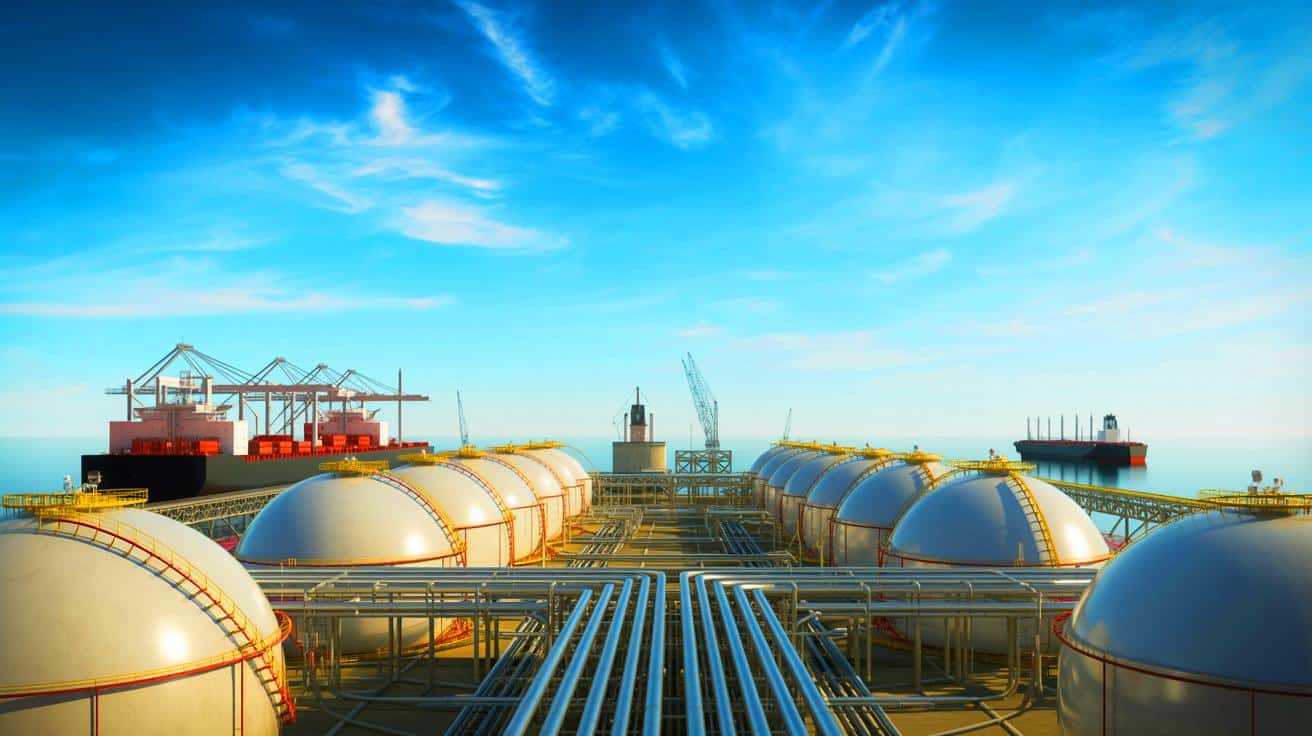
The U.S. has emerged as a dominant player in the global LNG market, overtaking traditional leaders like Australia and Qatar. This transformation was largely fueled by increased LNG exports, which reached a record 18.0 bcfd in November, up from 16.6 bcfd in October. The Freeport LNG facility in Texas is a significant contributor to this growth, with one of its liquefaction trains returning to service, further boosting output.
Global geopolitical factors, including Russia’s 2022 invasion of Ukraine, have further propelled U.S. LNG demand. Supply disruptions and sanctions have made U.S. LNG a vital alternative for countries seeking reliable energy sources. This geopolitical climate underscores the strategic importance of U.S. LNG exports in stabilizing global energy markets.
Global Market Trends and Implications
Global natural gas prices exhibit contrasting trends across regions. In Europe, prices at the Dutch Title Transfer Facility (TTF) benchmark have dipped to a 15-month low of about $10 per million British thermal units (mmBtu). Meanwhile, in Asia, the Japan Korea Marker (JKM) benchmark reflects a three-month high near $12 per mmBtu. These variations highlight regional disparities in supply and demand, influenced by factors such as weather patterns and geopolitical tensions.
The ongoing construction of the Golden Pass LNG export plant in Texas exemplifies the U.S.’s commitment to expanding its LNG infrastructure. Expected to begin production soon, this facility will further bolster U.S. export capabilities, catering to rising global demand. As the U.S. continues to navigate these complex market dynamics, its influence on global energy trends remains significant.
Future Prospects and Challenges
Looking ahead, the U.S. natural gas market faces both opportunities and challenges. The ability to sustain production levels while managing environmental and regulatory concerns will be critical. Additionally, the transition to renewable energy sources poses a long-term challenge for the natural gas industry. Balancing these factors will be essential in maintaining market stability and growth.
Despite these challenges, the U.S. remains well-positioned to capitalize on its robust natural gas infrastructure. The question remains: how will the U.S. natural gas industry adapt to evolving global energy needs while addressing environmental sustainability? As the world increasingly focuses on cleaner energy solutions, this balance will be key to the industry’s future trajectory.




Wow, a 2% rise! Does this mean my heating bill will go up too? 🥶
Wow, 2% doesn’t sound like much but I guess in the energy market it really is. Anyone got insights on how this affects the average consumer? 🤔
Interesting article, but how reliable are these forecasts really? Weather predictions can be so unpredictable.
Thanks for the update! It’s crucial to stay informed about energy trends. 🔍
This is a great overview. Thank you for breaking down the complex market dynamics so clearly!
Isn’t it about time we move away from fossil fuels? The focus should be on renewables!
With U.S. becoming the largest LNG exporter, are we heading for a global energy monopoly?
Can someone explain how LNG exports affect domestic gas prices? I’m a bit lost. 🤔
Great article, but I noticed a typo in the second paragraph.
Can someone explain why Europe has such low gas prices compared to Asia? Seems counterintuitive. 🤷♂️
I’m curious, does this mean the US will have more power in global energy politics?
Why is the Freeport LNG plant in Texas so important? I’m not familiar with it.
Oh great, just what we needed, another rise in energy prices right before winter. 🙄
Every winter it’s the same story: supply issues and price hikes. 😒
Record LNG exports sound impressive, but how sustainable is this growth?