




| IN A NUTSHELL |
|
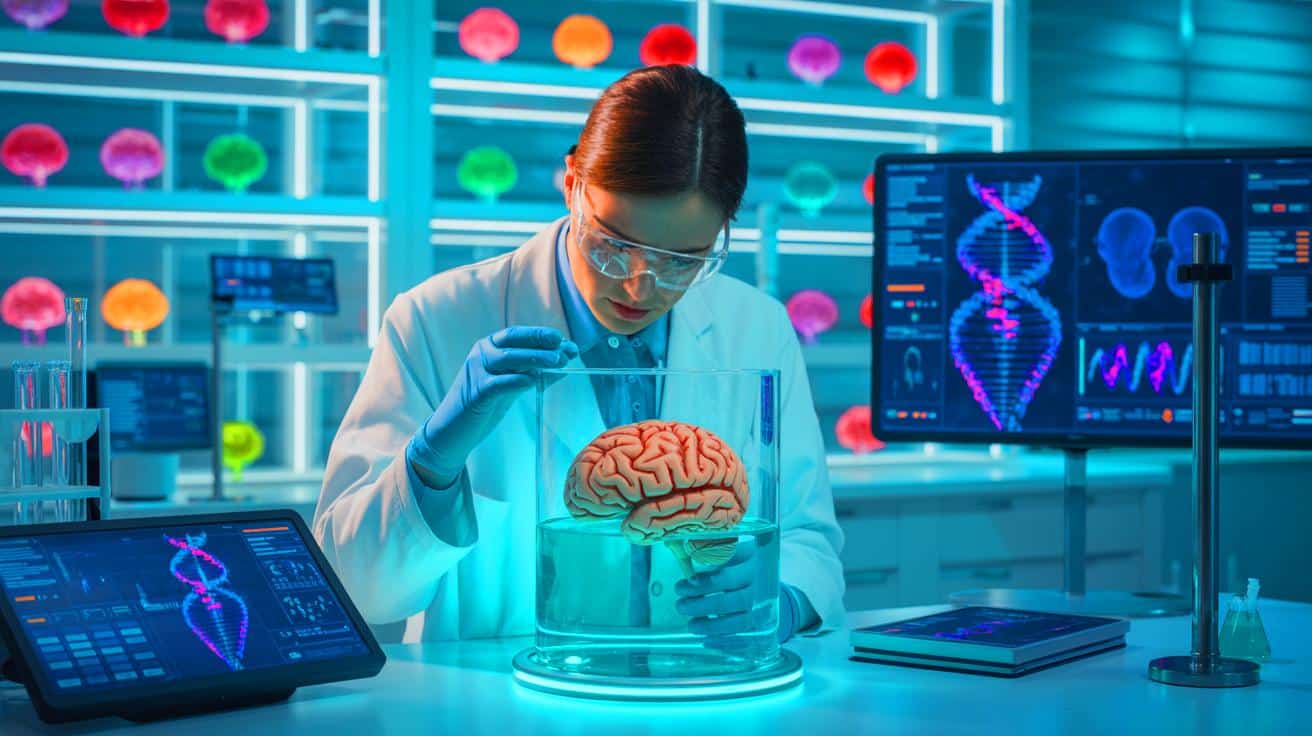
The quest to unlock the mysteries of the human brain and the evolution of diseases has taken a significant leap forward with the development of a new RNA-mapping tool. This cutting-edge technology holds the potential to decode the secrets held within some of our most precious biological archives. From the preserved brain of Albert Einstein to long-frozen cancer tissues, this tool is set to revolutionize our understanding of historical samples. While the challenges are significant, the promise of this technology could open new frontiers in scientific research, offering insights into the very basis of human genius and the progression of diseases.
Revolutionizing the Study of Historical Samples
For decades, researchers have been limited by the degradation of biological samples stored in formalin-fixed, paraffin-embedded (FFPE) blocks. These blocks, while stable, often result in chemically damaged DNA and RNA, hindering detailed genetic analysis. This is critical as DNA and RNA are the blueprints of life, storing and converting genetic information into proteins.
The introduction of Stereo-seq V2, an advanced spatial transcriptomics tool, marks a breakthrough. This tool enhances RNA capture efficiency, using random-primed chemistry to achieve comprehensive gene-body coverage, even in degraded samples. In trials, it successfully mapped RNA at a single-cell resolution, identifying tumor subtypes and immune responses within old cancer tissues.
Li Yang, a research associate at BGI-Research, highlights the tool’s potential: “If we are fortunate enough to analyze Einstein’s brain, we could give it a try.” However, challenges persist, given the preservation techniques of Einstein’s era. Yet, the potential insights into the cellular basis of genius are tantalizing.
Unlocking a Treasure Trove of Archived Data
Globally, hospitals store millions of FFPE samples, often kept for over 20 years. These samples represent a vast, untapped reservoir of genetic information, previously locked away due to preservation-induced damage. The new RNA-mapping technique expands the pool of research material, particularly for rare diseases that require extensive sample accumulation.
Li Yang notes, “Many rare diseases require a long time to accumulate samples. Now, we can effectively utilize precious samples preserved over the long term.” This capability could lead to earlier diagnostics and more personalized treatments, transforming our approach to diseases.
The potential for retrospective studies on archived specimens is immense. Hospitals may also consider establishing joint laboratories to process samples in-house, thereby reducing risks associated with external transfers. This approach not only safeguards the integrity of samples but also accelerates research timelines.
Applications Beyond Oncology
While the possibility of decoding Einstein’s genius remains speculative, the real-world applications of Stereo-seq V2 are already proving significant. Beyond oncology, the platform has shown promise in profiling both host and microbial RNAs in tuberculosis studies. This dual profiling offers insights into how pathogens interact with immune systems over time, potentially guiding new therapeutic approaches.
Co-corresponding author Liao Sha, chief technology officer of STOmics, emphasizes the tool's versatility. “If the samples had degraded too much, we would not be able to analyze them effectively,” she explains. However, when viable, the technology provides a detailed view of cellular interactions and responses, paving the way for novel treatments and interventions.
As scientists continue to refine this tool, its implications for understanding complex biological systems and disease mechanisms will likely expand, offering new avenues for medical research and treatment development.
The Future of RNA-Mapping in Science
The development of Stereo-seq V2 represents a significant advancement in the field of spatial transcriptomics. As this technology becomes more widely adopted, it could transform the landscape of biomedical research. Scientists now have sharper tools to explore the biology of cancer, infections, and rare diseases that have long been locked away in tissue archives.
Published in the journal Cell, the study highlights the immediate applications of the technology in current research. As researchers harness this tool's full potential, the implications for future scientific discoveries are vast. The possibility of unraveling the mysteries of preserved historical samples offers a new dimension to our understanding of biology.
Yet, as we stand on the brink of these potential breakthroughs, one question remains: How will the integration of these advanced techniques reshape the future of medical and scientific research?



Wow, this is mind-blowing! Are we really going to study Einstein’s brain? 🧠✨
Wow, this is like science fiction becoming reality! 🧠✨
Can this technology help in understanding how viruses evolve over time?
Isn’t it a bit creepy to scan dead people’s thoughts? 🤔
So, are they saying we can peek into Einstein’s brain? Mind-blown! 🤯
Isn’t it creepy to think about all those preserved brains just sitting in storage?
How accurate can this new RNA-mapping tool actually be with really old samples?
What are the ethical implications of using preserved brains for research?
Thank you for shedding light on this groundbreaking research!
This is kind of scary. What if they find something they shouldn’t? 😬
Thank you for this fascinating article! I never knew hospitals had so many secret samples. 😲
How long will it take for this technology to be used in real-world medical diagnostics?
Fascinating read! I never knew hospitals had such vast archives of samples.
How long until this technology is available in hospitals worldwide? 🌍
What are the ethical implications of using preserved human brain samples?