


| IN A NUTSHELL |
|
Undersea fiber-optic cables, initially intended for global communication, are now being repurposed to serve as extensive sonar arrays in anti-submarine warfare. This transformation is facilitated by Distributed Acoustic Sensing (DAS), a burgeoning technology that leverages these cables to detect and monitor undersea activity. Stretching across the ocean floor, these cables cover a vast network capable of offering real-time surveillance. As nations like the United States, the United Kingdom, and others in the European Union explore the potential of DAS, the implications for military strategy and maritime security are profound. This development raises significant questions about the future of undersea warfare and international security dynamics.
Turning Cables Into Giant Sonar Arrays
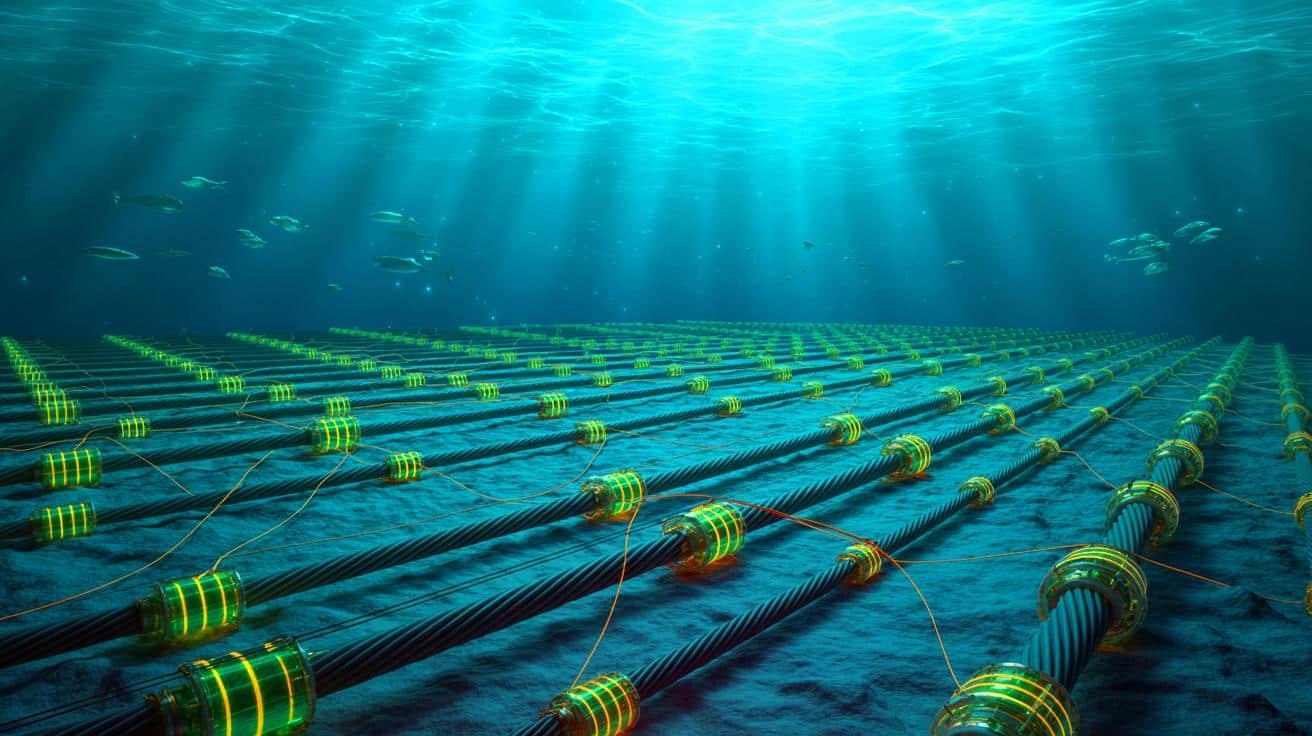
Distributed Acoustic Sensing (DAS) technology transforms ordinary fiber-optic cables into expansive acoustic sensors. By transmitting a pulsed laser through the cable, DAS can identify tiny backscattered signals that change due to vibrations or stress from nearby sound waves. These patterns, when analyzed with advanced algorithms, can pinpoint undersea sounds, including submarine engines and ship propellers.
This innovation effectively repurposes existing telecommunication cables into a vast, continuous, real-time monitoring system. Such a system can monitor oceanic activity across thousands of miles at a fraction of the cost associated with traditional sonar systems. The benefits extend beyond military applications, as DAS can also detect cable tampering, natural disasters, and unauthorized underwater activities.
Recent studies have demonstrated that DAS can effectively track ships and submarines across various marine environments. By correlating acoustic readings with vessel GPS or AIS data, enhanced by artificial intelligence, the technology offers both strategic and commercial opportunities. The conversion of communication cables into dual-use assets presents a significant shift in how nations approach maritime security.
US, UK, EU Programs
Several nations, including the United States, United Kingdom, and members of the European Union, are integrating DAS into their maritime security frameworks. The U.S. Navy, alongside research partners, has advanced from experimental trials to incorporating DAS data into operational networks. Efforts are underway to integrate DAS with data from maritime patrol aircraft and undersea drones, leveraging artificial intelligence to enhance detection across the Pacific Ocean.
In the United Kingdom, the Ministry of Defence, in collaboration with major telecom providers, has tested DAS systems in the North Atlantic and North Sea. This initiative aims to monitor subsea infrastructure and track submarines, marking DAS as a crucial element in homeland defense strategy.
Across Europe, countries like the Netherlands, Norway, and Germany are exploring DAS-based vessel tracking. The Netherlands has pioneered real-world cable monitoring in the North Sea, while Norwegian companies develop long-range sensing along Arctic routes. The European Union is funding DAS maritime security projects, reflecting the technology’s significance in regional defense strategies.
A New Undersea Battlespace
China and Russia are believed to be exploring DAS capabilities, given the strategic advantages. China, with its extensive regional cable network, is likely testing DAS for surveillance and anti-tampering purposes. Russia has expressed concern over Western monitoring capabilities, particularly in the Arctic and Baltic Seas.
Incidents involving damaged undersea cables have highlighted the geopolitical significance of these networks. Analysts suggest that DAS offers several advantages: it utilizes existing infrastructure, provides covert coverage, and scales easily over vast distances. However, challenges remain, such as the extensive data generated, requiring sophisticated AI processing.
Adversaries may attempt to jam or spoof DAS-enabled cables, raising concerns about potential conflict scenarios. Despite these challenges, experts believe DAS could revolutionize undersea warfare and intelligence operations. By transforming global communication cables into acoustic tripwires, militaries may soon detect submarine movements in real-time across strategic maritime routes.
Implications for Future Military Strategy
The integration of DAS technology into military strategy represents a significant shift in undersea warfare. As the technology matures, the potential for creating virtual hydrophone arrays across oceans becomes more tangible. This would significantly hinder submarines’ ability to move undetected, particularly in regions dense with cables.
The rapid advancement of AI and fiber-optic sensing technologies is transforming military planning. The lines between intelligence, cyber operations, and traditional anti-submarine warfare are increasingly blurred. The potential for DAS to alter the balance of power in maritime security is substantial, prompting nations to reconsider their defense strategies.
As this technology continues to evolve, questions arise about its impact on global security dynamics. Will the proliferation of DAS lead to new forms of undersea competition, or will it foster greater collaboration among nations to ensure maritime safety?
The development and integration of DAS technology into global defense strategies mark a pivotal moment in undersea warfare. The ability to transform communication cables into expansive sonar arrays offers significant strategic advantages. However, it also raises critical questions about security, privacy, and international cooperation. As nations continue to explore and deploy this technology, how will it reshape the landscape of global maritime security in the coming years?


Wow, who knew undersea cables could do more than just internet? 😲
Wow, this is like something out of a sci-fi movie! 🌊
Can DAS technology detect underwater earthquakes too?
Is this technology already being used, or is it still in development?
Isn’t it risky to rely so heavily on undersea cables for military purposes?
Seems like we’re one step closer to a real-life game of Battleship! 😂
This sounds like a game-changer for naval warfare. Thanks for the detailed article!
What are the potential environmental impacts of using undersea cables in this way?
Jamming DAS-enabled cables seems like a serious vulnerability. 🤔
This could be a game-changer for maritime security. Thanks for the info! 🙌
Are there any environmental impacts of using DAS technology?
Does this mean we’ll see fewer submarines sneaking around the seas?
The integration with AI sounds fascinating. How accurate is it in real-world scenarios?
Interesting article, but it raises a lot of privacy concerns. Who’s monitoring the monitors?