



| IN A NUTSHELL |
|
The world’s oceans, covering over 70% of our planet, hold many secrets that scientists are eager to uncover. A new mission, spearheaded by Teledyne Marine and Rutgers University, aims to revolutionize our understanding of these vast bodies of water. At the heart of this groundbreaking initiative is the Slocum Sentinel Glider, named “Redwing,” which is poised to become the first autonomous robotic submarine to circumnavigate the globe. Launched from Martha’s Vineyard in Massachusetts, this mission, known as the Sentinel Mission, seeks not only to achieve a historical milestone but also to significantly advance oceanographic data collection and analysis.
Mission Aims to Enhance Oceanographic Data Collection
The Sentinel Mission is not merely a technological feat; it represents a significant leap forward in oceanographic research. By deploying Redwing, the mission aims to collect extensive oceanographic data that can be used to support marine research and conservation efforts. This initiative is expected to bolster maritime security and enhance surveillance capabilities. The advanced technology incorporated in Redwing will allow researchers to gather data that was previously out of reach, offering new insights into ocean dynamics and ecosystems.
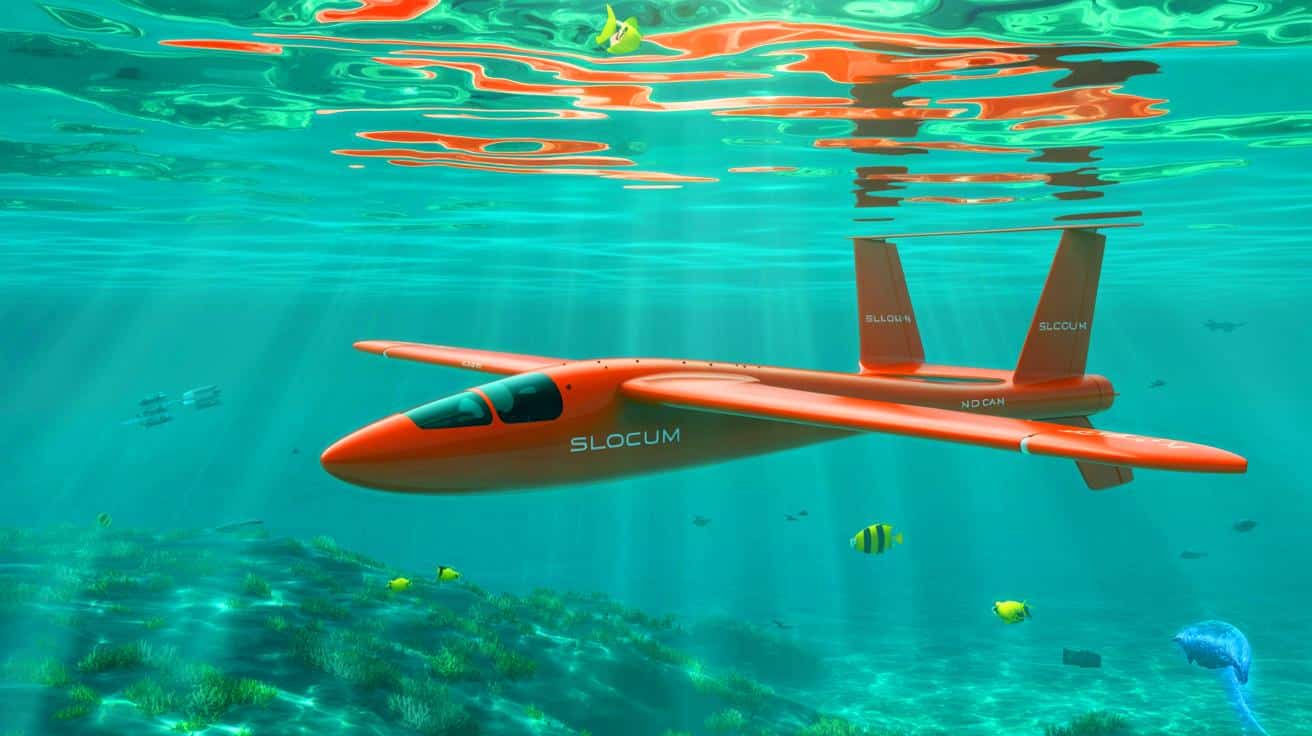
Redwing, a Slocum Sentinel Glider, stands out as a next-generation autonomous ocean glider. It boasts ultra-long endurance capabilities, enabling it to perform persistent ocean monitoring for over a year. With its advanced sensors and energy-efficient design, Redwing is set to tackle the most challenging oceanographic missions. By conducting these operations autonomously, the mission will showcase the immense potential of cutting-edge oceanographic technology.
Additional Batteries, More Space for Sensors
One of Redwing’s key features is its enhanced capacity for extended missions. The glider is equipped with additional batteries, providing the energy needed for prolonged operations. This energy capacity allows Redwing to support a wide array of sensors and other hardware, facilitating comprehensive data collection. Teledyne Marine has highlighted that Redwing can operate up to eight sensors simultaneously, offering unparalleled flexibility in mission planning.
The glider’s design also includes multiple locations for external hardware integrations, making it adaptable to various research needs. This flexibility enables scientists to tailor the glider’s instrumentation to specific research objectives, whether exploring ocean currents, marine life, or chemical properties. As the first autonomous underwater glider set to complete a global circumnavigation, Redwing represents a significant advancement in ocean exploration technology.
Glider Can Conduct Deep Underwater Operations
Redwing’s journey will follow the historic path of explorer Ferdinand Magellan’s 1519-1522 circumnavigation. The glider will travel to key locations, including Gran Canaria, Cape Town, Western Australia, New Zealand, the Falkland Islands, and potentially Brazil, before returning to Cape Cod. This ambitious route, spanning approximately 45,000 miles, underscores the glider’s robust design and operational capabilities.
Capable of submerging to depths of 3,280 feet, Redwing can access parts of the ocean that are often unreachable by traditional research methods. Once it resurfaces, the glider transmits collected data to satellites, providing real-time insights to researchers. This data transmission occurs every 12 hours, ensuring a continuous flow of information that can be used to enhance our understanding of the ocean’s complex systems.
Global Collaboration and Future Implications
The Sentinel Mission is supported by a coalition of organizations, including NOAA, the UN Ocean Decade, and the Marine Technology Society. This collaboration highlights the global commitment to advancing oceanographic research and underscores the importance of international partnerships in addressing environmental challenges. The mission also invites the global oceanographic community to participate in the Slocum Glider User’s Conference, where Redwing’s journey will be officially launched.
As Redwing embarks on its historic voyage, it sets the stage for future advancements in marine technology and research. By demonstrating the capabilities of autonomous gliders, the mission paves the way for more extensive and cost-effective ocean exploration. This initiative also raises important questions about the future of oceanographic research and the role of technology in addressing pressing environmental issues.
The Sentinel Mission represents a remarkable convergence of technology and scientific ambition. As Redwing prepares to journey around the globe, it not only aims to make history but also to transform our understanding of the oceans. This mission promises to yield valuable insights that could shape the future of oceanographic research and conservation efforts. How will the data collected by Redwing influence our approach to marine science and our efforts to protect the world’s oceans for future generations?

Wow, 45,000 miles! That’s like going around the world almost twice! 🚀
Wow, 45,000 miles! How long will this mission take to complete? 🤔
This is amazing! Redwing sounds like a game-changer for ocean research. 🌊
How does Redwing avoid running into ships or marine animals? 🤔
What kind of sensors will Redwing be using during its mission?
This is an incredible mission! Thank you for pushing the boundaries of ocean exploration.
How does Redwing compare to other ocean gliders in terms of capabilities?
Isn’t it risky to send a robotic submarine on such a long journey?
Will the data collected by Redwing be available to the public? I’d love to see what it finds!
Thanks for sharing this fascinating article! 🚀
What happens if Redwing encounters a storm? Is it built to withstand rough weather?
Could the data gathered impact climate change research?
Why is it named “Redwing”? Seems like an interesting choice for a submarine.
Does the mission have any backup plans if Redwing encounters issues?
I’m curious about the cost of running such a mission. Any estimates?
I’m skeptical. How can a robot gather better data than humans on a ship?