




| IN A NUTSHELL |
|
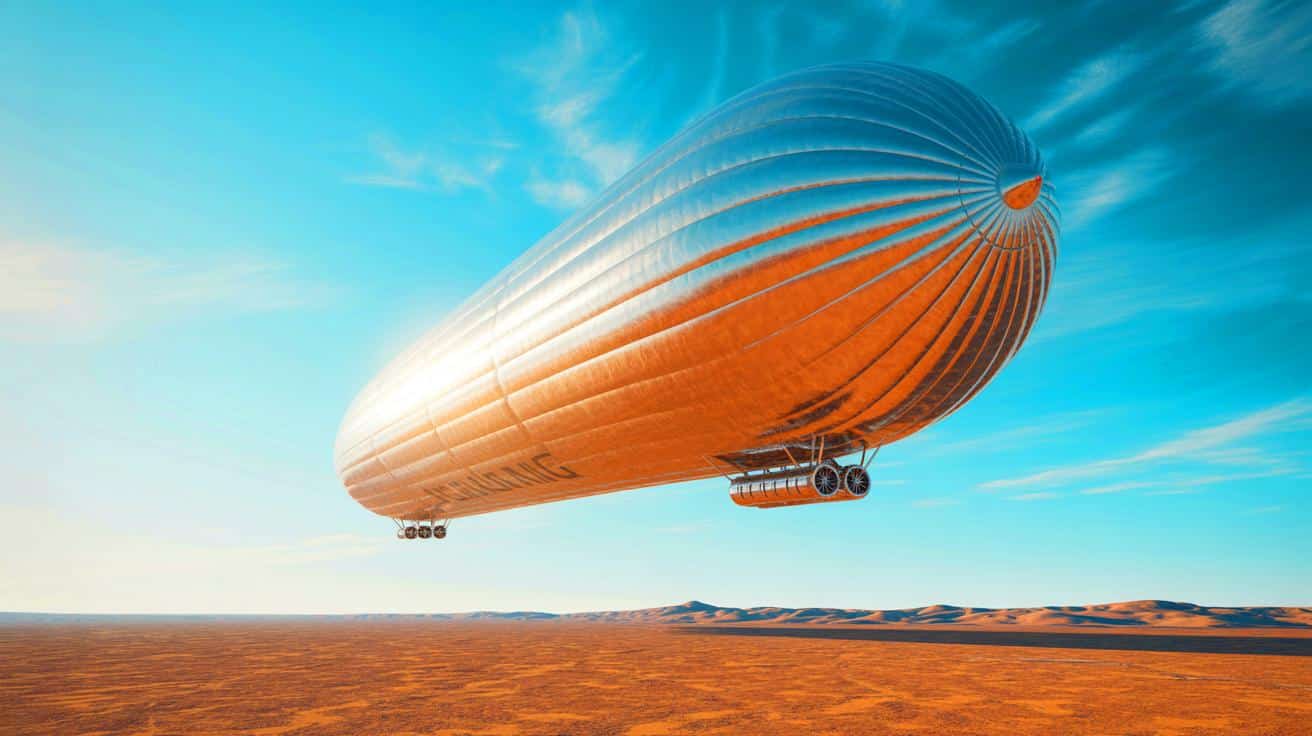
Floating high above the arid landscapes of Xinjiang, a remarkable innovation is taking shape in the form of the S1500, a prototype that reimagines wind energy capture. This Chinese creation, a colossal helium-filled dirigible, aims to harness the untapped power of high-altitude winds. By positioning itself beyond the reach of traditional wind turbines, the S1500 promises a new frontier in renewable energy. It has drawn the attention of scientists, policymakers, and technologists worldwide, all curious to see if this futuristic concept can deliver on its ambitious promises.
Harnessing the Power of High-Altitude Winds
The winds at altitudes between 1,600 and 33,000 feet are significantly stronger and more consistent than those encountered by ground-based wind turbines. This high-altitude wind energy is an enticing prospect for engineers and environmentalists alike. The S1500 capitalizes on this by utilizing a 200-foot-long, 130-foot-wide helium balloon equipped with twelve 100-kilowatt turbines. This configuration allows it to generate energy comparable to a small traditional wind farm, but within a single airborne platform.
The electricity produced is then transmitted to the ground through a high-voltage cable, demonstrating a novel method of energy transfer. This system not only promises improved efficiency but also reduces the need for cumbersome, expensive turbine structures on land. The S1500’s design showcases a strategic shift from the conventional approach of building ever-taller towers, instead opting to directly access the potent energy available at higher altitudes.
Ruggedness and Utility in Remote Areas
Deploying such a massive dirigible in the unpredictable winds of the Xinjiang desert posed significant challenges. Yet, the S1500 has proven its resilience in harsh conditions during initial tests in Hami. Engineers have developed a system that allows for rapid deployment and relocation, crucial for providing energy to isolated locations, islands, or disaster-stricken regions.
Remarkably, the dirigible's construction also promises a reduction in material usage by 40% compared to traditional turbines, alongside a 30% decrease in electricity production costs. These factors make the S1500 an attractive proposition for policymakers seeking affordable renewable energy solutions. Its successful deployment could revolutionize how we think about wind energy, offering a more flexible and cost-effective alternative.
China's Lead in Airborne Wind Energy
While the S1500 has captured global attention, it is not the first attempt at airborne wind energy. British company Kite Power Systems and Dutch startup Ampyx Power have explored kite-based and glider systems, respectively, while Google's Makani Technologies worked on drone-mounted turbines. However, the S1500 stands out due to its scale, as no other project has managed to integrate turbines directly into the air in such a substantial manner.
China's approach underscores its commitment to becoming a leader in renewable energy technology. By taking airborne wind energy to new heights, the S1500 sets a new benchmark in the field. This innovation aligns with China's broader energy strategy, positioning the nation as a formidable player in the global push for sustainable power solutions.
Challenges Ahead for Widespread Adoption
Despite its promise, the S1500 faces numerous hurdles before it can achieve widespread adoption. Key challenges include maintaining stability in high winds, ensuring the safety and durability of its cables, and managing helium resources. The long-term economic viability of such systems also remains an open question.
Nonetheless, the vision of a massive white dirigible floating over deserts or oceans is captivating. It evokes a future where renewable energy is both innovative and visually striking, akin to a blend of Jules Verne's imagination and applied science. As we look to the skies for solutions, one must wonder: Could airborne wind energy become a mainstay in our quest for a sustainable future?
As we ponder the potential of the S1500 and its impact on renewable energy, questions about its feasibility and integration into existing energy systems remain. Can innovations like the S1500 truly revolutionize how we harness wind energy, or will they remain experimental endeavors? The answers could shape the future landscape of sustainable energy solutions worldwide.

Wow, floating wind farms! Are we living in the future or what? 🤖
Wow, this is like something out of a sci-fi movie! Can’t wait to see how this develops. 🚀
How does the S1500 compare to traditional wind farms in terms of efficiency?
How do they plan to handle the helium supply? Isn’t that a finite resource?
China is really pushing the boundaries with this one. Impressive! 🇨🇳
Interesting concept, but I wonder how they will maintain stability in such high winds?
Did anyone else think of the movie “Up” when they read about this dirigible? 🎈😂
Thanks for the update. It’s amazing to see these innovations in renewable energy.
How do they prevent bird strikes at those altitudes?
Wouldn’t the cost of helium be a significant factor in the overall expense of the project?
Great innovation, but I wonder about the environmental impact of helium extraction.
Is it safe to have high-voltage cables hanging from the sky? 🤔
China’s really taking the lead in renewable tech. Impressive move with the S1500.
Finally, some good news for renewable energy! Thanks for sharing. 🌍
LOL, next we’ll be seeing floating cities powered by these dirigibles! 😄