




| IN A NUTSHELL |
|
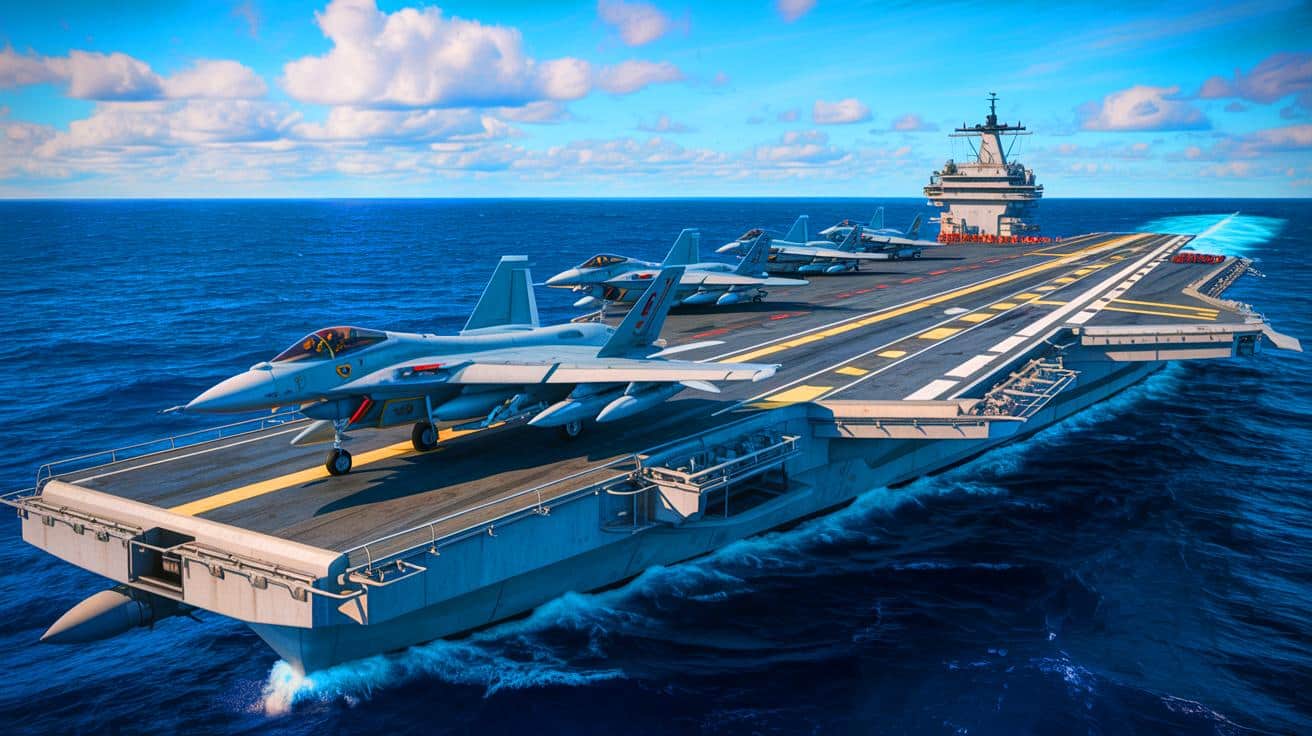
The unveiling of China’s latest naval capabilities with the Fujian aircraft carrier marks a significant milestone in maritime power projection. The vessel, equipped with cutting-edge technology, has successfully conducted launch and recovery operations with advanced aircraft, including the J-35 stealth fighter. As China continues to expand its naval prowess, the Fujian represents a leap forward in both technological advancement and strategic capability. This development not only underscores China’s growing military strength but also raises questions about the shifting dynamics of naval power in the Asia-Pacific region.
China’s Leap in Naval Aviation
The People’s Liberation Army Navy (PLAN) has taken a substantial step forward with the Fujian aircraft carrier, the third in its fleet but the first to utilize catapult-assisted take-off but arrested recovery (CATOBAR) technology. This allows for more efficient and effective launch operations, enabling the carrier to deploy a wider range of aircraft with heavier payloads. The J-35 fifth-generation stealth fighter, alongside the J-15 attack jet and the KJ-600 airborne early warning aircraft, recently launched from the carrier as part of its initial operations.
The ability to operate these advanced aircraft signals a major enhancement in China’s naval aviation capabilities. The Fujian’s electromagnetic catapult system, second only to the U.S. Navy’s, positions it as a formidable force in the region. This technological edge allows China to project power further and with greater precision, potentially altering the strategic balance in the Asia-Pacific.
Regional Implications of Fujian's Deployment
The deployment of the Fujian has significant implications for regional security dynamics, particularly in the contested waters of the South China Sea. As the carrier sailed through the Taiwan Strait for testing, it highlighted China’s intentions to assert its presence in these critical maritime regions. The strategic deployment underscores Beijing’s ambition to establish a dominant naval presence, capable of projecting power throughout the Western Pacific and beyond.
This move comes amid a broader naval arms race in the region, with India, Japan, and Indonesia also enhancing their naval capabilities. India is set to deploy French Rafale fighters on its latest carrier, while Japan is converting destroyers to support F-35B operations. These developments indicate a regional trend towards bolstering naval strength, in response to China's expanding capabilities.
Technological Advancements in the Fujian
The Type 003 Fujian, launched in 2022, is a testament to China's rapid advancements in naval technology. At 80,000 tons, it is the largest warship to be launched in Asia since World War II. Its capacity to support an air wing of 40 aircraft underscores its role as a central asset in China's naval strategy. The integration of an electromagnetic catapult system is particularly noteworthy, as it allows for quicker and more efficient aircraft operations compared to traditional steam catapults.
Furthermore, the Fujian serves as a platform for testing and developing new technologies, such as unmanned aerial combat vehicles. Beijing's plans to equip its Type 076 landing helicopter docks with similar systems for drone operations further highlight its commitment to enhancing its naval warfare capabilities. These technological strides not only bolster China’s military prowess but also challenge other regional powers to innovate and adapt.
Strategic Outlook for China's Naval Power
With the commissioning of the Fujian on the horizon, China’s naval strategy is set to enter a new phase. The carrier's ability to field fifth-generation stealth fighters and early warning aircraft across the first island chain and Western Pacific Ocean significantly enhances Beijing's power projection capabilities. This development provides the PLAN with a versatile tool to assert its maritime interests and safeguard its strategic objectives.
Ben Lewis, a co-founder of PLATracker, emphasized the significance of these advancements, noting the potential for the PLAN to operate sophisticated carrier aircraft across the region. Such capabilities may alter the strategic calculations of neighboring countries and could lead to increased tensions in already contested waters. As the Fujian prepares to enter service, the international community will be closely watching how China leverages its new naval assets.
The launch of the Fujian and its advanced aircraft has undoubtedly shifted the naval landscape in the Asia-Pacific region. As China continues to expand its military capabilities, the implications for regional security and power dynamics are profound. In this evolving environment, nations will need to carefully consider their strategic responses. How will these developments influence future international relations and military strategies in the region?




Wow, this is a game-changer for China! Do you think this will escalate tensions in the South China Sea? 🤔
Wow, China’s stepping up their game! How does the J-35 compare to the US F-35?
Are these advancements triggering a new arms race in the South China Sea? 🤔
Great article! It’s fascinating to see how quickly China’s naval capabilities are advancing. Thanks for the insights!
The electromagnetic catapult system sounds impressive! How does it actually work?
Does anyone else think the electromagnetic catapult system sounds like something out of a sci-fi movie? 😄
China’s military spending must be through the roof! Is this sustainable in the long run?
How does the J-35 compare to other fifth-generation fighters like the F-35?
So, is this the beginning of a new Cold War at sea? 😮
This article raises some important questions about regional security. What are the potential implications for U.S. naval strategy?
Can someone explain how a stealth jet remains stealthy while launching from a carrier?