



| IN A NUTSHELL |
|
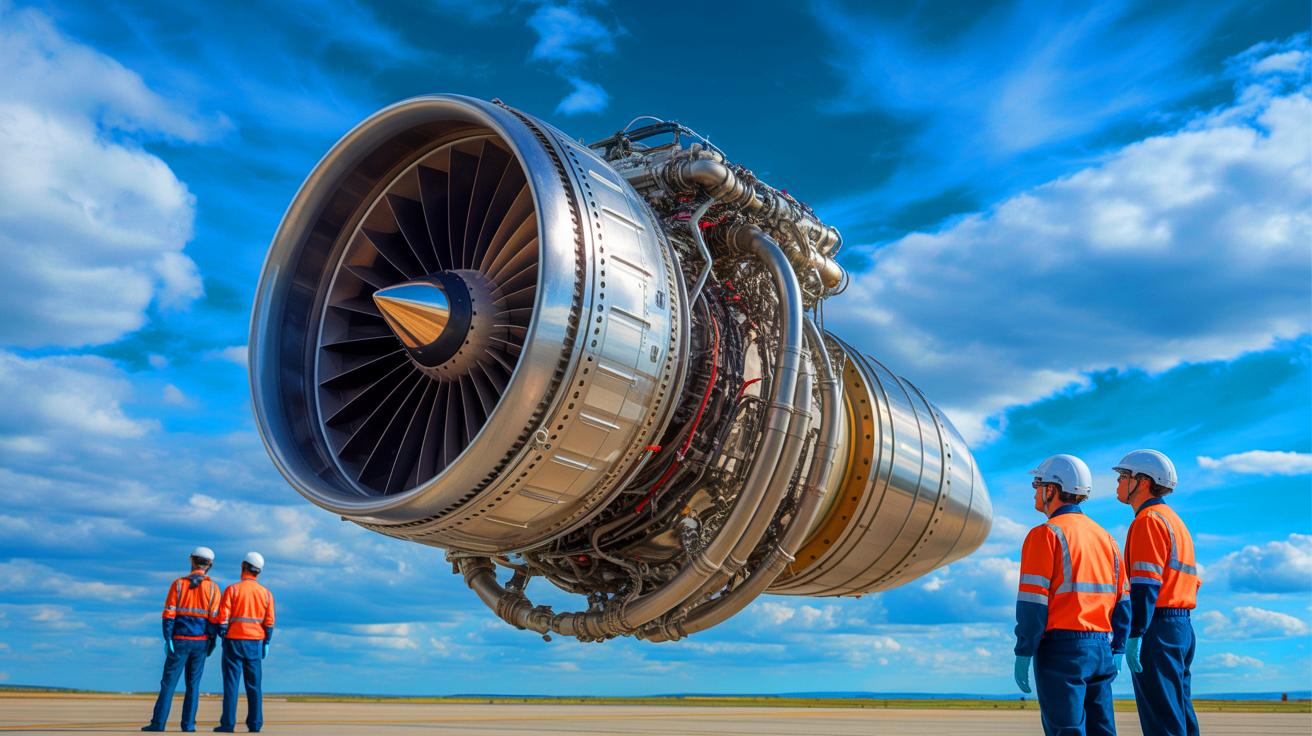
The aerospace industry is on the brink of transformation, led by China’s successful test of its first fully 3D-printed turbojet engine. This remarkable achievement not only signifies a milestone in manufacturing innovation but also positions China as a formidable force in global aerospace. The engine’s ability to operate at altitudes of up to 13,000 feet highlights the potential of additive manufacturing to redefine traditional production methods. As the world observes this technological leap, the implications for global aerospace dynamics become increasingly significant, raising questions about the future of engine manufacturing and international competitiveness.
China’s First Flight-Validated Turbojet in 160-kg Thrust
China’s successful test of a 3D-printed turbojet engine, generating an impressive 353 pounds of thrust, marks a pivotal moment in aviation engineering. This engine, which combines additive manufacturing with multi-disciplinary topology optimization, represents a new frontier in design and fabrication. By utilizing computational models to distribute materials efficiently, the engine achieves enhanced strength and reduced weight. Such an approach allows for the creation of complex components that traditional manufacturing methods cannot easily replicate.
The implications of this advancement extend beyond technical innovation. Strategically, it addresses China’s past dependency on foreign-sourced engines, a long-standing vulnerability in its industrial landscape. By leveraging 3D printing to tackle challenges like intricate metallurgy and precision engineering, China is poised to redefine the global aerospace market. This move not only accelerates development timelines but also positions China as a leader in manufacturing standards and capabilities.
A Technology with Critical Applications
While China’s achievement is groundbreaking, the use of additive manufacturing in aerospace is not entirely novel. Major players like GE Aviation and Pratt & Whitney have integrated 3D-printed components to enhance engine performance. However, China’s unique accomplishment lies in its ability to produce an entire engine using these methods. If scalable, this process could usher in a new era of aerospace innovation, setting a precedent for future developments.
The immediate application of this technology is likely to be in unmanned aerial vehicles (UAVs), where lightweight and efficient engines can drive high-speed operations. However, challenges remain in scaling production from prototype to mass production. This transition involves advancements in material science, especially high-temperature metal powders, and a rigorous certification process to ensure reliability. Despite these hurdles, the potential for industry-wide transformation is vast, promising to expand the boundaries of aerospace engineering.
Implications for Global Aerospace Industries
The successful test flight of China’s 3D-printed turbojet engine sends ripples across the global aerospace industry. By proving the viability of fully 3D-printed engines, China signals its readiness to lead in aerospace innovation. This development challenges traditional manufacturing paradigms and may influence how other nations approach engine production in the future.
Internationally, the shift towards additive manufacturing could heighten competition, spurring innovation and potentially reducing costs. As more countries invest in this technology, aerospace advancements are likely to accelerate, with new designs and capabilities emerging. The strategic implications are profound, as nations strive for self-sufficiency in aerospace technology, reducing dependencies and bolstering national security. This shift may redefine the global balance of power in aerospace innovation.
The Road Ahead: Challenges and Opportunities
Despite the promising progress, widespread adoption of 3D-printed engines faces significant challenges. Scaling production to meet industrial demands requires overcoming technical hurdles in material science and quality control. Consistent production quality and meeting rigorous certification standards will be crucial for long-term success.
However, the opportunities presented by this technology are substantial. As it matures, faster prototyping, lower production costs, and enhanced design flexibility are expected. The ease of producing complex components opens new possibilities for improving engine performance and efficiency. As China continues to refine and scale this technology, the global community watches with anticipation, eager to see how it will impact the future of aerospace engineering.
As we gaze into the future, one pressing question emerges: how will this revolutionary approach to engine manufacturing influence the global balance of power in aerospace technology?


Wow, a storm-harnessing device? Sounds like something out of a sci-fi movie! 🌩️
Is it safe to use this device during a storm? 😬
Finally, a way to harness Mother Nature’s fury for good! Thanks, scientists! 🙌
How does this device actually work? Would love more details!
What happens if something goes wrong with the device during a storm?
Can’t wait to see how this technology evolves over time. So exciting! 🚀
Are there any environmental concerns with using this storm-harnessing device?
How much energy can this device generate from a single storm? 🤔
Is it just me, or does this sound like a plot for the next blockbuster disaster movie? 🎬
Amazing news! Kudos to the team for pushing the boundaries of what’s possible.
Does this mean we can finally say goodbye to power outages during storms?
Sounds revolutionary, but I’m curious about the cost of implementing such technology.
Hope they have a backup plan if things go awry. Safety first! ⚠️
What are the critics’ main arguments against this device?
Can this technology be used worldwide, or is it just for the US?
This is either genius or madness. Guess time will tell! 🤷♂️
Who else is imagining a giant lightning rod? Just me? ⚡
I’m skeptical. Harnessing storms seems too risky and unpredictable.
Can’t believe this is actually happening. Science fiction becomes reality!
Will there be any public demonstrations of this device in action?
How will this affect the current energy industry? Big changes ahead?
Thank you to the brilliant minds behind this innovation. Truly inspiring. 😊
Is this device meant to be mobile, or is it fixed in one location?
Hope this doesn’t anger the storm gods! 😄
Curious to see how this compares to other renewable energy sources.
Imagine the potential if this tech becomes mainstream. Endless possibilities!
Is this the start of controlling the weather, or am I getting ahead of myself? 🌧️
How long did it take the scientists to develop this technology?
Sounds impressive, but I worry about the unintended consequences.
Why do some people oppose this innovation? Need more info on the critics’ views.
Could this device be used in regions prone to frequent storms?
Thanks to the team for thinking outside the box. This could change everything! 💡
I’m excited and nervous at the same time. What a time to be alive!
Does this mean we could potentially power entire cities with storms?
Hope this tech gets the support it needs to succeed! Fingers crossed. 🤞