




| IN A NUTSHELL |
|
The United States is embarking on a groundbreaking endeavor to redefine satellite deployment through the development of an orbital aircraft carrier. Spearheaded by the innovative startup Gravitics in collaboration with the U.S. Space Force, this initiative underscores a strategic commitment to space as an essential frontier. The project not only highlights the U.S.’s focus on technological advancement but also exemplifies the growing synergy between private enterprises and national defense. In an era marked by escalating global tensions, this decisive move aims to fortify the nation’s dominance in the space domain and secure its presence on the cosmic stage.
The Vision Behind the Orbital Aircraft Carrier
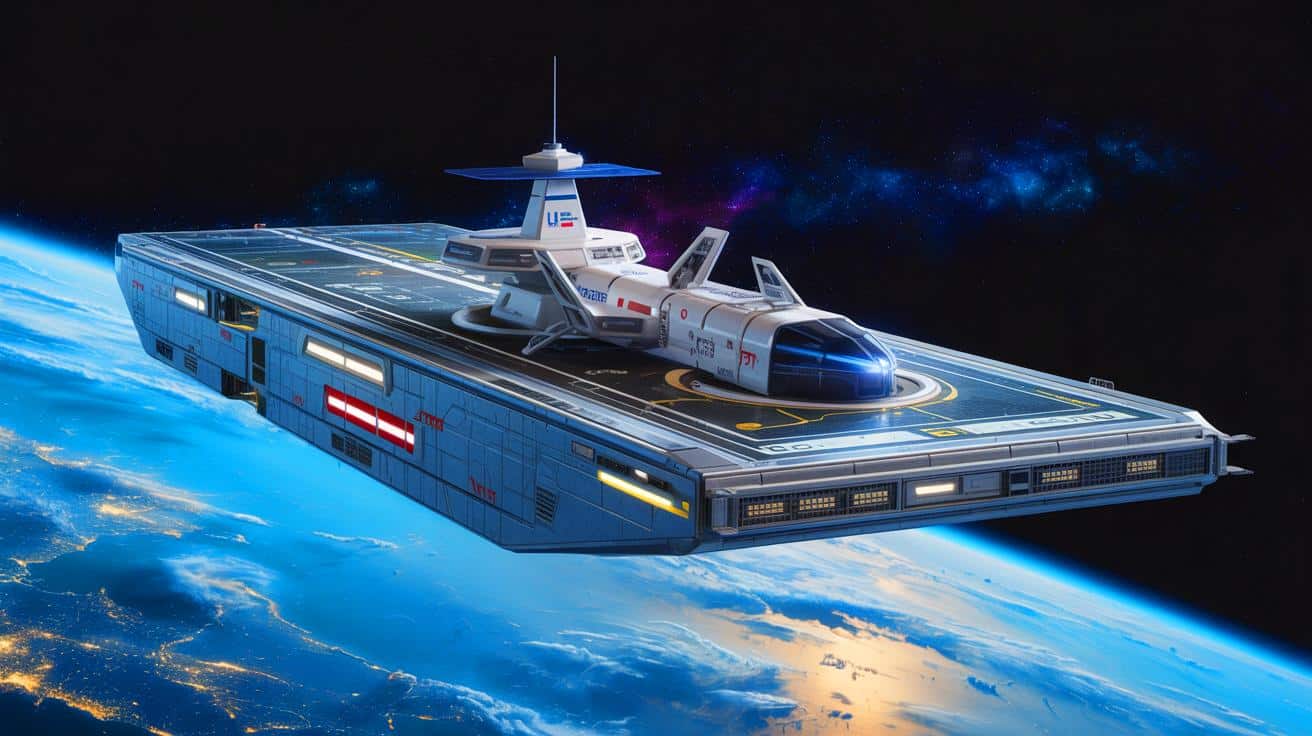
Gravitics, in partnership with the U.S. Space Force, is at the forefront of a visionary $60 million project aimed at transforming the way satellites are launched and managed. The concept of an orbital aircraft carrier is designed to enable the direct deployment of satellites from Earth’s orbit, offering a more responsive and agile approach to national security challenges. This revolutionary platform eliminates the need for traditional rocket launches, providing a strategic advantage by facilitating rapid deployment capabilities.
The initiative aligns with the U.S. military’s broader strategy to maintain an assertive orbital presence amid rising concerns of a space arms race. By establishing a pre-positioned platform in orbit, the U.S. can efficiently deploy satellites to address both immediate and long-term security requirements. This advancement signals a significant leap in space technology, reaffirming the United States’ leadership in global space capabilities and positioning the nation at the forefront of technological prowess.
Enhancing Space Security and Superiority
The orbital aircraft carrier being developed by Gravitics is engineered to house multiple satellites in an unpressurized environment, safeguarding them from space's harsh conditions. This protective measure is crucial in an era increasingly dominated by electronic warfare and cyber threats. By isolating and shielding sensitive electronics and batteries, the U.S. secures a strategic edge in bolstering its space security capabilities.
The carrier's ability to conceal satellites from adversarial detection further enhances its tactical advantage. Gravitics CEO Colin Doughan describes the carrier as a "game-changer" that aligns seamlessly with the Space Force's mission of achieving orbital dominance. This innovative project not only enhances military capabilities but also sets a precedent for future advancements in space exploration and technology.
Public-Private Partnerships and Their Impact
The development of the orbital aircraft carrier underscores the critical role of public-private partnerships in the evolving space sector. Gravitics, in collaboration with Axiom Space, is also focused on developing a pressurized space module, underscoring its commitment to both national defense and commercial solutions. This dual approach highlights Gravitics's alignment with the Department of Defense's objectives while showcasing its potential for growth.
Collaborations between private companies and government entities are essential for integrating new technologies into national defense strategies. By working together, these partnerships strengthen the U.S.'s position in space while fostering the development of technologies with far-reaching civilian applications. The success of these collaborations could pave the way for new market opportunities and further advancements in the realm of space technology.
The Future of Space Exploration
The emergence of technologies like the orbital aircraft carrier heralds a new era of space exploration and utilization. This technological leap has the potential to reshape security, surveillance, and communication paradigms, impacting both military operations and private sector involvement. The implications are profound, signaling a transformative shift in how space is utilized and governed.
As the U.S. Space Force and companies like Gravitics prepare to navigate future challenges, important questions about international space cooperation arise. How will these innovations influence diplomatic relations among nations? More importantly, how can we ensure that space remains a realm of shared peace and progress, benefiting all of humanity?
With the United States taking bold steps to secure its position in space, the future of satellite deployment and space exploration appears promising. As technological advancements continue to unfold, the broader implications for international relations and global security will become increasingly significant. As we look toward the stars, how will these developments shape the future of space exploration and cooperation among nations?


Wow, an orbital aircraft carrier! Sounds like something out of a sci-fi movie! 🚀
Wow, an orbital aircraft carrier! 🚀 How long until we see this in action?
Is this just another way for the military-industrial complex to expand into space? 🤔
How will the orbital aircraft carrier impact international space treaties?
Thank you for the insightful article. This project seems like a game-changer!
Does this mean we’ll soon have space battles like in Star Wars? 😄
How will this affect international space treaties and agreements?
I’m skeptical about the costs. Is $60 million really enough for such a project?
Will the orbital carrier be visible from Earth? Just curious! 👀
I hope this doesn’t escalate the space arms race further. 🌌
This sounds ambitious, but what happens if it becomes a target for space debris?
Thanks for the article! This is exciting news for space enthusiasts! 👍
Gravitics sounds like a promising company! Can’t wait to see their progress.
Does this mean we are closer to having Star Trek-style starships? 😄
What kind of satellites will they deploy from this carrier?
Are there any environmental concerns with having such a large structure in orbit?
Can’t wait to see how this transforms satellite deployment! 🤩
Does this mean traditional rocket launches will become obsolete?
How will this affect commercial satellite companies?
Is this all about national security, or are there commercial interests too?
Seems like a significant leap in technology. Bravo to Gravitics and the Space Force! 🚀
Will other countries try to build something similar?
I’m worried about space debris. How will this project manage that issue?
Is this the future of space exploration? Truly groundbreaking!
Are there any risks involved with the unpressurized environment for satellites?
Can this orbital carrier be seen from Earth?
Sounds like the Space Force is really ramping up its capabilities.
How soon can we expect to see this in action? ⏳
Is there any international collaboration in this project?
Hope this doesn’t lead to more conflicts in space. Peace is key! ✌️
Can the orbital aircraft carrier be reused, or is it a one-time use?
Does this open new opportunities for scientific research in space?
How does the carrier remain undetected by adversaries?
I’m curious about the public-private partnership aspect. How does it work?
Is this an entirely new concept, or has it been attempted before?
Exciting times for space exploration! What’s next, a lunar base? 🌕