




| IN A NUTSHELL |
|
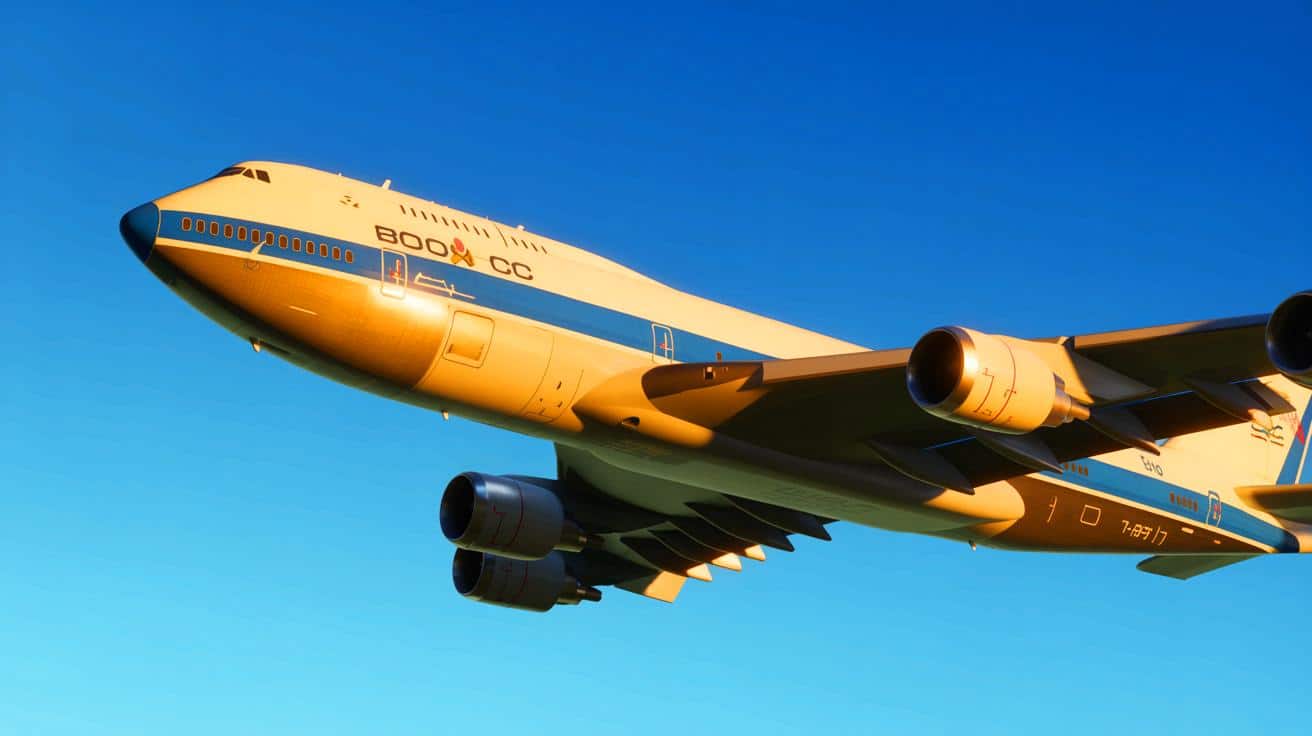
The United States Air Force has taken a significant step toward modernizing its defense capabilities. On August 7, 2025, a Boeing 747-8 aircraft known as the E-4C, or more ominously, the “Doomsday Plane,” completed its maiden flight in Dayton, Ohio. This state-of-the-art airborne command center is designed to withstand nuclear attacks and coordinate military responses during catastrophic events. As part of a $13 billion investment, the E-4C will replace the aging fleet of E-4B “Nightwatch” aircraft, offering enhanced security and communication capabilities.
The Costly Endeavor to Secure the Future
The introduction of the E-4C underscores the U.S. Air Force’s commitment to upgrading its defense apparatus. The current fleet of E-4B aircraft, which dates back to the 1980s, serves as the airborne command post for the President of the United States and military leaders during emergencies. The E-4C is poised to take over this critical role. With a price tag exceeding $13 billion, the transformation of Boeing 747-8 into this highly specialized aircraft is a testament to the evolving nature of military technology.
The modernization process involves converting standard commercial aircraft into militarized fortresses. This task has been entrusted to Sierra Nevada Corporation, which is responsible for outfitting the planes with the necessary technology to ensure they can operate in the toughest conditions. The E-4C’s ability to withstand nuclear attacks makes it a strategic asset in global defense. Despite the high cost, the confidentiality surrounding its design and capabilities underscores its importance in national security.
Technological Advancements and Operational Readiness
The E-4C is not just a flying command center; it is a technological marvel designed to function under extreme conditions. One of its key features is its ability to communicate with the entire fleet of nuclear submarines, ensuring seamless coordination in the event of a nuclear conflict. The aircraft can reportedly accommodate up to 110 personnel, providing ample space for command operations. Its operational readiness is bolstered by its capability to be refueled mid-air, allowing it to remain airborne indefinitely and far from potential threats.
A significant departure from conventional aircraft design is the absence of windows. This feature minimizes vulnerabilities and reflects its mission as a secure command post rather than a transport vehicle. The E-4C is scheduled to become fully operational in 2036. This timeline suggests that the current U.S. administration is focused on long-term strategic planning, ensuring the country's defense systems remain robust for future generations.
Strategic Implications and Global Defense Dynamics
The E-4C is set to redefine strategic deterrence by enhancing airborne command capabilities.
This development occurs at a time when global tensions and military advancements are accelerating. The E-4C's introduction may shift the dynamics of deterrence, providing the U.S. with a more resilient airborne command structure. The aircraft's ability to remain operational in the face of nuclear threats offers a strategic advantage, potentially altering the calculus of adversarial nations.
Furthermore, the E-4C's presence could influence defense policies and military investments worldwide, as other nations may seek to develop similar capabilities. The aircraft's operational readiness by 2036 places the U.S. at the forefront of technological and military innovation, setting a benchmark for global defense strategies.
The Road Ahead: Challenges and Opportunities
Despite its advanced features, the E-4C faces several challenges before becoming fully operational. The extensive testing and evaluation process will be crucial to ensure its reliability and effectiveness. Additionally, integrating this new capability into existing command structures will require strategic planning and coordination across various military branches.
Nevertheless, the E-4C represents an opportunity to enhance national security and project power in an increasingly complex world. Its development reflects the broader trend of modernizing military assets to address emerging threats. As global security environments evolve, the E-4C will likely play a pivotal role in shaping future defense strategies.
The debut of the E-4C marks a significant milestone in military aviation and defense strategy. As the U.S. Air Force prepares to integrate this new capability, questions remain about its long-term impact on global security. How will the introduction of such advanced technology influence international relations and defense policies in the coming decades?




Wow, $13 billion? That’s a lot of money! I hope it’s worth it. 💸
Wow, a plane that can survive a nuclear war! Just hope it never has to prove it. 😅
Why is it called the “Doomsday Plane”? Sounds a bit dramatic. 🤔
Is the $13 billion price tag justified for a single aircraft? 🤔
Great article! I appreciate the detailed breakdown of the E-4C’s capabilities.
2036 seems so far away! Why does it take so long to get operational?
Will this “Doomsday Jet” affect the balance of power globally?
Thank you for the informative article. I had no idea such projects were in the works!
How can a plane withstand a nuclear attack? Seems like something out of a movie!
So, basically, it’s a flying bunker with no windows? Impressive and slightly claustrophobic! 😂
Who needs windows anyway? 😂 Perfect for introverts who hate sunlight!
What’s the difference between the E-4C and the old E-4B planes?
Is it really necessary to spend so much on a jet when there are so many other pressing issues?
This sounds like something out of a sci-fi movie. Are we sure it’s real?