


| IN A NUTSHELL |
|
Since the detonation of the first atomic bomb during the Trinity test in 1945, nuclear weapons have profoundly influenced military, scientific, and geopolitical landscapes. Despite technological and scientific advancements, manufacturing nuclear weapons remains a daunting challenge even for the most developed nations. The complexity and cost associated with producing these weapons of mass destruction are significant barriers. This article delves into the intricate processes and challenges faced in the creation of nuclear arsenals, highlighting the technological, infrastructural, and geopolitical hurdles that define this high-stakes endeavor.
The Challenge of Uranium Enrichment
Central to the development of nuclear weapons is uranium, a naturally occurring element used to create a nuclear explosion. However, natural uranium is primarily composed of the isotope U-238, which is not sufficiently reactive for weaponization. The key lies in increasing the concentration of U-235, a more reactive isotope, through a process known as enrichment.
Enriching uranium is a complex task that involves separating U-235 from U-238, as natural uranium contains merely 0.7% of U-235. To be viable for a nuclear weapon, the concentration must be raised to over 90%. This requires sophisticated technology and facilities, including centrifuges that separate isotopes based on their mass difference.
Enrichment demands significant resources and expertise. The process is not only technically challenging but also hazardous, as it involves handling highly toxic uranium hexafluoride. Mistakes in handling can lead to severe environmental and health consequences, underscoring the need for stringent safety protocols and skilled personnel.
Plutonium: A Complex Alternative
In addition to uranium, plutonium-239 is another critical fissile material for nuclear weapons. However, plutonium is not naturally abundant and must be produced in nuclear reactors. Here, uranium-238 captures neutrons and transforms into plutonium-239 through a series of reactions.
Extracting plutonium from irradiated nuclear fuel is a highly complex and risky process. It involves chemical reprocessing techniques that separate plutonium from other fission products. These methods are expensive and pose significant safety risks due to the intense radioactivity of plutonium, necessitating advanced facilities and protective measures.
Handling plutonium requires meticulous purification before it can be used in weapons, restricting this capability to nations with advanced industrial and scientific infrastructure. The hazardous nature of plutonium further complicates its production and handling, limiting widespread capability.
High-Tech Infrastructure: A Costly Necessity
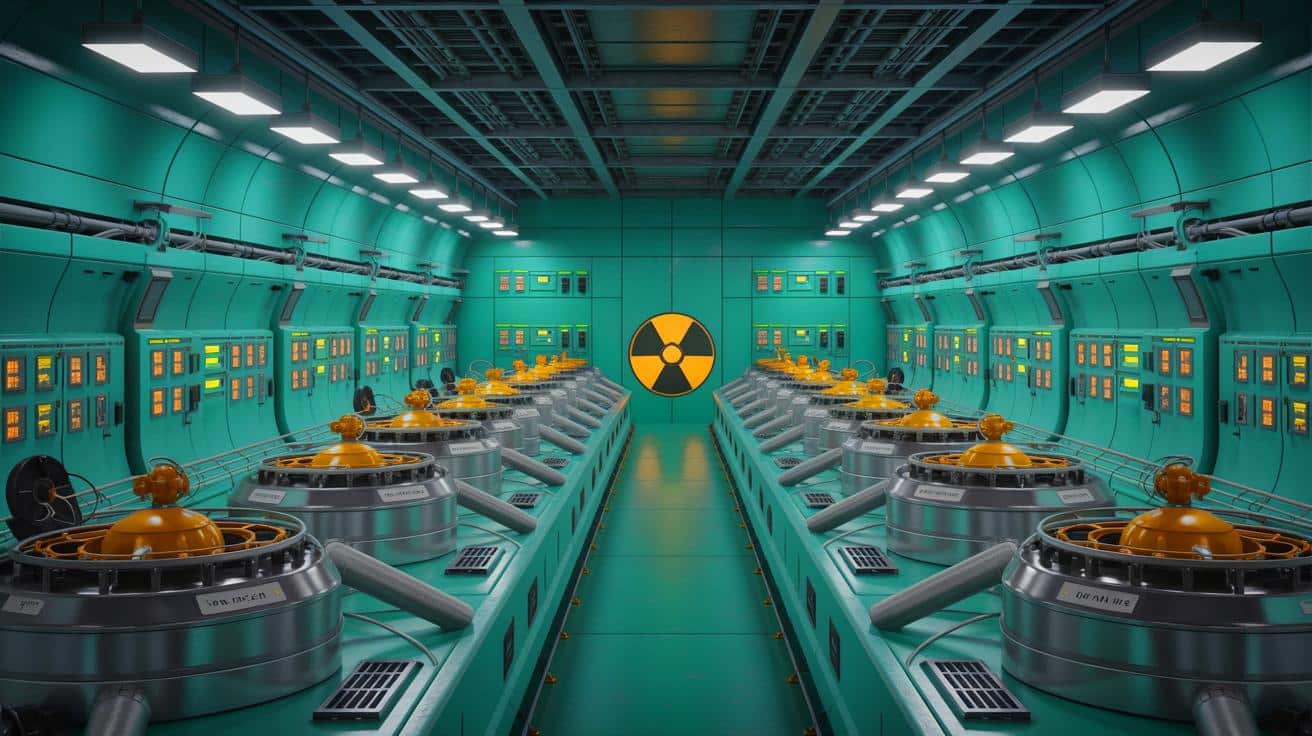
Producing nuclear weapons necessitates more than just material expertise. It requires extensive infrastructure, including nuclear reactors, specialized centrifuges, secure laboratories, and reprocessing facilities. Establishing these capabilities demands substantial financial investment and skilled labor.
Building an enrichment plant or a plutonium reprocessing facility involves cutting-edge technology and highly trained personnel. Protecting these installations from sabotage or espionage adds layers of complexity and cost. Furthermore, testing nuclear weapons poses significant risks, both in terms of safety and geopolitical stability.
Despite the existence of technology to produce these weapons, international treaties largely prohibit outdoor nuclear tests, shifting the focus to costly computer simulations. This further increases the financial and technical burden on countries pursuing nuclear capabilities.
Geopolitical Risks and International Pressure
Beyond technical and financial challenges, nuclear weapon development is tightly regulated by geopolitical factors. The Treaty on the Non-Proliferation of Nuclear Weapons (NPT), signed by 190 nations in 1968, aims to prevent nuclear weapon proliferation. It encourages nations to limit military nuclear programs and work towards disarmament.
Countries attempting to develop nuclear arsenals outside this framework face intense international pressure. Sanctions and diplomatic actions may be employed to deter nuclear ambitions. The International Atomic Energy Agency (IAEA) conducts regular inspections to ensure compliance with the NPT, adding another layer of oversight.
Nations like India, Pakistan, Israel, and North Korea, which have developed nuclear capabilities, face ongoing international scrutiny and pressure to curb proliferation. Their nuclear programs highlight the geopolitical complexities intertwined with nuclear weapon development.
The Mastery of Complex Expertise
Ultimately, producing nuclear weapons is a highly complex, costly endeavor requiring advanced technological and industrial capabilities, rare expertise, and significant financial resources. The enrichment of uranium, production of plutonium, and establishment of reprocessing and testing facilities are formidable obstacles.
Beyond technical challenges, nuclear proliferation remains a contentious political issue. Treaties like the NPT exert constant pressure on nations contemplating nuclear arsenals, explaining why so few countries possess these weapons despite available technology.
While technically feasible, manufacturing nuclear weapons is a complex, risky, and expensive pursuit, limited to a select few countries with requisite resources and expertise. Given these challenges, what role will nuclear weapons play in the future of global security and diplomacy?

Fascinating article! I never realized how much goes into making a nuclear bomb. 😲
This article is quite enlightening. I always assumed building a nuclear bomb was straightforward once you had the materials. Thanks for clarifying!
If it’s so difficult, why do countries still pursue nuclear weapons instead of focusing on alternative defense strategies? 🤔
Why do they need such a high percentage of U-235? Isn’t there any way to use less?
Wow, 90% enrichment! I can’t even get my morning coffee right. ☕
This sounds like something out of a James Bond movie! 😂
Isn’t it time we focus more on disarmament rather than justifying the complexity of building these weapons?
Thank you for the detailed breakdown. I had no idea about the geopolitical pressures involved.
Thank you for breaking it down. The technicalities are daunting!
Can someone explain why 90% uranium is necessary? Isn’t that overkill? 🤷
Can other isotopes be used besides U-235 and plutonium?
Great article, but it would’ve been helpful to include more about the environmental impacts of uranium enrichment.