



| IN A NUTSHELL |
|
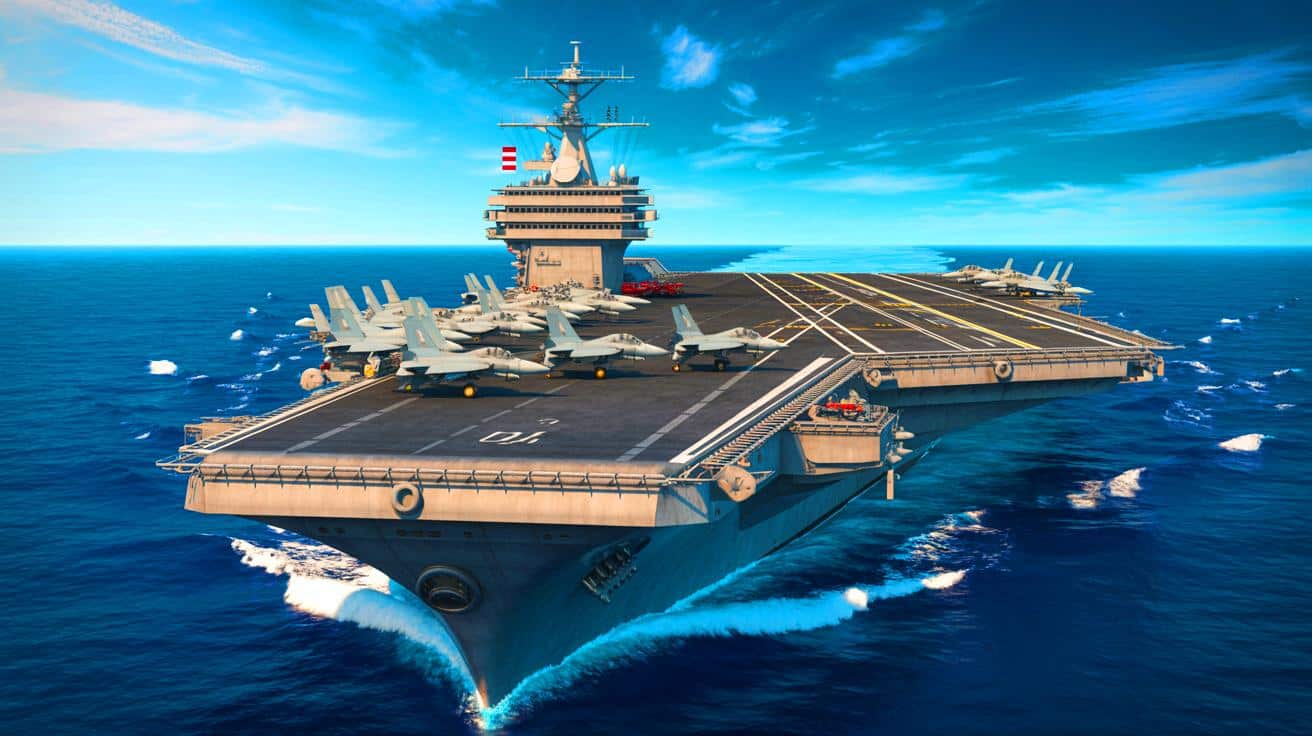
The USS Gerald R. Ford represents a significant leap in naval technology and strategic capability for the United States Navy. As the largest and most technologically advanced aircraft carrier in the world, it is a critical component of the U.S.’s global military presence. Commissioned in 2017, this carrier stands as a symbol of innovation, despite facing substantial challenges during its development. With its cutting-edge systems, the USS Gerald R. Ford sets a new standard in naval warfare, reflecting the U.S.’s commitment to maintaining maritime dominance. Its deployment continues to influence global defense strategies and technological advancements in military operations.
The Technological Marvel of USS Gerald R. Ford
The USS Gerald R. Ford is a testament to the pinnacle of naval engineering, measuring about 1,106 feet long with a flight deck that spans 256 feet. This colossal vessel boasts a displacement of 100,000 tons and is powered by two nuclear reactors. These reactors drive four shafts, allowing the carrier to move at speeds exceeding 30 knots, facilitating rapid deployment across the globe. The immense power generation capability supports a host of sophisticated onboard systems.
A key feature of this carrier is the Electromagnetic Aircraft Launch System (EMALS), a significant upgrade from the steam-powered catapults used in previous classes. EMALS increases the sortie rate to 160 per day, enhancing operational efficiency by reducing stress on aircraft. This technological advancement is complemented by an advanced arresting gear system and state-of-the-art weapons elevators, ensuring quick and efficient operations.
The carrier’s power generation is threefold compared to its predecessors, providing the necessary energy for advanced radar and defense systems. These include the SLQ-32(V)6 electronic warfare system and the Evolved Sea Sparrow Missile (ESSM) Block 1, which bolster the ship’s defensive capabilities. Such innovations ensure the USS Gerald R. Ford remains at the forefront of naval technology, crucial for its role in modern warfare.
Strategic Importance and Global Impact
As the centerpiece of the Carrier Strike Group, the USS Gerald R. Ford plays a vital role in U.S. naval strategy. This group combines the carrier with cruisers, destroyers, and supply ships, forming a powerful force capable of extended operations at sea. The carrier supports a variety of air wing missions, from combat and reconnaissance to deterrence, reinforcing the U.S. military’s global presence.
Deployments to strategic locations such as the Mediterranean underline its importance in regional deterrence and influence. The carrier’s presence in these waters serves as a powerful deterrent to potential threats, signaling the U.S.’s commitment to international peace and stability. Through naval exercises, the USS Gerald R. Ford demonstrates its capabilities and strengthens alliances with global partners.
Beyond military operations, the carrier is a symbol of technological achievement and national pride. As the most expensive warship ever constructed, costing approximately $13.3 billion, it represents a significant investment in the future of naval warfare. Its role in global security strategy underscores the U.S.’s dedication to maintaining its status as a leading military power.
China Firm Sparks US Fears: This New Battery Defies -40°F, Solar Industry Faces Potential Disruption
Challenges and Controversies
The development of the USS Gerald R. Ford was marked by several challenges, including delays and budget overruns. Integrating new technologies, such as weapon elevators and EMALS, proved complex, contributing to these setbacks. The difficulties in certifying these systems highlighted the challenges of pioneering new technologies on such a massive scale.
The budget overruns, exceeding initial estimates by about 30%, sparked debates over defense spending priorities. Critics argue that the funds could have been allocated to other defense needs or social programs. This controversy has fueled discussions about the allocation of military resources and the balance between innovation and cost.
Furthermore, the ship’s advanced automation systems, designed to reduce crew size by 700, have raised questions about the future of naval employment. While automation reduces operational costs and improves crew conditions, it also poses challenges related to job security and the human element in military operations. These debates continue to shape discussions on the future of naval employment and technology integration.
Future Prospects and Adaptability
The USS Gerald R. Ford is built with adaptability in mind, designed to integrate future technologies such as advanced drones. This capability ensures its continued relevance as naval warfare evolves. As threats and technologies advance, the carrier can be upgraded to maintain its strategic edge, making it a vital asset for years to come.
Its adaptability is crucial for addressing emerging challenges, ensuring the U.S. Navy’s continued superiority. The ability to incorporate new technologies places the USS Gerald R. Ford at the forefront of naval innovation, capable of responding to unforeseen threats and opportunities. This forward-thinking design sets the standard for future vessels, influencing the design and development of subsequent ships.
The USS Gerald R. Ford embodies the intersection of tradition and innovation, a testament to the enduring strength of the U.S. Navy. As it continues its operations around the world, one wonders: how will emerging technologies and geopolitical shifts shape the future role of such monumental vessels in global security?


Does anyone else think $13 billion is a little too much for a ship that doesn’t work properly? 🤔
Wow, $13 billion? That’s a lot of dough for something that doesn’t work! 😲
Wow, I didn’t realize how important the USS Gerald R. Ford is to global military strategy!
Isn’t technology supposed to make things easier? Why is EMALS so problematic?
Who needs a functional catapult anyway? Just throw the planes off the deck manually! 😂
Maybe they should have stuck to the old steam catapults. If it ain’t broke, don’t fix it! 🤷♂️
Did they try turning the electromagnetic catapults off and on again? 🤷♂️
Thanks for the article. I learned a lot about naval technology!
Great article, thanks for shedding light on the issues with the USS Gerald Ford.
Isn’t there a backup plan when these advanced systems fail? Seems risky.
How do other countries’ aircraft carriers compare to the USS Gerald Ford?
It’s a shame to see so much money spent with so many issues still unresolved.
Why not just go back to steam catapults if the new tech isn’t reliable?
As a taxpayer, I’m concerned about where my money is going. What are the chances they’ll fix these catapults?
Maybe they should have invested in better technology testing before deployment.
This ship sounds like a beast! Too bad about the catapults.
How do they plan to fix the catapult issue? This seems like a major problem.
Maybe they should have built a prototype first before scaling up. 🤦♀️
The price of innovation is sometimes steep, but this is a bit much.
Anyone know how long it took to build this carrier?
With that budget, I could have built a fleet of smaller carriers!
Are there any other ships with similar issues in the Navy?
Great read! I’m curious about how they plan to fix these technical challenges.
What’s the point of having the latest tech if it’s not reliable? 🤔
Can they retrofit the ship with older tech to make it functional?
Seems like a lot of money went into a ship that can’t even launch planes properly.
Even the most advanced tech can have teething problems, I guess!
They should consult with experts from other countries to get this sorted.
Hope they find a solution soon. This is embarrassing for the Navy.
At least it’s good for deterrence, even if the tech isn’t working perfectly! 😅
So much for “most technologically advanced,” huh?
How does this impact the Navy’s operational capabilities right now?
This is why we can’t have nice things… or functioning catapults. 😒
Seems like they need a better project management team for these ships.
Maybe they should have spent more on R&D before building it.
Sounds like a classic case of “too many cooks” in the engineering process.
Thanks for the insight. Hope they sort out the kinks soon!
Is this going to affect future naval projects? Budget cuts, maybe?
They should start a crowdfunding campaign to fix the catapults! 😂
Do other carriers have similar technology issues, or is it just this one?
Hope this doesn’t undermine the U.S. Navy’s global presence.
Maybe it’s time for a new approach to defense spending.
Love reading about military tech, even when it fails. Fascinating stuff! 🚀