


| IN A NUTSHELL |
|
In a significant move towards reshaping America’s energy landscape, the U.S. Department of Energy has announced plans to allocate up to $800 million to support the development of small modular reactors (SMRs). This funding will be directed towards initiatives by the Tennessee Valley Authority (TVA) and Holtec, a private company. The push for SMRs comes as the nation experiences a renewed rise in power demand, driven by advancements in artificial intelligence, the cryptocurrency sector, and the growing popularity of electric vehicles. This initiative, while promising, also raises questions about cost-effectiveness and the handling of nuclear waste.
The Promise of Small Modular Reactors
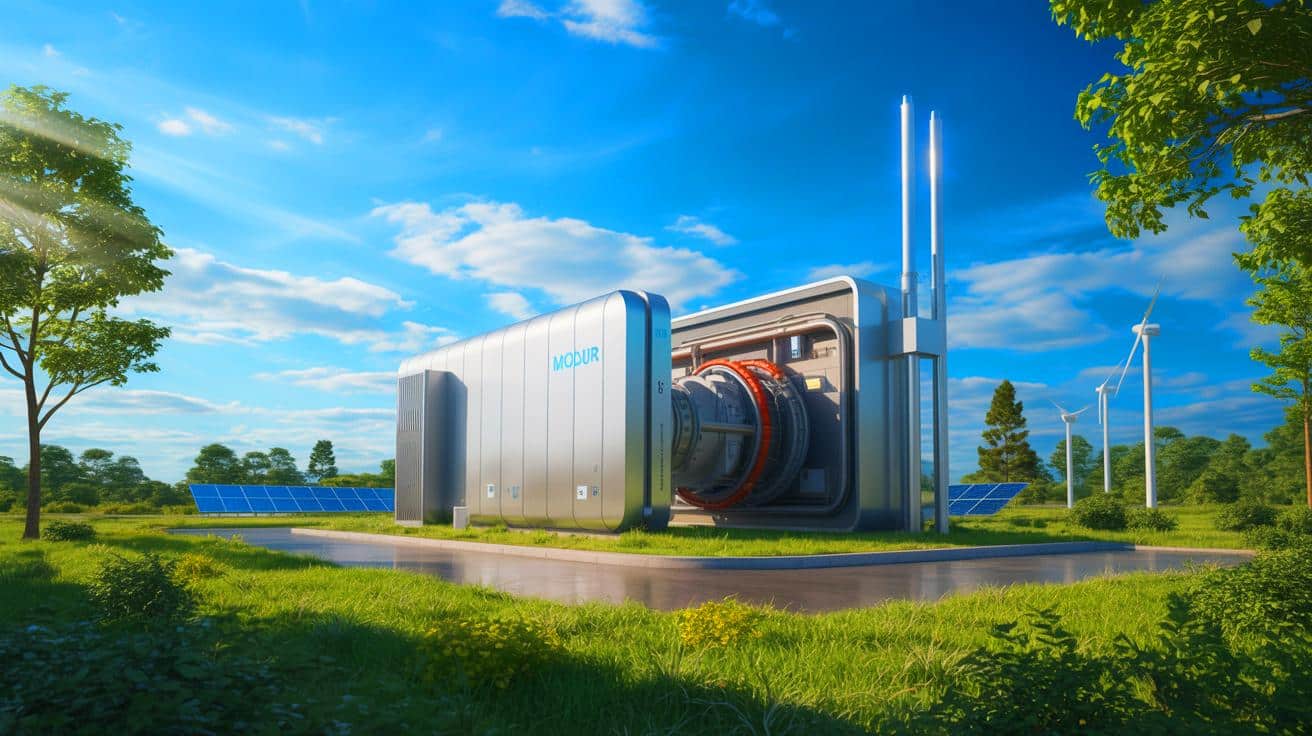
Small modular reactors, or SMRs, have been touted as a transformative innovation in the field of nuclear energy. Proponents of SMRs argue that these reactors can be constructed in factories, potentially leading to significant cost savings and efficiency improvements. Unlike traditional large-scale reactors, SMRs are designed to be more flexible, making them suitable for a variety of locations and applications. The anticipated ability to produce energy at a lower cost and with a smaller environmental footprint has made SMRs an attractive option for future energy needs.
However, despite the potential benefits, no SMRs are currently under construction in the United States. The technology remains in developmental stages, and several challenges must be addressed before these reactors can become a viable part of the national energy infrastructure. Questions persist about whether SMRs can deliver power as economically as existing large reactors. Additionally, the unresolved issue of radioactive waste disposal continues to be a significant concern for nuclear power’s expansion.
Funding and Strategic Partnerships
The U.S. Department of Energy’s funding initiative reflects a strategic partnership with both the Tennessee Valley Authority and Holtec. TVA, a government-owned utility, is set to receive up to $400 million in federal cost-shared funding. This financial support will be utilized for the development of a GE Vernova Hitachi BWRX-300 reactor at the Clinch River site in Tennessee, along with other related projects. The choice to support TVA underscores the government’s commitment to leveraging established entities in advancing nuclear technology.
Holtec, another recipient of the funding, plans to construct two SMRs at its Palisades site in Michigan. The company is also working towards reopening its 800-megawatt conventional reactor, which was shut down in 2022 after more than five decades of operation. Holtec’s efforts are supported by a substantial $1.52 billion loan guarantee secured during former President Joe Biden’s administration, with the Energy Department having already disbursed over $490 million. These collaborations highlight the importance of public-private partnerships in driving forward the next generation of nuclear energy solutions.
US Crude Production Reaches New Heights, Setting Record for Two Consecutive Weeks, EIA Reveals
Challenges and Concerns
While the potential of SMRs is exciting, several challenges and concerns must be addressed. One of the primary issues is the economic feasibility of these reactors. Critics question whether SMRs can truly compete with the cost-effectiveness of larger nuclear plants or other renewable energy sources like wind and solar. The initial costs of development and deployment might pose significant barriers, especially if production does not achieve the anticipated economies of scale.
Another significant concern is the management of nuclear waste. Nuclear energy generates long-lasting radioactive waste, and the United States currently lacks a permanent disposal solution. This issue poses a critical challenge to the broader acceptance and expansion of nuclear power. It raises questions about the environmental and public health implications of increased nuclear energy reliance. Addressing these concerns is crucial for the successful integration of SMRs into the national grid.
Looking Ahead: A Vision for the 2030s
According to the Energy Department, the development of SMRs is expected to progress significantly with the goal of deployment by the early 2030s. This timeline reflects a sense of urgency in meeting the United States’ growing energy demands while also transitioning to cleaner energy sources. “These awards ensure we can deploy these reactors as soon as possible,” stated Energy Secretary Chris Wright, emphasizing the government’s commitment to advancing nuclear technology.
The next decade will be pivotal for the energy sector, as technological advancements and policy decisions shape the future landscape. The success of SMR initiatives will depend on overcoming economic, technical, and environmental challenges. As the nation continues to explore innovative energy solutions, the role of nuclear power in achieving sustainable energy goals remains a topic of significant debate and consideration.
As the United States ventures into this new era of energy innovation, the question remains: How will the development and deployment of small modular reactors shape the future of the country’s energy strategy and its commitment to reducing carbon emissions?



Great initiative! Hope this funding will lead to more jobs in the energy sector. 🌱
Wow, $800 million? That’s a huge investment! Let’s hope it pays off. 💸
Are small modular reactors really safe? I have my doubts. 😬
How will the US manage the nuclear waste from these new reactors?
Thanks to the U.S. Department of Energy for supporting innovation in nuclear power!
How long before we see these reactors actually working? Decades?
Do we really need more nuclear energy? What about wind and solar?
SMRs sound promising, but what about the cost? Can they really compete with solar and wind?
Is the economic feasibility of SMRs really that much of a concern?
I’m excited to see how SMRs will change the energy landscape! 🌍
Finally, some investment in nuclear power! It’s about time! 😄
So, what happens to all the nuclear waste? No clear answers yet?
Can someone explain why SMRs are better than big reactors?
I’m skeptical. Nuclear energy still has too many environmental risks.
This sounds promising, but I’m worried about the costs. 💰