



| IN A NUTSHELL |
|
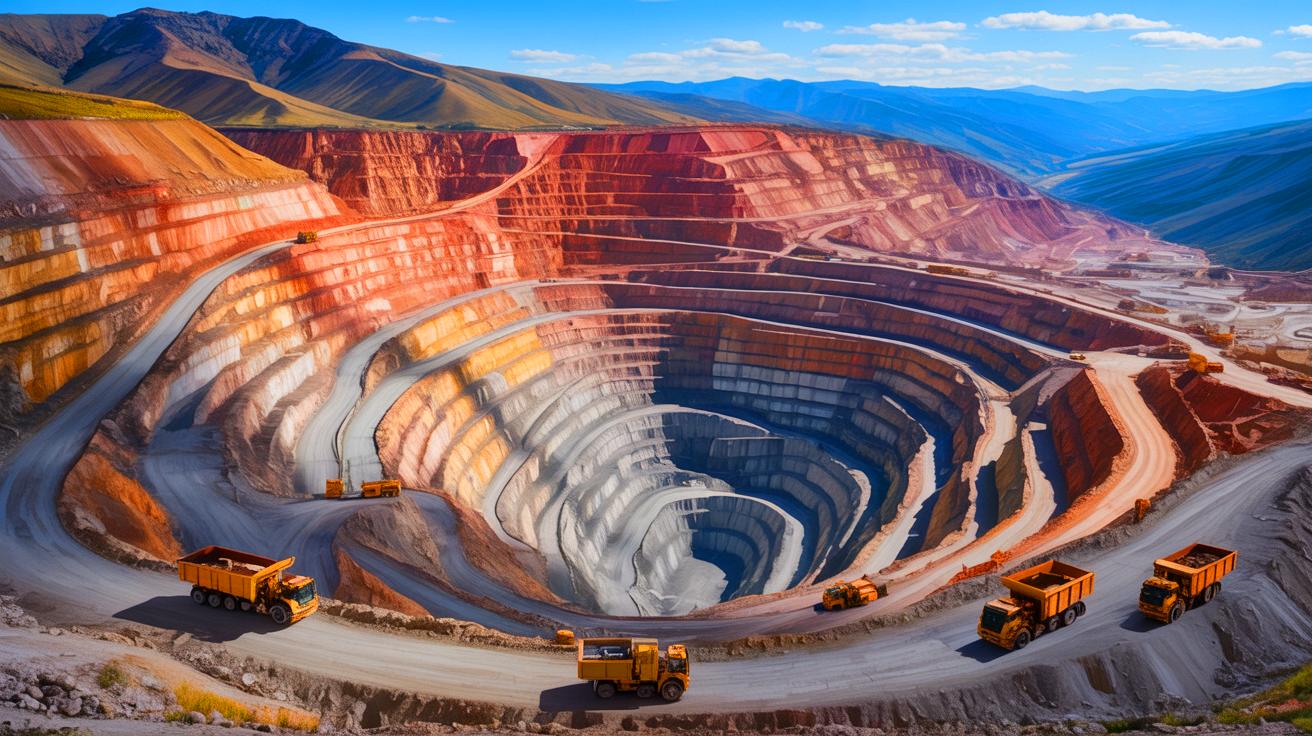
In the vast expanses of Utah, the Bingham Canyon Mine stands as a testament to human ingenuity and ambition. This colossal excavation, stretching over 0.6 miles deep and 2.5 miles wide, is not just a marvel of engineering but also a potential game-changer in global mineral dynamics. As the United States ramps up its copper production at this site, it challenges China’s longstanding dominance in the global mineral market. With over 400,000 tons of copper expected to be produced annually, the Bingham Canyon Mine is poised to alter the landscape of mineral supply chains, emphasizing sustainable and ethical mining practices.
Unveiling the Bingham Canyon Mine
The Bingham Canyon Mine, also known as the Rio Tinto Kennecott Copper Mine, boasts a rich history of over 120 years of mining operations. It has produced more copper than any other mine globally, with a staggering output of approximately 20 million tons so far. This site, operated by Rio Tinto, is equipped with advanced facilities, including a smelter, refinery, concentrator, and storage room, making it a highly sophisticated mining operation.
Every year, the mine produces around 400,000 tons of refined copper, meeting a significant portion of the international demand. The sheer scale of its operations is mind-boggling, with massive trucks transporting tons of rock daily. However, what sets the Bingham Canyon Mine apart is its commitment to sustainable mining practices. The site has received the Molybdenum Mark and the Copper Mark certifications, ensuring that its operations are both environmentally conscious and ethically sound.
Challenging China’s Resource Dominance
With the Bingham Canyon Mine ramping up its copper production to 400,000 tons annually, China’s strategic dominance in global mineral resources is being questioned. For years, China has controlled around 40% of the world’s copper supply, positioning itself at the center of the clean energy sector. However, the United States is now making significant strides to alter this balance.
Through investments like the $1.5 billion South Wall pushback, the U.S. is set to secure an independent and stable supply chain. This initiative ensures that mining operations at Bingham Canyon will continue until at least 2040, potentially yielding an additional 1.5 million tons of copper. Alongside copper, the site is also extracting tellurium, a critical component in solar panel manufacturing, further challenging China’s dominance.
Global Power Dynamics in Flux
The extraction of tellurium at the Bingham Canyon Mine signifies a shift in global power dynamics. Previously, the U.S. relied heavily on China for this essential mineral. While it may not signal the end of China’s dominance, it certainly indicates changing tides in global mineral supply chains. The U.S. is showcasing its ability to extract minerals at scale while aligning with environmental goals.
Other regions, like Oceania with the CopperString 2032 project, are also stepping up in the decarbonization mission. These initiatives collectively challenge China’s position as the primary supplier of critical minerals. Although China continues to advance in energy leadership, producing 1,800 tons of energy annually, it now faces competition from multiple fronts.
A Symbol of Independence and Sustainability
The Bingham Canyon Mine symbolizes not only independence in mineral supply but also a commitment to sustainability. With its substantial copper output, the mine supports the U.S.’s clean energy agenda, simultaneously challenging China’s global mineral dominance. While the need for rare earths and metals continues to grow, this human-made excavation site ensures that China no longer monopolizes the supply of critical minerals.
Despite these developments, China remains a formidable player in the energy sector, continuously advancing its capabilities. However, the emergence of alternative mineral sources like Bingham Canyon highlights shifting dynamics in global resource management. The question remains: how will China respond to these new challenges in the coming years?



Wow, 400,000 tons of copper annually? That’s a lot of pennies! 🪙
Wow, 400,000 tons of copper annually!? That’s a whole lotta metal! 🚜
Is the Bingham Canyon Mine open for public tours? I’d love to see it in person!
Isn’t it time we stop relying on mining and start recycling more? 🤔
Very informative article, thank you! It’s fascinating to see how mining impacts global politics.
Great initiative by the U.S. But how sustainable are these mining practices really?
How long has China dominated the copper supply, and what does this mean for their economy?
Thank you for highlighting the importance of tellurium! Didn’t know it was crucial for solar panels. 🌞
Utah’s taking on China? That’s a plot twist I didn’t see coming! 😄
What about the environmental impact of such a massive mine? 🌎
It’s great that they’re focusing on sustainable mining practices. 🌱
China’s dominance being challenged? Interesting. But let’s not underestimate their response!
Are there any environmental concerns with ramping up production at such a large scale?